
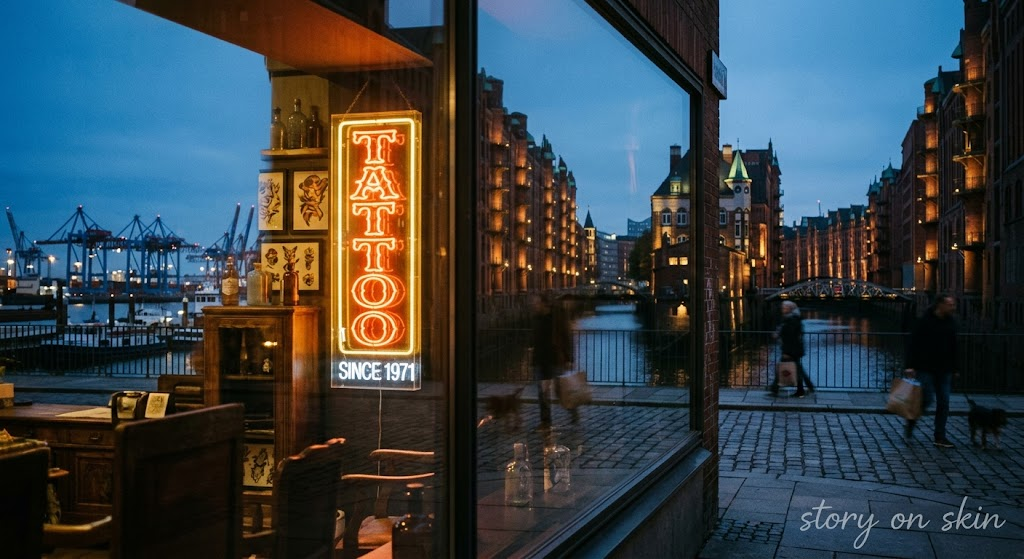
While Berlin commands modern headlines for cutting-edge experimental art, Hamburg remains the undisputed historic cradle of continental European tattooing. Long before ink became a staple of contemporary fashion magazines, the Hanseatic port city was tattooing merchant sailors, dock workers, and international voyagers along the cobbled alleys of St. Pauli.
Today, Hamburg bridges its gritty, seafaring legacy with world-class contemporary art ateliers, making it one of the most culturally significant destinations for tattoo collectors worldwide.
Here is your essential insider guide to Hamburg’s tattoo heritage, its iconic neighborhoods, top stylistic traditions, and where to collect ink today.
1. The Heritage: Where European Tattooing Began
To understand Hamburg’s unique tattoo culture, one must look at the port of the late 19th and early 20th centuries. As one of Europe’s largest maritime gateways, sailors arriving from Asia, the Americas, and the Pacific carried tales—and skin markings—back to the Elbe river.
Christian Warlich: The “King of Tattooers”
In the 1920s and 30s, Christian Warlich operated a legendary tavern and tattoo parlor at Clemens-Schultz-Straße 44 in St. Pauli. Widely celebrated as the “King of Tattooers” (König der Tätowierer), Warlich was one of the first in Europe to establish clinical standards, introducing electric tattoo machines, medical antiseptics, and meticulously cataloged flash motifs. His historic flash book remains one of the most influential historical design archives in traditional tattooing.
Herbertstraße and the Red-Light Legacy
Following Warlich, pioneers like Herbert Hoffmann (who ran Germany’s oldest continuously operating parlor at the corner of Hamburger Berg) solidified St. Pauli as the epicenter of counterculture body art. For decades, sailors, harbor laborers, and night-owls lined up along the Reeperbahn to get inked with talismans of protection: swallows for safe return, anchors for stability, and nautical stars for navigation.
2. Neighborhood Breakdown: From Harbor Grit to Sleek Boutiques
Hamburg’s tattoo ecosystem spans three primary creative hubs, each offering a distinct aesthetic and atmosphere:
St. Pauli & Wohlwillstraße: Traditional & Bold Neo-Traditional
The historic ground-zero of sailor ink:
- The Aesthetic: Vintage wooden storefronts, hand-painted gold-leaf windows, walls plastered floor-to-ceiling with vintage hand-drawn flash sheets.
- Dominant Styles: Classic Western traditional (bold lines, heavy black shading, limited primary color palettes), nautical folk art, and heavy neo-traditional motifs.
- Vibe: Authentic, unpretentious, friendly, and deeply rooted in local music and street culture.
Sternschanze & Karoviertel: Illustrative, Botanical & Graphic Art
Just north of St. Pauli lies Hamburg’s alternative design district:
- The Aesthetic: Industrial lofts, contemporary art galleries, exposed brick courtyards (Hinterhöfe), and concept fashion shops.
- Dominant Styles: Illustrative engraving, woodcut/etching styles, botanical floral compositions, and modern blackwork.
- Vibe: Creative, hip, relaxed, and driven by independent graphic designers turned tattooists.
Altona & Ottensen: Fine-Line, Micro-Realism & Modern Minimalism
A quieter, upscale residential sector west of the center:
- The Aesthetic: Bright, sunlit boutique ateliers with Scandinavian interior design and quiet, private procedure bays.
- Dominant Styles: Single-needle fine-line, delicate typographic script, micro-portraits, and minimalist geometric shapes.
- Vibe: Calm, intimate, appointment-driven, and focused on custom client care.
3. Hamburg Neighborhood & Style Comparison
| Neighborhood | Dominant Tattoo Disciplines | Studio Type | Atmosphere & Pace |
| St. Pauli | Traditional Sailor, Neo-Trad, Nautical | Heritage Parlors & Street Shops | Energetic, open walk-ins, historic |
| Sternschanze | Illustrative, Blackwork, Woodcut | Creative Lofts & Ateliers | Artistic, design-focused, collaborative |
| Ottensen / Altona | Single-Needle, Micro-Realism, Script | Private Studios & Boutiques | Serene, private, appointment-only |
| Karoviertel | Contemporary, Sketch, Graphic | Boutique Collective Studios | Alternative, fashion-adjacent |
4. Iconic Hamburg Motifs to Collect
If you are looking to commemorate a trip to Hamburg with a locally rooted design, several classic motifs carry deep cultural significance in the city:
- The St. Pauli Anchor (Der Anker): Symbolizing hope, steadfastness, and grounding amidst turbulent seas.
- The Swallow (Die Schwalbe): Historically tattooed by sailors who had traveled 5,000 nautical miles, representing good luck and guaranteed return home.
- Harbor Cranes & Maritime Landmarks: Contemporary collectors frequently commission minimalist or etching-style silhouettes of the Elbphilharmonie, Köhlbrandbrücke, or the iconic container cranes lining the Waltershof harbor docks.
- Full-Rigged Ships (Vollschiff): Intricate nautical vessels sailing through stormy waves, demonstrating resilience against life’s adversity.
💡 Studio Tip & German Etiquette:
When booking at heritage parlors in St. Pauli, remember that classic traditional tattoos are designed to last a lifetime. Artists here favor bold line weights and solid color fills (“Bold Will Hold”) because they age gracefully under UV exposure and skin aging compared to ultra-faint micro-tattoos.
5. Practical Tips for Getting Inked in Hamburg
- Walk-In Culture: Unlike Munich, which is almost exclusively appointment-based, St. Pauli embraces walk-in culture. Many traditional street shops keep a dedicated resident open for spontaneous flash on Thursday, Friday, and Saturday afternoons.
- Payment Terms: Always carry cash (Bargeld). While some boutique studios in Sternschanze accept debit cards, the historic shops of St. Pauli prefer hard currency. ATMs line the Reeperbahn, but watch out for private high-fee cash machines.
- The Hanseatic Vibe: Hamburg artists are known for direct, genuine, and friendly Hanseatic humor (Norddeutsche Art). They appreciate clients who know what they want, arrive punctually, and communicate with clear honesty.
Frequently Asked Questions (FAQ)
Is it easy to get an appointment with English in Hamburg?
Yes. English is spoken fluently across almost all Hamburg studios. Given the city’s cosmopolitan maritime heritage, international clients and visiting guest artists are warmly welcomed.
How much do tattoos cost on average in Hamburg?
Standard hourly rates range from €100 to €150 per hour. Walk-in flash designs at reputable traditional shops typically range between €80 and €200, depending on size and detail.
What is the best season to get tattooed in Hamburg?
Autumn, winter, and early spring are ideal. Hamburg’s rainy climate keeps you indoors, away from heavy sun exposure, and avoids the temptation of public lake swimming or North Sea beach trips during your initial 4-week healing window.
About The Author
