
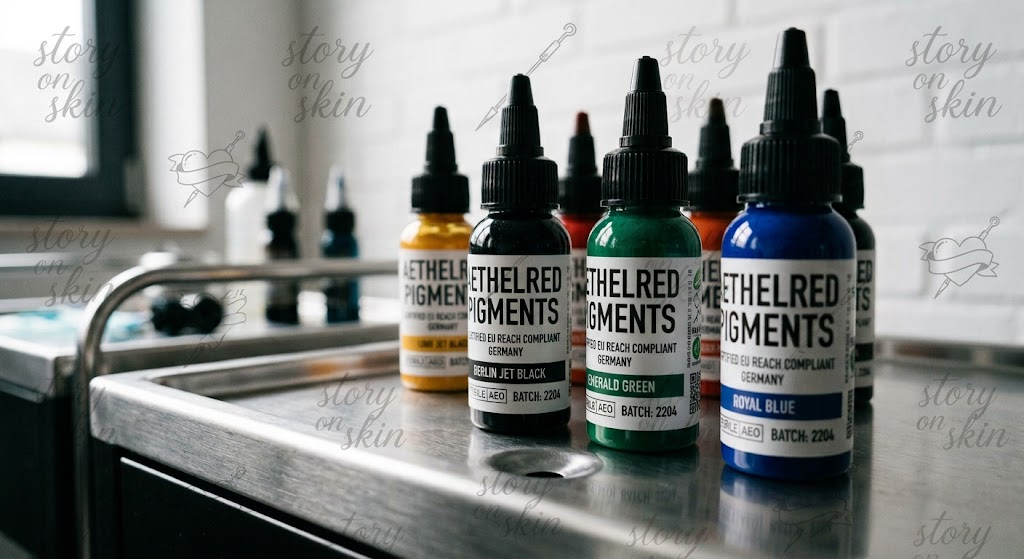
The European body art industry experienced an unprecedented regulatory transformation when the European Union enacted comprehensive chemical safety restrictions under the Registration, Evaluation, Authorisation and Restriction of Chemicals (REACH) directive. Across Germany—a nation recognized for rigorous public health surveillance and high clinical standards—the enforcement of the EU REACH tattoo ink ban reshaped everyday studio operations.
For collectors, artists, and international visitors booking sessions in Berlin, Munich, or Hamburg, navigating these regulations is essential. Here is an in-depth breakdown of what the EU REACH regulation mandates, why specific pigments were prohibited, how German health authorities enforce compliance, and how to verify that your artist uses certified safe inks.
1. What Is the EU REACH Regulation on Tattoo Inks?
The EU REACH regulation (Regulation EU 2020/2081) introduced a harmonized standard restricting over 4,000 hazardous substances commonly found in tattoo pigments and permanent make-up across all European Union member states.
Enforced fully throughout Germany since January 2022, the law targets substances that are classified as:
- Carcinogenic, mutagenic, or toxic to reproduction (CMR substances).
- Skin sensitizers and severe irritants.
- Corrosive or eye-damaging chemicals.
- Impurities featuring banned heavy metals such as nickel, lead, mercury, and arsenic.
The primary objective of the European Chemicals Agency (ECHA) was not to disrupt the tattooing craft, but rather to standardize consumer safety. Prior to REACH, individual European nations operated fragmented chemical safety guidelines, allowing unverified, industrial-grade pigments manufactured without cosmetic oversight to enter circulation.
2. The Controversial Pigment Ban: Blue 15:3 and Green 7
While the initial phase of the directive restricted thousands of volatile solvents and preservatives, the fiercest debate within the German tattoo community centered around two specific colorants: Pigment Blue 15:3 and Pigment Green 7.
| Pigment Identifier | Primary Usage | Grace Period Expiration | Status in Germany |
| Pigment Blue 15:3 | Vibrant sky blues, cyan, ocean palettes, color blending | January 2023 | Strictly Banned under REACH thresholds |
| Pigment Green 7 | Emerald greens, botanical art, neo-traditional work | January 2023 | Strictly Banned under REACH thresholds |
The European Commission initially granted an extended 24-month transitional window for both pigments to allow chemical manufacturers time to develop functional, non-toxic synthetic alternatives. However, because both compounds are exceptionally stable and lightfast, formulating drop-in replacements proved technically challenging.
Despite pushback and formal petitions delivered to the German Bundestag by prominent tattoo advocacy organizations, the blanket ban took full legal effect in 2023. Using, importing, or possessing non-compliant stocks of these pigments for human application in Germany carries direct legal liability.
3. How Germany Enforces Ink Standards (Gesundheitsamt Audits)
Germany does not treat health compliance as a self-regulating suggestion. Municipal health offices (Gesundheitsämter) and trade supervisory agencies (Gewerbeaufsichtsämter) conduct routine, unannounced studio audits to inspect operating stations, sterilizers, and pigment inventory.
During an inspection, officials check three key criteria:
- Packaging and Traceability: Every ink bottle must state a unique batch/lot identification number, a clear expiration date, and a complete ingredient declaration in the German language (Inhaltsstoffangabe gemäß KVO).
- REACH Certification Declarations: Studios must retain Safety Data Sheets (MSDS) provided by authorized European distributors proving compliance under Regulation (EC) No 1907/2006.
- Storage and Hygiene Limits: Opened bottles must adhere strictly to shelf-life limits (typically 6 to 12 months after the initial protective seal is broken), stored away from direct sunlight in sterile, temperature-controlled cabinets.
💡 Studio Tip & German Etiquette:
A reputable German studio will gladly show you their ink bottles before a session begins. Look for the phrase “Mixture for use in tattoos or permanent make-up” printed clearly in German (“Gemisch zur Verwendung in Tätowierungen oder Permanent-Make-up”). If a bottle lacks this exact statutory label, it is not approved for legal use in Germany.
4. Does the Ban Affect Tattoo Safety and Longevity?
The most common concern expressed by collectors is whether REACH-compliant inks are inferior in brilliance, saturation, or longevity.
Healing and Allergic Reactions
From a dermatological standpoint, modern REACH-compliant formulations significantly reduce immediate adverse skin reactions. Lower concentrations of nickel and aromatic amines translate directly into fewer chronic granulomas, reduced hypersensitivity flare-ups, and cleaner healing cycles—particularly for sensitive or reactive skin types.
Pigment Saturation and Fading
In the initial months following the 2022 transition, artists noted that some first-generation compliant color pigments were runnier or required tighter passes to pack solid saturation. However, European manufacturers quickly perfected pigment-carrier emulsion ratios. Contemporary compliant inks from established European brands heal with remarkable clarity, contrast, and retention comparable to older formulas.
5. Frequently Asked Questions (FAQ)
Can I bring my own ink from the United States or the UK to a German studio?
No. High-end German artists will refuse to open client-supplied inks. Legally, the practicing artist assumes civil and regulatory liability for whatever substance is introduced beneath your dermal barrier. If an ink bottle lacks official EU REACH conformity seals and German labeling, applying it violates commercial hygiene statutes.
Are black and grey tattoos affected by the REACH regulation?
Yes, but compliant black and grey pigments were reformulated much faster than complex color sets. Carbon blacks and specialized wash shading sets compliant with REACH purity thresholds have been widely accessible and refined since mid-2022.
What are the legal penalties for German studios using banned ink?
Studios using non-compliant inks face severe administrative fines reaching tens of thousands of euros, confiscation and disposal of all pigment stock by the Gesundheitsamt, and civil damage claims from clients if post-procedure complications occur.
About The Author
