
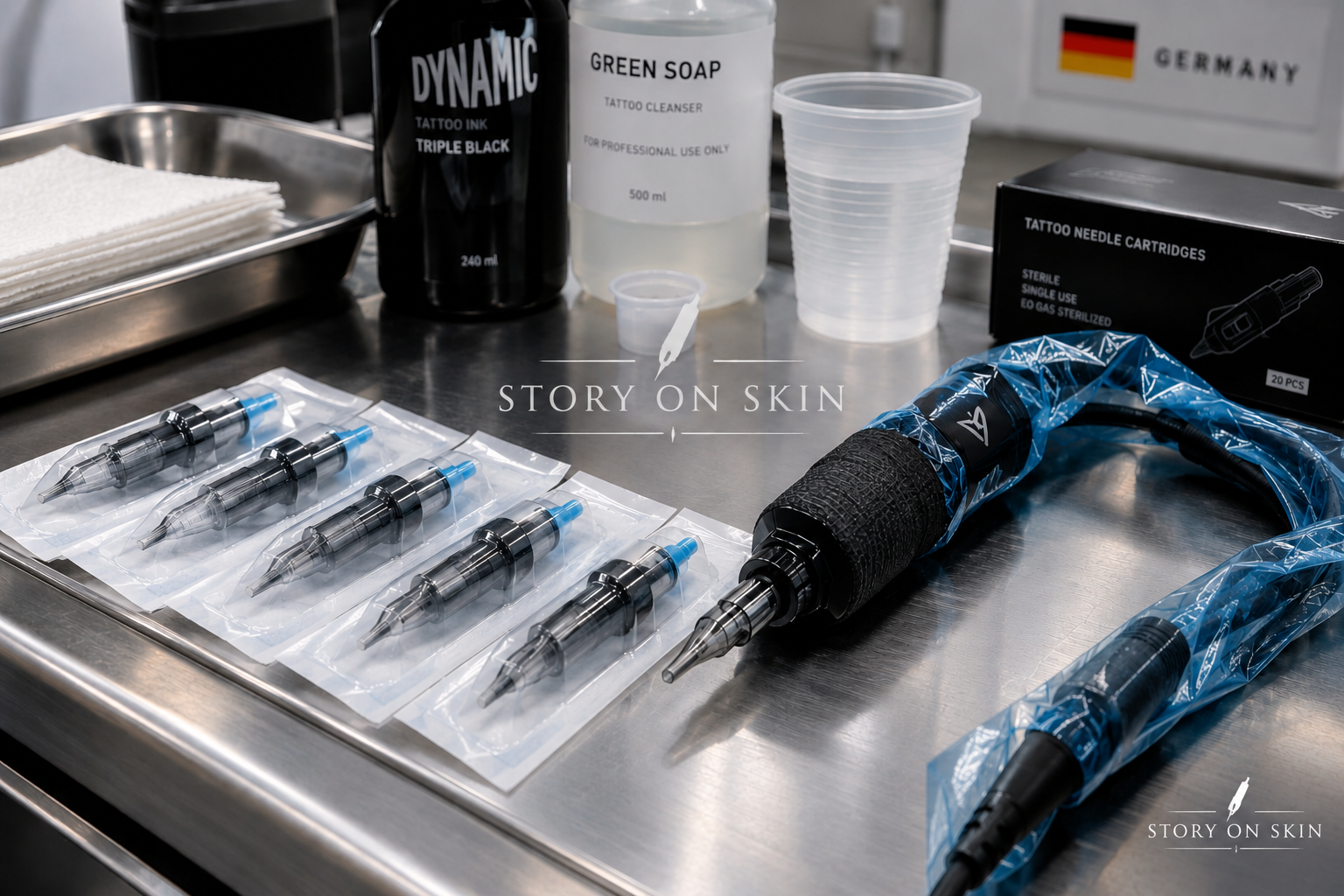
Germany holds an international reputation for rigorous technical certification and uncompromising public safety protocols. In the tattooing sector, this reputation translates into some of the most comprehensive hygiene frameworks found anywhere in the global body art industry. Whether you are walking into an avant-garde studio in Berlin or an established private atelier in Munich, professional tattooing in Germany is governed by strict sanitary codes designed to eliminate cross-contamination and prevent bloodborne pathogen transmission.
For collectors, understanding these regulations provides essential peace of mind. Here is a definitive overview of German tattoo hygiene standards, European DIN EN 17169 compliance, municipal health inspections, and the critical visual markers of a sterile studio workstation.
1. The Legal Foundation: Infection Protection Act & DIN EN 17169
Tattoo hygiene in Germany is grounded in both federal public health legislation and European industry-specific standards:
Infection Protection Act (Infektionsschutzgesetz – IfSG)
Under § 17 and § 36 of the German Infection Protection Act, any commercial facility performing procedures that intentionally pierce or breach the human skin barrier must implement documented hygiene management plans (Hygieneplan). This statute empowers regional authorities to monitor, inspect, and enforce clinical cleanliness across all operating premises.
The European Standard: DIN EN 17169
Introduced to unify European studio procedures, DIN EN 17169 (Tattooing – Good practice for tattoo services) defines operational guidelines spanning initial client intake, clean workspace preparation, aseptic technique during application, and post-procedure wound management. Top-tier German studios operate in direct alignment with this standard, utilizing it as their baseline for insurance verification and local trade guild recognition.
2. The Core Components of a Compliant German Workstation
When observing an artist prepare their workspace before your session begins, a DIN EN 17169-compliant setup adheres to strict sterile barrier protocols:
| Workstation Element | Compliance Protocol | Safety Purpose |
| Surface Disinfection | Certified hospital-grade disinfectant (VAH-listed) | Kills bactericidal, fungicidal, and virucidal contaminants on hard surfaces. |
| Barrier Film Wrapping | Clip cord sleeves, machine bags, and barrier tape | Shields non-autoclavable electrical gear and power supplies from fluid droplets. |
| Needles & Cartridges | EO Gas (Ethylene Oxide) pre-sterilized single-use blisters | Guarantees zero risk of cross-contamination; packaging opened only in front of the client. |
| Ink Caps | Disposable medical-grade single-use plastic cups | Ensures bulk ink bottles are never exposed to fluids or returned residue. |
| Hand Hygiene | Medical nitrile gloves replaced after touching any non-barrier object | Protects against micro-tears and dermal allergen reactions. |
3. How Health Offices (Gesundheitsämter) Conduct Audits
Unlike jurisdictions where studios operate with minimal state oversight, German studios are subject to both planned and unannounced inspections by the local Gesundheitsamt (Municipal Health Office).
During an official inspection, public health officers evaluate four critical operational areas:
- The Written Hygiene Plan (Hygieneplan): Studios must keep an updated, written procedural binder detailing chemical contact times, hand disinfection routines, waste disposal methods, and needle-stick emergency protocols.
- Sterilization and Instrument Processing: If reusable metal grips are used, the studio must maintain a validated, certified Class B autoclave with digital cycle printouts and biological spore test documentation. Most modern studios bypass this by using 100% disposable, pre-sterilized single-use disposable grips.
- Clinical Waste Disposal: Used needle cartridges and scalpels must be discarded immediately into rigid, puncture-proof sharps disposal containers (Kanülenabwurfboxen), which are picked up and incinerated by licensed hazardous waste disposal contractors.
- Spatial Separation: German building codes for tattoo studios require strict physical separation between the client waiting lounge, the administrative reception, and the sterile procedure cabins or working bays. Eating, drinking, or permitting pets inside the active tattooing zone is illegal.
💡 Studio Tip & German Etiquette:
Watch the prep routine closely. A certified artist in Germany will disinfect the workstation, apply protective plastic wrapping to all equipment, wash their hands thoroughly, and then don fresh gloves before opening needle cartridges from their sealed sterile blisters. If an artist touches their smartphone or clothing while gloved, they are expected to discard the gloves and sanitize immediately.
4. Client Screening and the Medical Intake Form (Anamnesebogen)
Before touching the tattoo chair, German law requires clients to complete a comprehensive medical declaration (Anamnesebogen). This document protects both client and artist by screening for contraindications:
- Cardiovascular & Hematological Conditions: Taking blood thinners (such as Aspirin, Marcumar, or Heparin) significantly increases bleeding, which displaces ink pigments and complicates skin trauma.
- Immune Deficiencies & Active Infections: Conditions that impair immune response directly increase post-procedure infection risks.
- Skin Conditions: Active eczema, psoriasis, keloid scar tendencies, or sunburn in the target placement area require postponing the session until the skin is fully recovered.
- Pregnancy & Breastfeeding: Under German industry codes, reputable studios maintain an absolute prohibition on tattooing pregnant or nursing clients due to hormonal shifts, altered skin elasticity, and systemic stress risks.
5. Frequently Asked Questions (FAQ)
Can I ask to inspect the expiration dates on needle cartridges?
Yes. Professional artists in Germany welcome clients who take an active interest in hygiene. Needle blister packs display both the production lot and the sterile expiration date alongside an ethylene oxide (EO) sterilization indicator dot.
Are German tattoo artists required to hold a medical license?
No. Tattooing is classified as a craft trade (freies Gewerbe). However, to operate legally and obtain commercial studio liability coverage, artists and studio owners must complete certified infection control and hygiene training courses approved by public health authorities.
What should I do if a studio appears cluttered or unhygienic?
Trust your instincts and leave. If a studio permits animals near tattooing stations, reuses unbagged cables, or fails to ask for a medical intake questionnaire, they are operating outside German public health standards.
About The Author
