
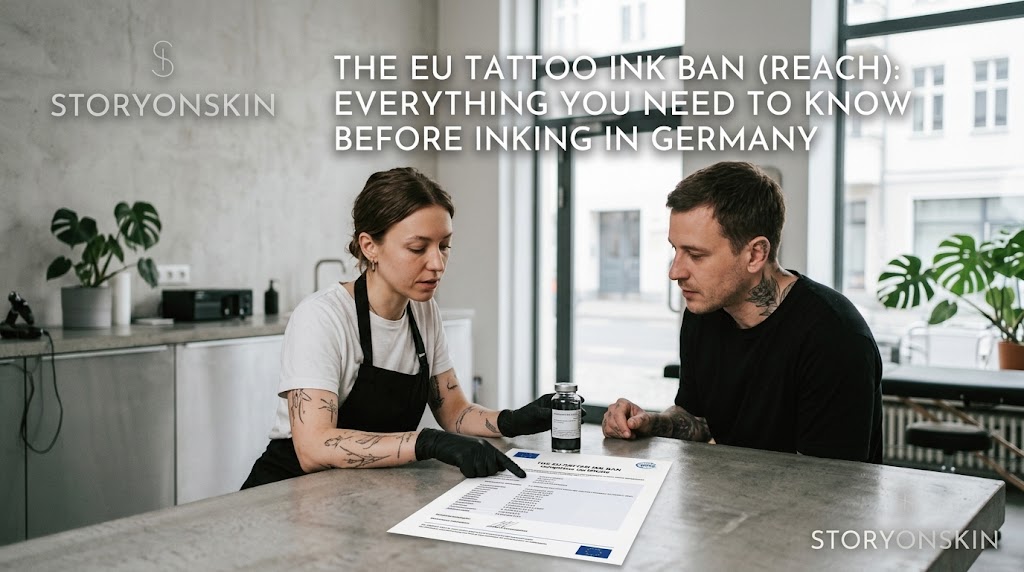
If you are planning to get tattooed in Germany or anywhere within the European Union, you might have heard about the strict regulations surrounding tattoo inks. Often referred to simply as the “EU Ink Ban,” this regulation is part of the European Chemicals Agency (ECHA) REACH framework.
Far from stopping the body art industry, these standards were designed to make tattooing significantly safer for collectors. Here is everything you need to know before sitting in the chair.
What Is the EU REACH Regulation for Tattoo Inks?
The EU REACH regulation (Registration, Evaluation, Authorisation and Restriction of Chemicals) limits the concentration of thousands of potentially hazardous chemicals previously found in tattoo inks and permanent makeup.
The goal is simple: eliminate toxic substances that could cause allergic reactions, genetic mutations, or long-term health complications.
Key points to understand:
- Sterility and Safety: German studios can strictly use inks that carry full laboratory certificates proving compliance.
- Banned Components: Ingredients such as certain industrial pigments, heavy metals, and specific preservatives are heavily restricted.
- Strict Enforcement: German local health authorities (Gesundheitsamt) conduct regular spot checks on registered tattoo studios.
How the Regulation Affects Tattoo Styles
When the ban initially came into full force, there was a temporary shortage of specific green and blue pigments (Pigment Blue 15:3 and Pigment Green 7). However, manufacturers responded quickly by innovating new, compliant formulations.
| Tattoo Style | Impact Under EU Regulations |
|---|---|
| Black & Grey / Fine Line | Minimal to zero disruption; carbon blacks are fully compliant. |
| Neo-Traditional & Colour Realism | Modern compliant inks are widely available, though shade ranges require certified brands. |
| Traditional Handpoke | Subject to the exact same certified ink and needle hygiene rules. |
Why Getting Inked in Germany Is Among the Safest Options Globally
Germany has always held a reputation for rigorous hygiene regulations (Hygieneverordnung). When combined with the REACH standards, the result is one of the cleanest and most regulated tattoo environments in the world.
Reputable studios in cities like Berlin, Hamburg, and Munich prioritize single-use needles, medical-grade barrier film, and hospital-standard surface sterilization.
What You Should Ask Your German Tattoo Artist
Before your session, you are fully entitled to verify the studio’s standards. Consider asking:
- Are your inks fully compliant with the latest EU REACH guidelines?
- Do you use disposable single-use grips and cartridges?
- What aftercare products compliant with German pharmacy standards do you recommend?
A professional artist will never hesitate to show you the sealed packaging and ingredient labels on their ink bottles.
About The Author
