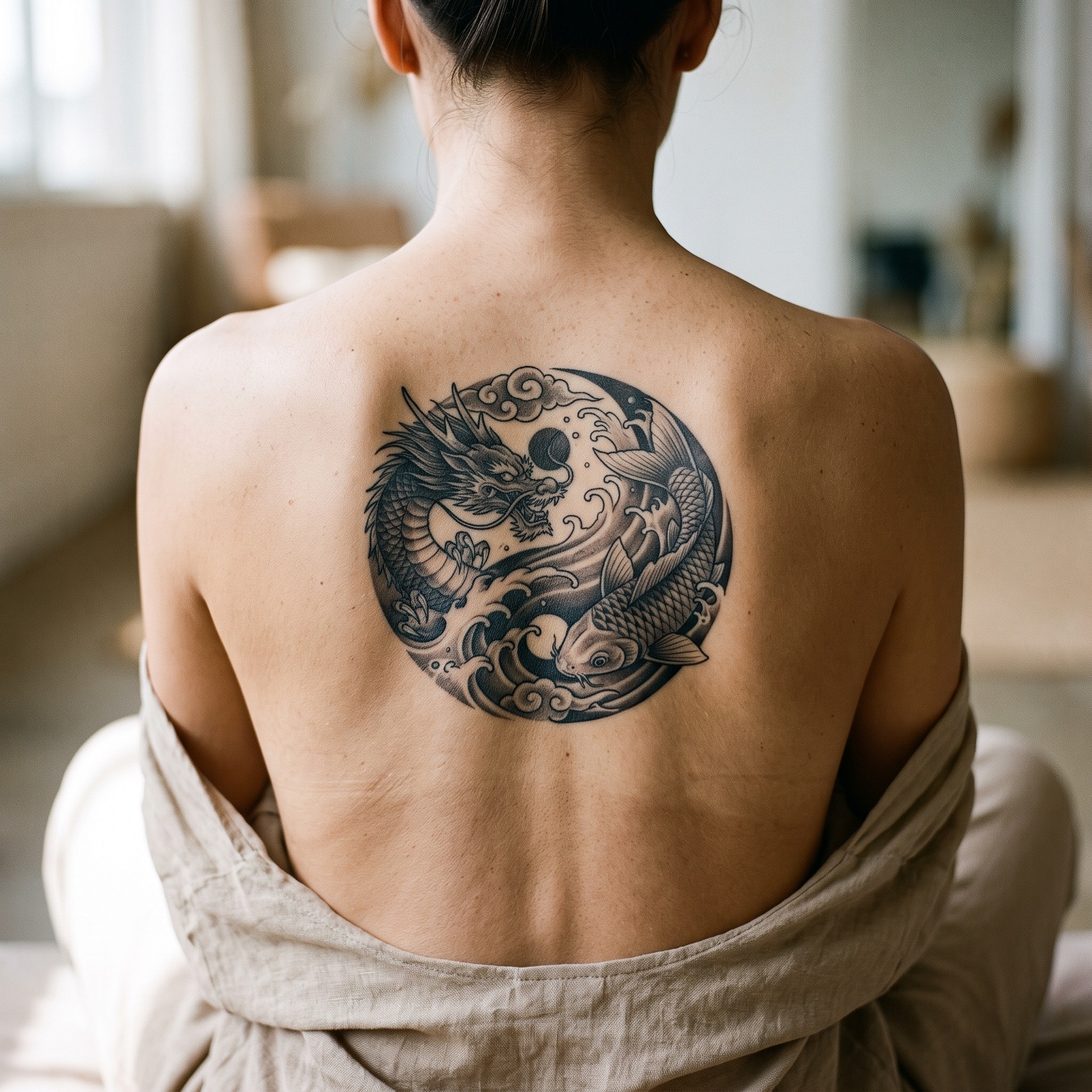
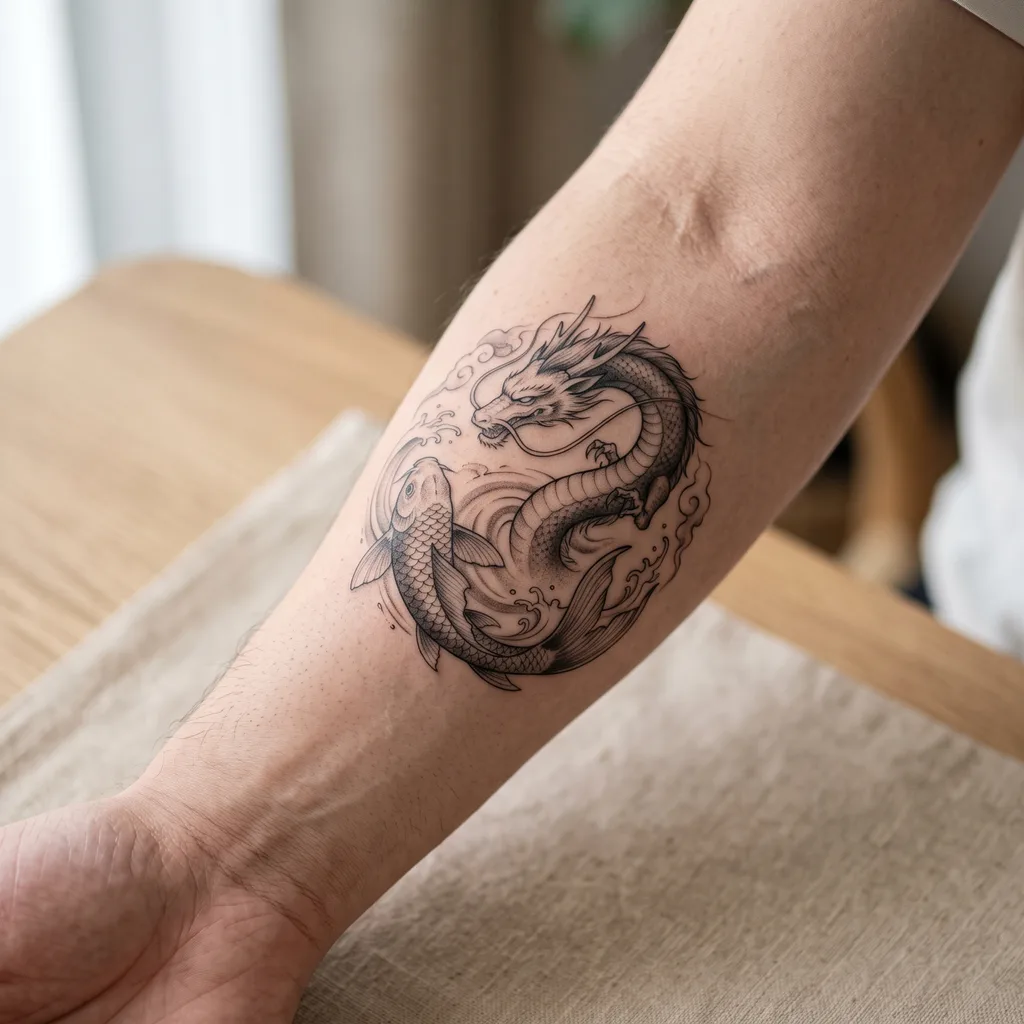
In the world of Eastern body art, yin-yang dragon and koi fish tattoos stand as one of the ultimate visual representations of universal balance and personal transformation. While each creature holds massive standalone significance in Japanese Irezumi and ancient Chinese philosophy, merging them into the sacred circular geometry of the Taijitu creates an unmatched narrative of harmony between opposing forces.
Whether you are navigating major life shifts or seeking an anchor for inner peace, this sacred pairing bridges terrestrial ambition with celestial wisdom.
Below, we dissect the profound dualities behind this motif, explore how Eastern philosophy shapes its ink composition, and showcase 3 striking design directions to inspire your next tattoo session.
The Philosophy: Duality of the Dragon and the Koi
The classic Yin-Yang concept dictates that seemingly contradictory forces are actually complementary, interconnected, and interdependent in the natural world. When interpreted through mythical creatures, the dragon (Ryu) and the carp (Koi) form a flawless metaphysical dialogue.
1. Water vs. Sky (Earthly Journey vs. Celestial Mastery)
- The Koi (Yin Energy): The koi is submerged in the watery depths. It embodies perseverance, struggle, fluid movement, and patient endurance against roaring river currents.
- The Dragon (Yang Energy): The dragon ascends into stormy skies and clouds. It channels wisdom, active authority, celestial strength, and the reward of reaching the ultimate peak.
2. The Cycle of Self-Transformation
In Eastern folklore, the koi and the dragon are not truly separate entities; they represent two distinct phases of the same heroic journey. According to the Dragon Gate legend, a persistent koi that swims up the Yellow River’s tallest waterfall transforms into a heavenly dragon.
When rendered together in a circular Yin-Yang composition, they signify that humble beginnings and ultimate triumphs exist simultaneously—you cannot appreciate wisdom without remembering the struggle that forged it.
3 Striking Yin-Yang Dragon and Koi Fish Tattoos & Design Ideas
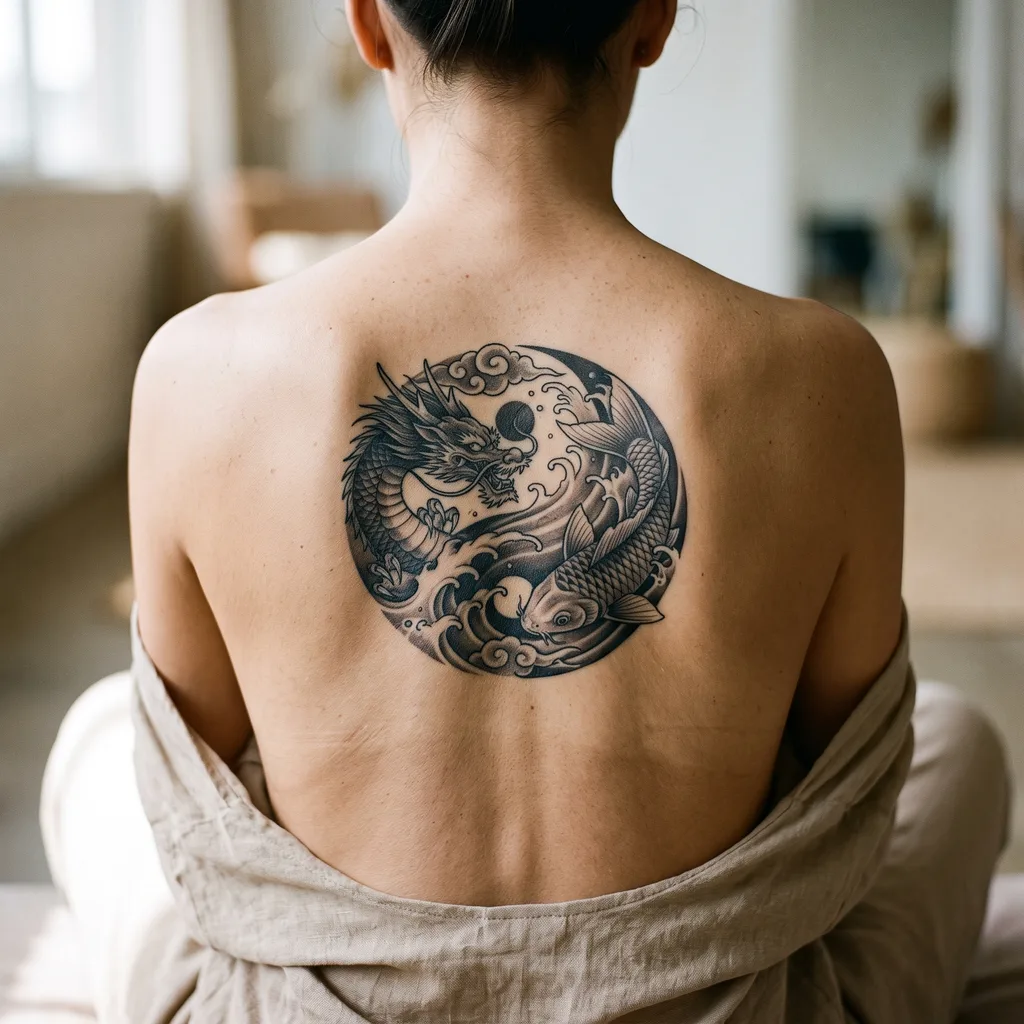
1. The Fluid Taijitu Circle (Circular Irezumi Flow)
In this quintessential layout, the dragon and koi twist gracefully around a central axis, tracing the iconic teardrop halves of the Yin-Yang emblem:
- The Silhouette: The serpentine dragon forms the upper sweeping arch, its claws and whiskers framing the outer curve. Beneath it, the koi’s tail and fins provide an opposing sweep of water currents.
- The Negative Space “Eyes”: In place of the classic black and white dots inside each teardrop, artists often position the sacred wish-granting jewel (Hoju) in the dragon’s grasp, countered by a radiant water droplet or open lotus flower beneath the koi.
- Best Placement: The upper back, centered between the shoulder blades, or a spacious canvas on the thigh.
2. High-Contrast Black & Grey vs. Negative Space Wash
For collectors drawn to monochromatic simplicity, this concept emphasizes textural differences rather than colored pigments:
- Dark Yin Half: Packed with dense black wind bars, stormy thunderclouds, and saturated charcoal shading across the dragon’s scaled coils.
- Bright Yang Half: Preserved through bare skin breaks, pale silver washes, and translucent Japanese water crests surrounding a lightly outlined koi fish.
- Why It Works: This aesthetic echoes classic brush-stroke calligraphy (Sumie), looking both mature and timeless over decades of healing.
- Best Placement: Inner forearm or shoulder cap panel (Hikae).
3. Elemental Fusion: Fire & Water Dualism
A dynamic, modern neo-traditional concept highlighting nature’s elemental contrasts:
- The Visual Contrast: The dragon breathes subtle golden flames, stylized smoke clouds, and fierce facial details. Opposing it, the koi churns deep cerulean rapids and tumbling cherry blossom petals (sakura).
- The Meaning: A visual reminder that passion and aggression (fire) must constantly be tempered by adaptability and emotional calm (water) to maintain personal equilibrium.
- Best Placement: Full circular forearm wrap or ribcage placement.
Core Principles for a Tattoo That Ages Well
Circular designs placed on curved muscle groups require precise anatomical planning:
- Beware of Muscular Distortion: A flat circular stencil on your paper will warp into an oval when applied across rotating muscles like the bicep. Work with an artist who hand-draws or adjusts the circular flow directly onto your relaxed stance.
- Preserve Skin Breaks for Readability: Squeezing two complex, scale-heavy mythical beasts into a 4-to-5-inch circle can lead to a muddled silhouette over time. Ensure the whiskers, fins, and claw tips have ample empty skin around them.
- Contrast Is Everything: Whether you opt for bold color or fine-line blackwork, high tonal contrast between the dragon’s body and the fish’s scales keeps both distinct from a distance.
Frequently Asked Questions
What does a yin-yang tattoo with a dragon and koi mean?
It symbolizes balance, metamorphosis, and the harmony between struggle and triumph. It represents the ancient Eastern philosophy that resilience through adversity (the koi) inevitably leads to spiritual transcendence and strength (the dragon).
Can this design be executed in a minimalist fine-line style?
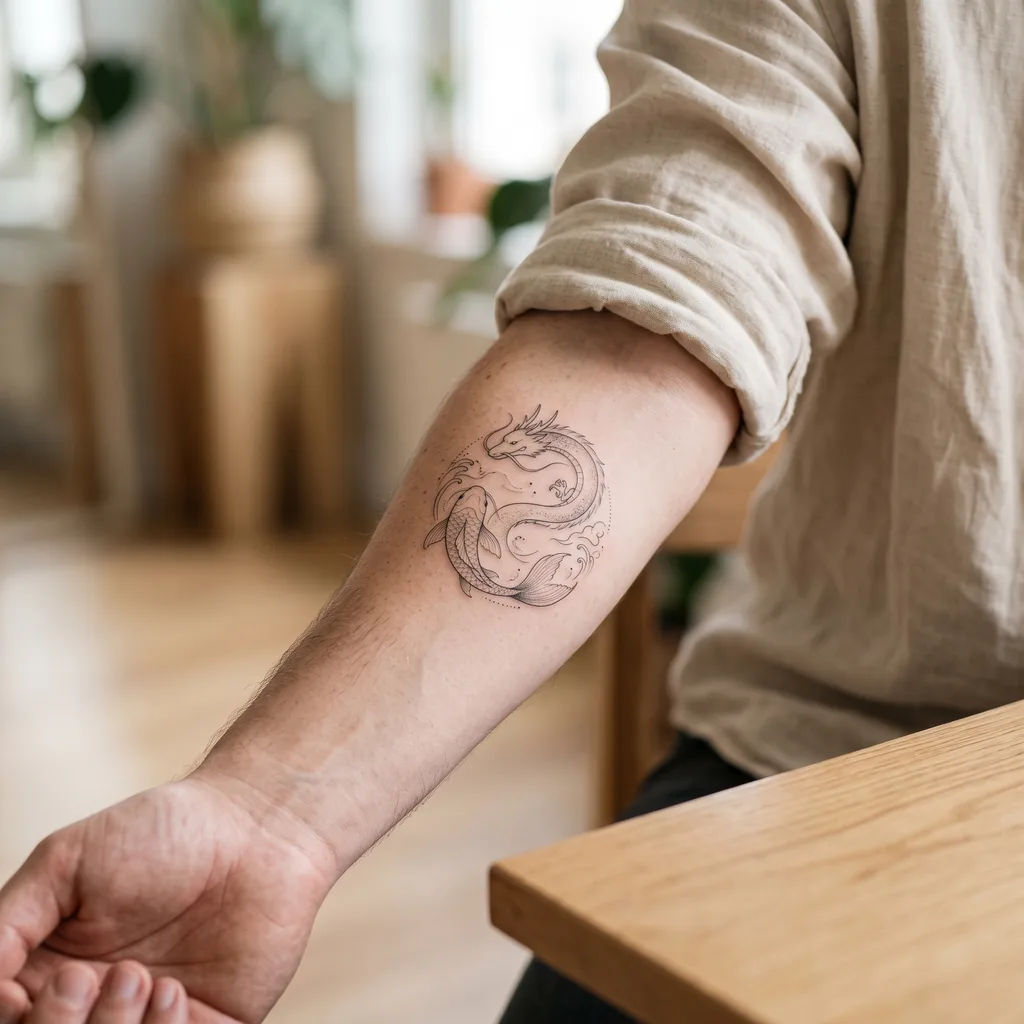
Yes. Contemporary artists frequently capture the yin-yang flow using delicate single-needle contours without heavy background shading, focusing on the winding silhouette rather than hundreds of scales.
Should the koi be black or white in a yin-yang pairing?
There are no rigid restrictions. Typically, the koi represents the lighter, fluid energy (pale wash or negative space), while the dragon anchors the darker, stormy energy (dense charcoal or deep blues). However, inverting the tones creates an equally meaningful composition.
About The Author
