
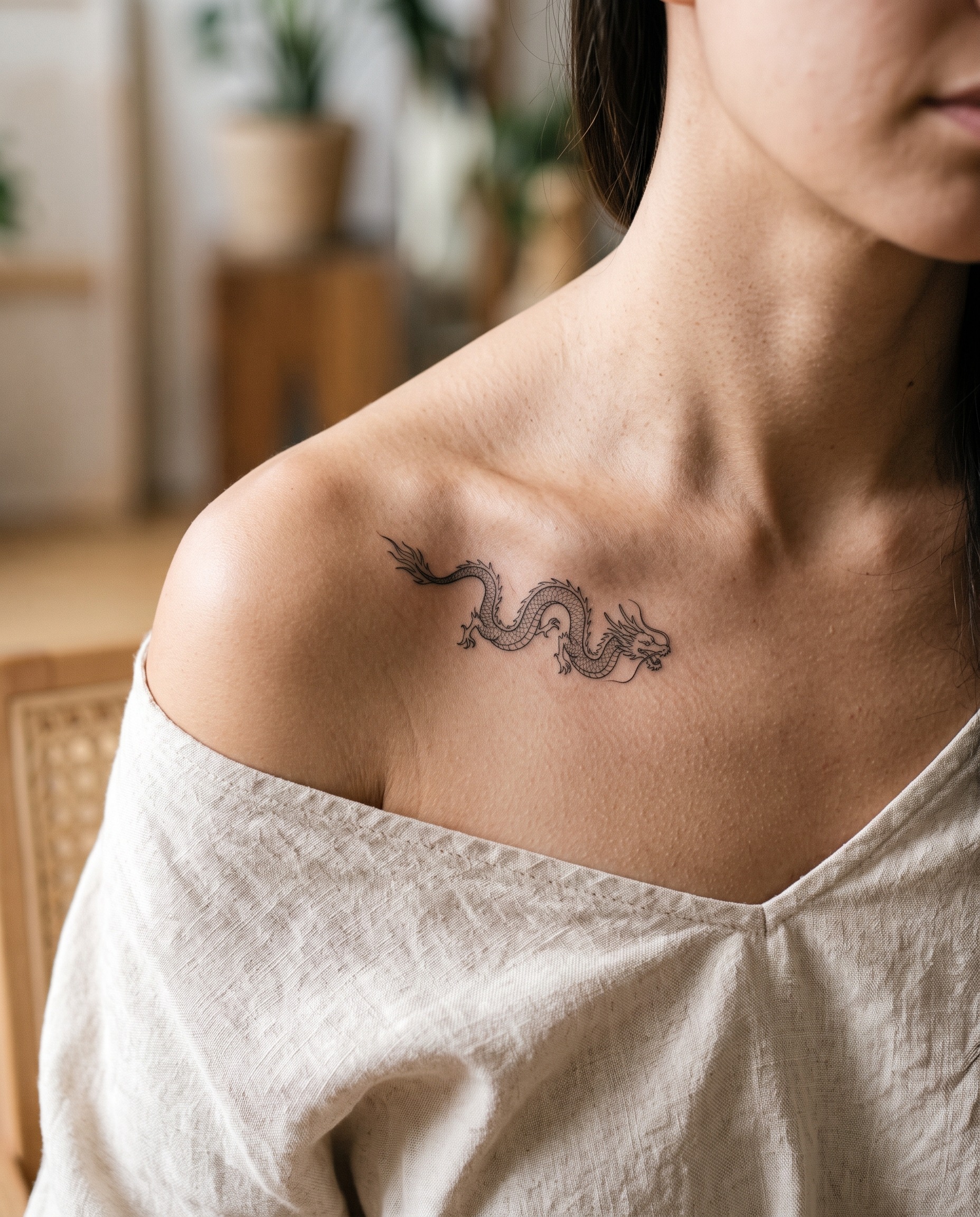
Japanese dragon tattoos (Ryu) are historically known for their grand scale—sweeping across entire backs or flowing seamlessly down full sleeves in traditional Irezumi compositions. But what if you want the power, wisdom, and protection of this legendary creature without committing to a full-body piece?
Thanks to modern fine-line tattooing and advanced needle configurations, you can easily carry this ancient mythical powerhouse in a discreet, minimalist format. A small Japanese dragon tattoo preserves centuries of Eastern storytelling while offering clean aesthetics, versatile placements, and effortless concealability.
Below, we explore the authentic symbolism behind subtle dragon designs, 20 curated concepts for your next piece, and crucial tips to ensure your micro-ink ages cleanly over time.
What Does a Small Japanese Dragon Tattoo Symbolize?
Before choosing a design, understanding authentic Japanese mythology ensures your tattoo carries genuine cultural weight. Unlike Western lore—where dragons are often fire-breathing beasts slain by knights—the Japanese Ryu is a benevolent water deity linked to nature, wisdom, and good fortune.
- Wisdom and Good Fortune: In Japanese folk traditions, dragons rule rainfall, rivers, and the open sea. Carrying a dragon motif acts as an amulet for good luck, balance, and quiet resilience.
- The Rule of Three Claws: Authenticity lies in the details. Traditional Japanese dragons are depicted with three claws on each foot, distinguishing them from Chinese dragons (which feature five claws). Even on a delicate wrist or collarbone piece, specifying three claws shows deep respect for traditional Irezumi art.
- Mastery Over Conflict: Because these dragons move freely between water, earth, and sky, a subtle dragon symbolizes the wearer’s ability to adapt to life changes with poise and strength.
20 Subtle Japanese Dragon Tattoo Ideas & Designs
1. Minimalist & Fine-Line Concepts
1. The Single-Line Dragon Silhouette
A continuous, unbroken fine line that forms the winding serpentine curve of the dragon’s spine. It captures pure motion and grace without the visual weight of heavy ink shading.
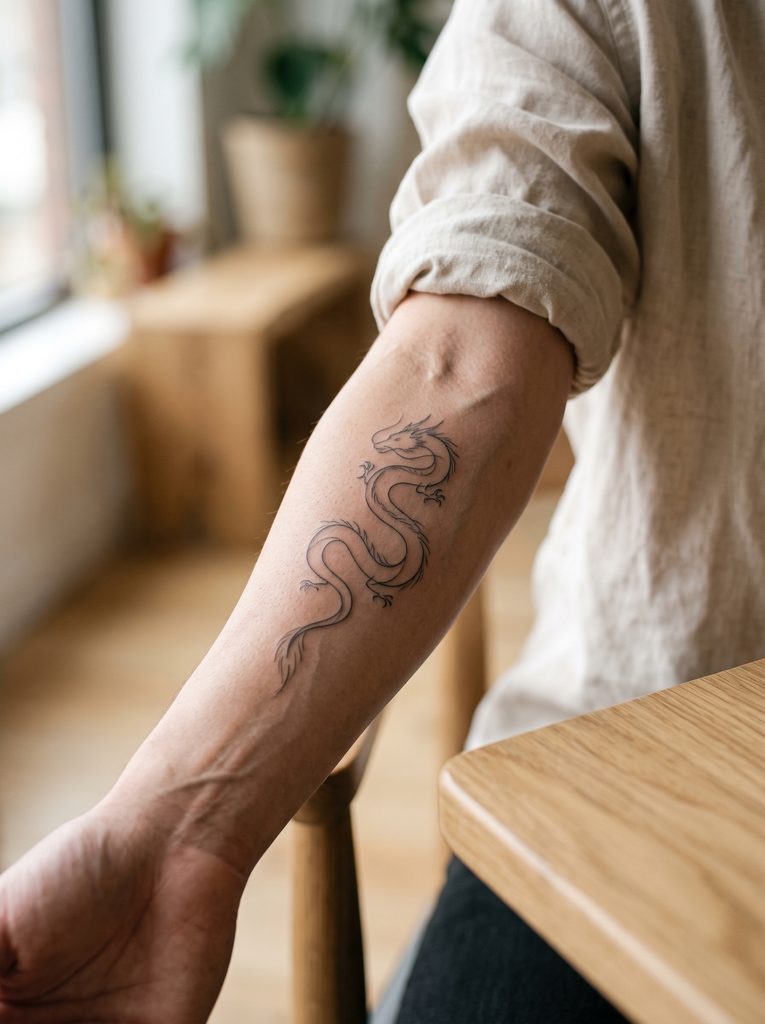
2. Micro Fine-Line Ryu
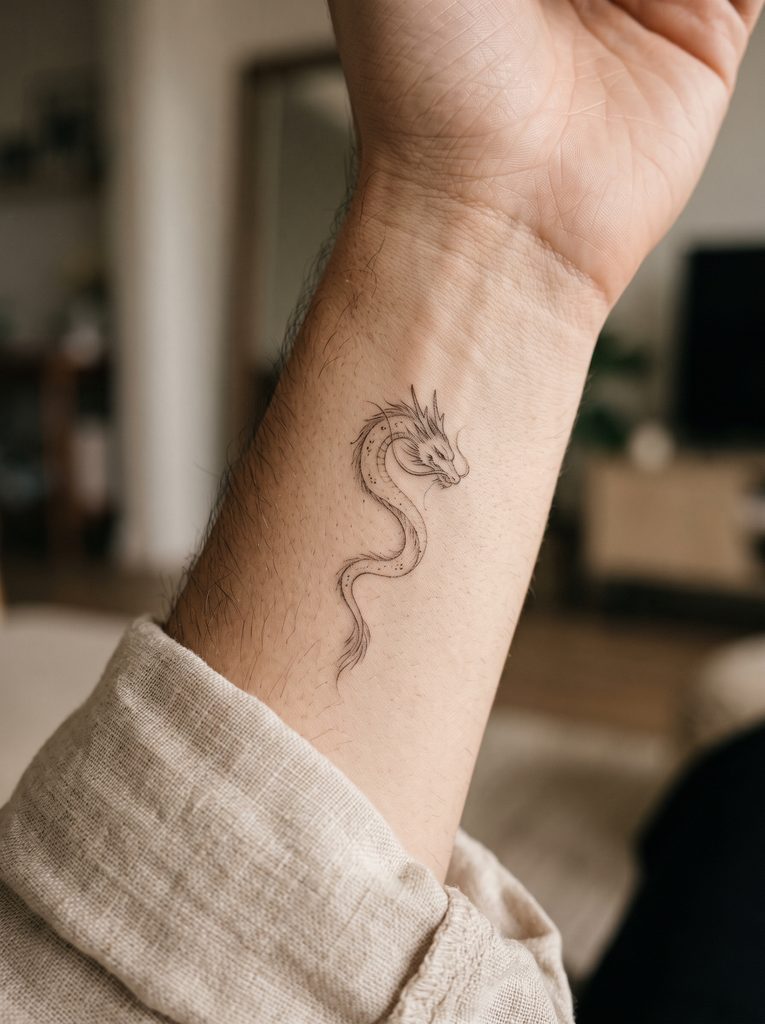
Executed with a single needle (1RL), this design focuses on a crisp, pencil-sketch aesthetic. The outline highlights facial whiskers (hige) and the sharp snout while keeping scales minimal to prevent blurring.
3. The Enso Dragon Circle
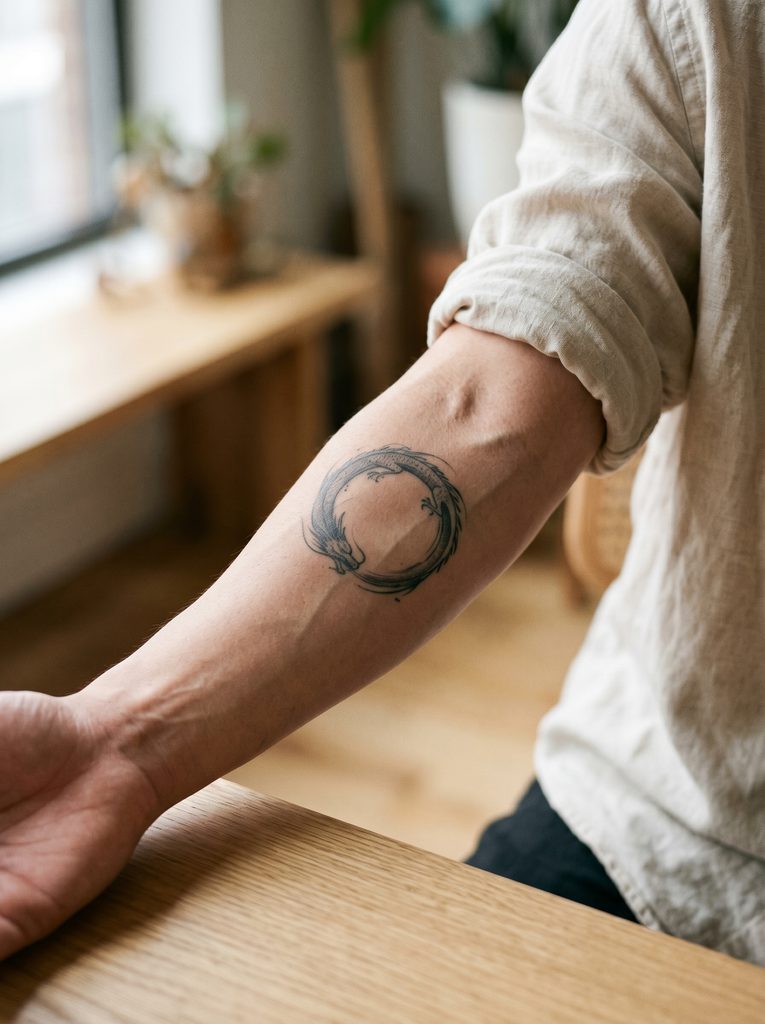
In Zen philosophy, the Enso circle represents enlightenment and the beauty of imperfection. In this concept, the dragon’s body curves into a loose circular brushstroke, biting near its tail in a subtle Eastern Ouroboros.
4. The Whispering Cloud Dragon
Instead of drawing the entire body, this design reveals only the dragon’s expressive head emerging from a soft, stylized Japanese cloud (kumo), with a flick of the tail vanishing into negative space.
5. Geometric Origami Dragon
A creative modern fusion that strips the fluid mythical beast into precise, folded origami planes. It provides a unique, architectural silhouette that fits comfortably on smaller flat areas of the skin.
2. Floral & Mythological Pairings
6. Cherry Blossom (Sakura) & Mini Dragon
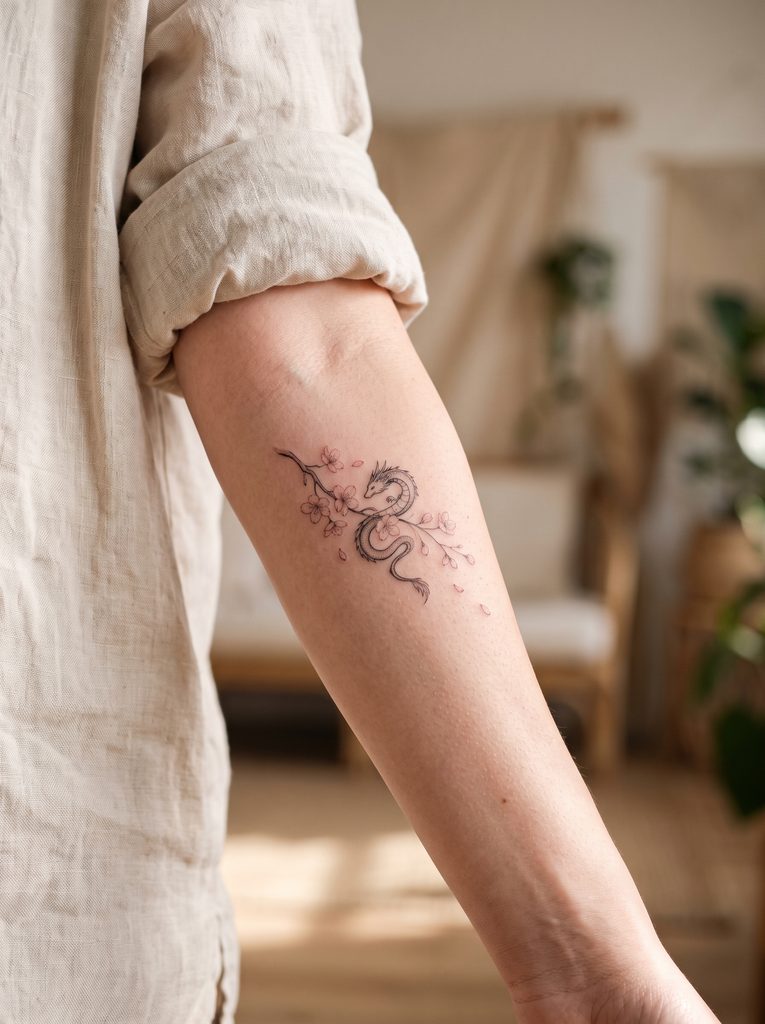
A tiny dragon coiled gently around a delicate branch of falling cherry blossoms. This pairing balances raw power with the fleeting, fragile beauty of life (mono no aware).
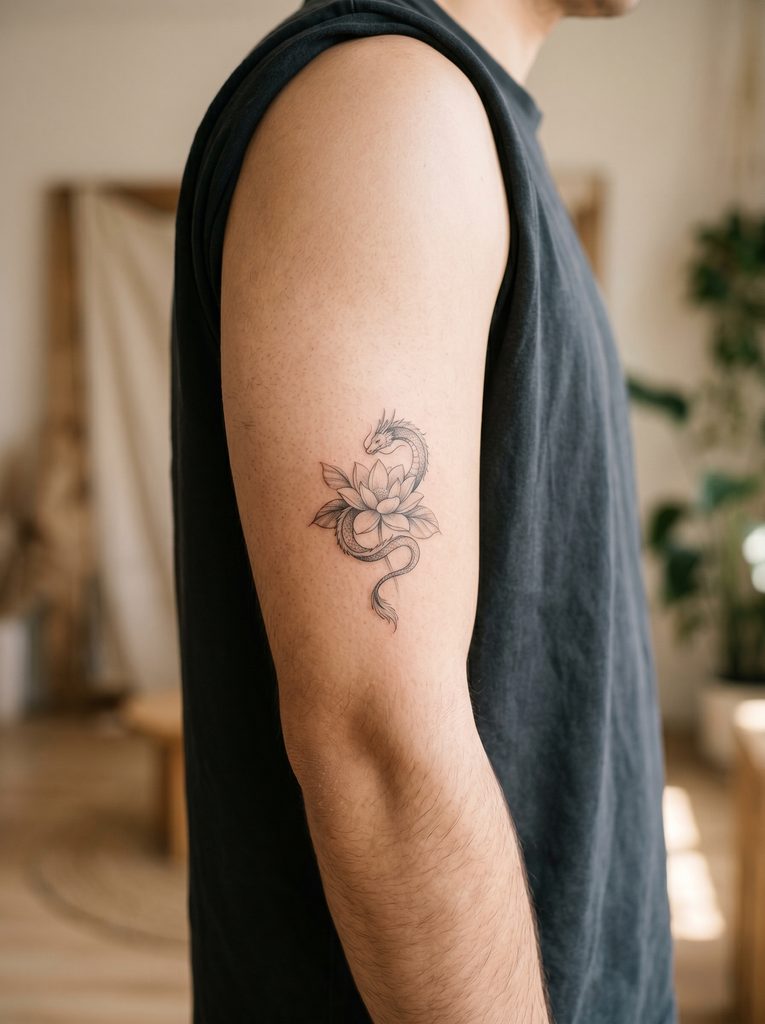
7. Mini Dragon & Lotus Blossom
Rooted in muddy riverbeds yet blooming purely above water, the lotus paired with a small water dragon symbolizes rising above personal adversity through wisdom.
8. Chrysanthemum Tail Accent
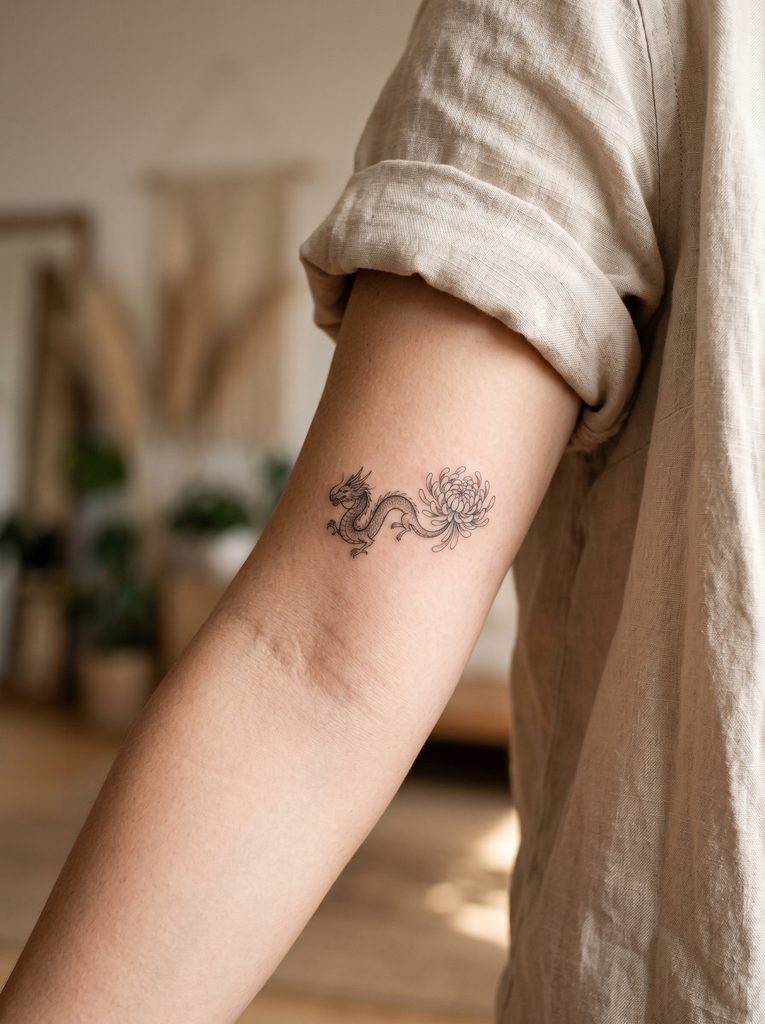
The chrysanthemum (kiku) is the historic imperial flower of Japan, symbolizing nobility and longevity. Incorporating a micro chrysanthemum petal motif into the tail adds regal nuance.
9. The Flaming Pearl (Hoju)
Japanese dragons are frequently shown clutching a sacred jewel known as the Hoju or wish-granting pearl. A minimalist version features a tiny jewel outlined in the dragon’s front claw.
10. Dragon Gate Koi Transition
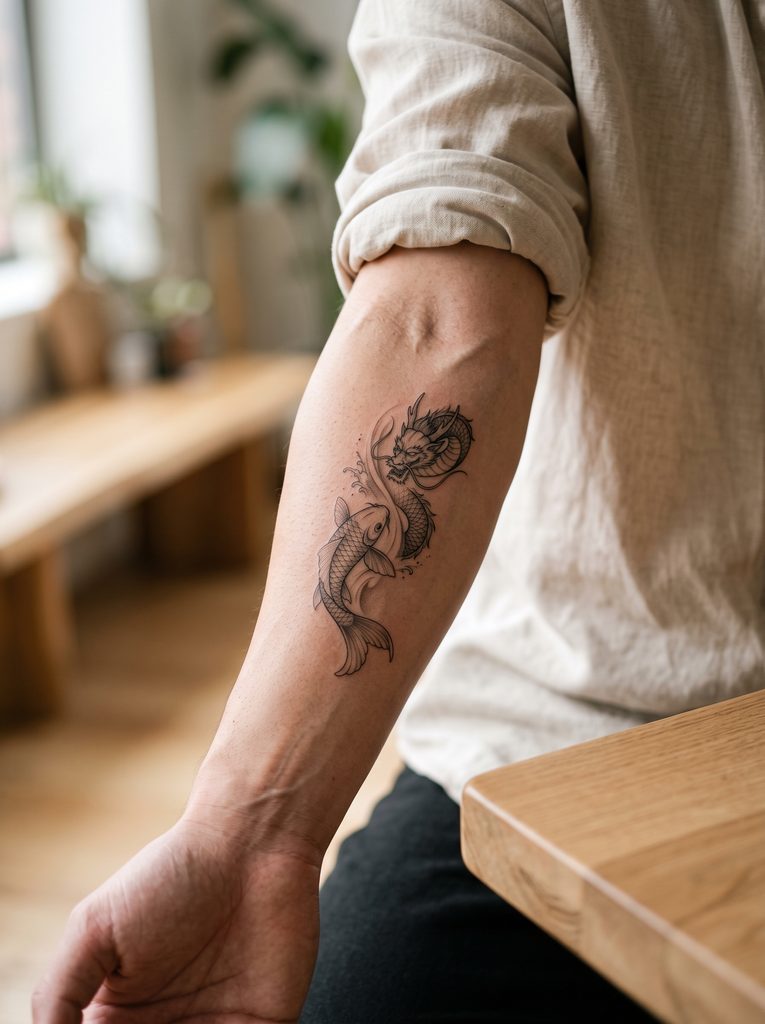
Based on the legend of the Yellow River, a koi fish that swims up the waterfall transforms into a dragon. A subtle split-design showing a fish’s tail merging into a dragon’s horned head celebrates hard-won perseverance.
3. Anatomical & Placement-Focused Subtle Styles
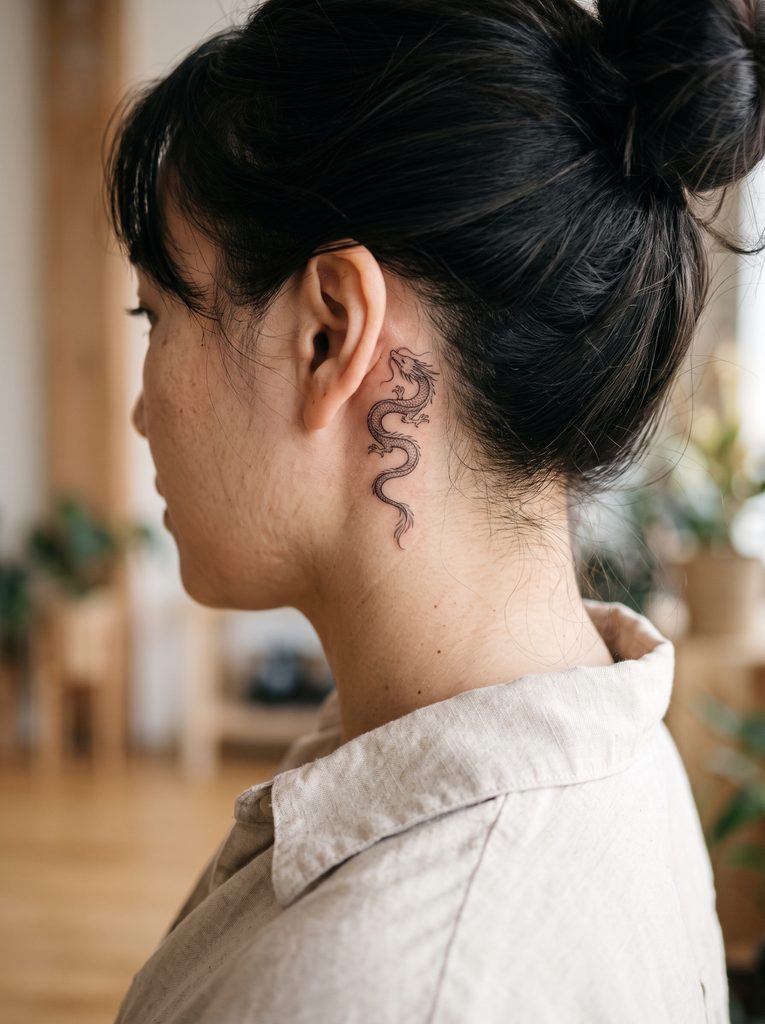
11. Behind-the-Ear S-Curve
A miniature vertical piece where the dragon’s serpentine torso contours naturally behind the ear, its head resting just beneath the hairline for effortless discretion.
12. Inner Forearm Alignment
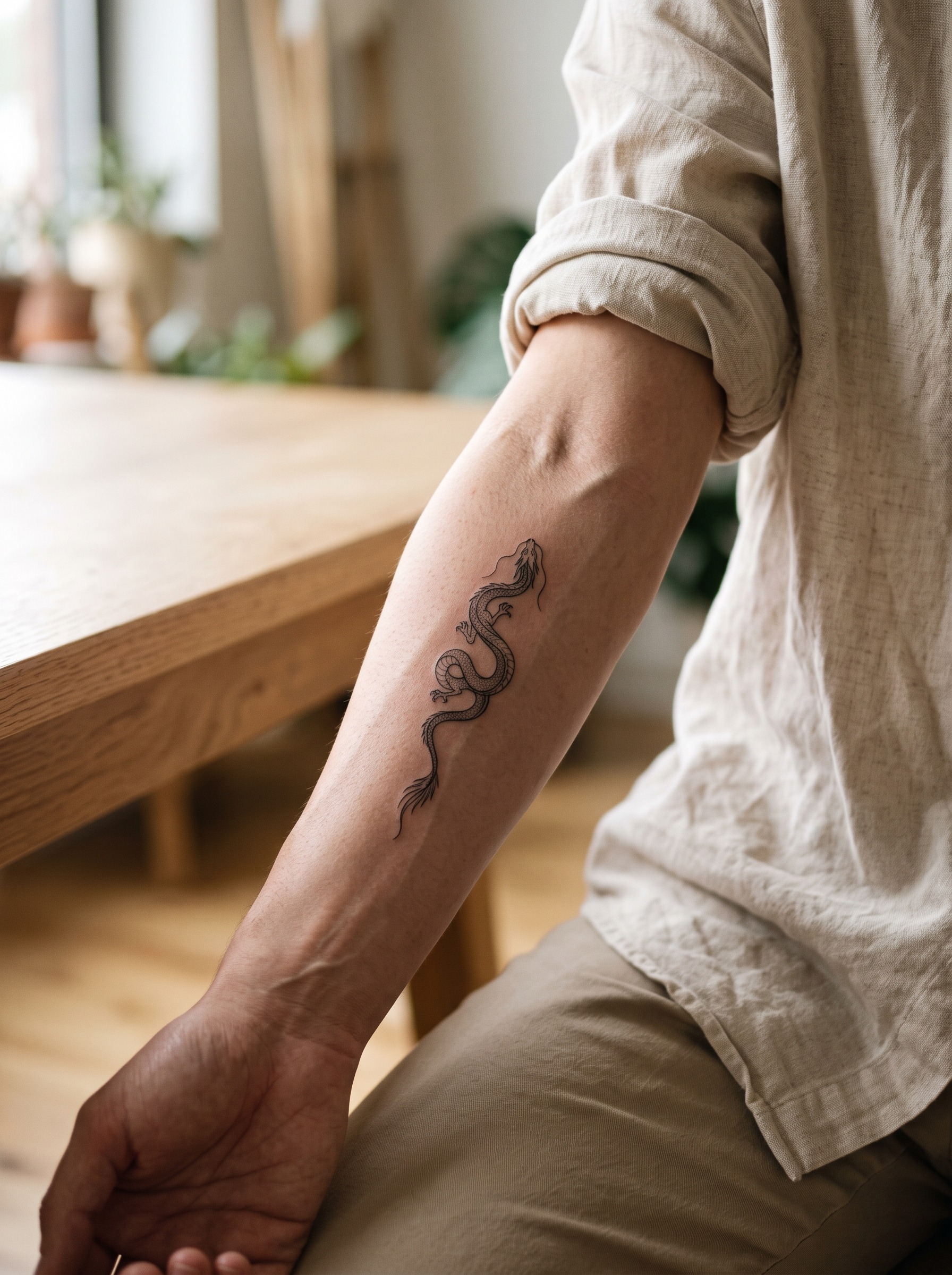
Placed along the inner arm parallel to the tendon, this long, slender design moves dynamically every time you flex or rotate your wrist.
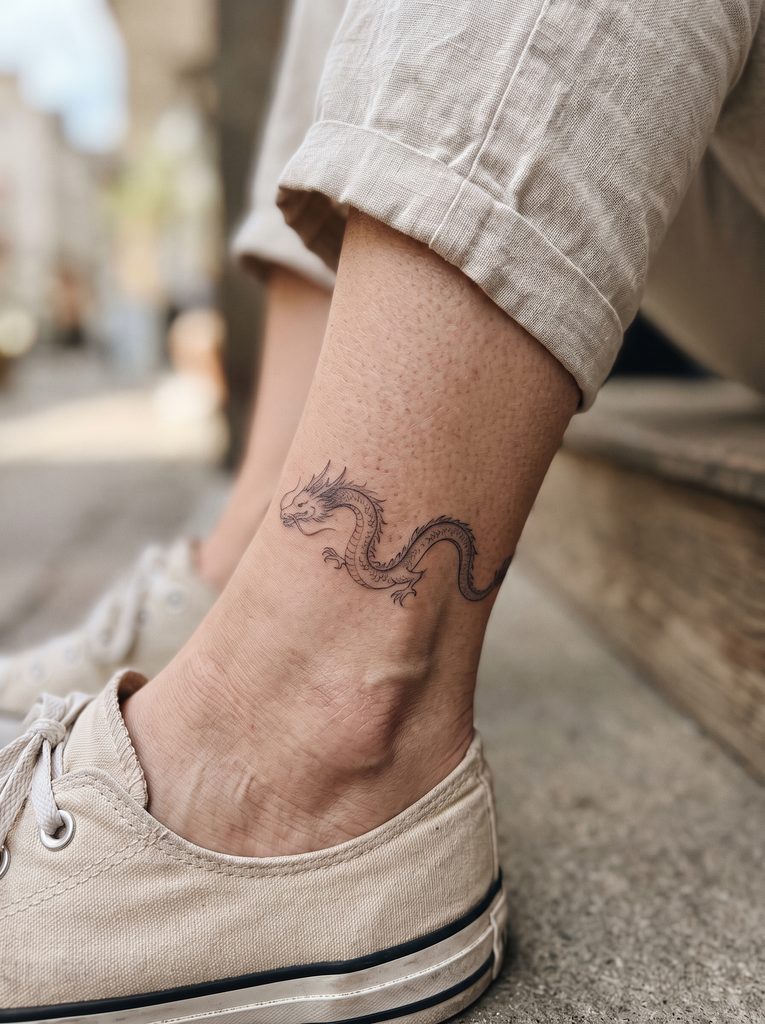
13. Subtle Ankle Wrap
A minimalist, low-saturation dragon winding like a fine chain around the ankle bone. It can be easily shown with low-cut sneakers or concealed under socks and pants.
14. Collarbone Ridge Flow
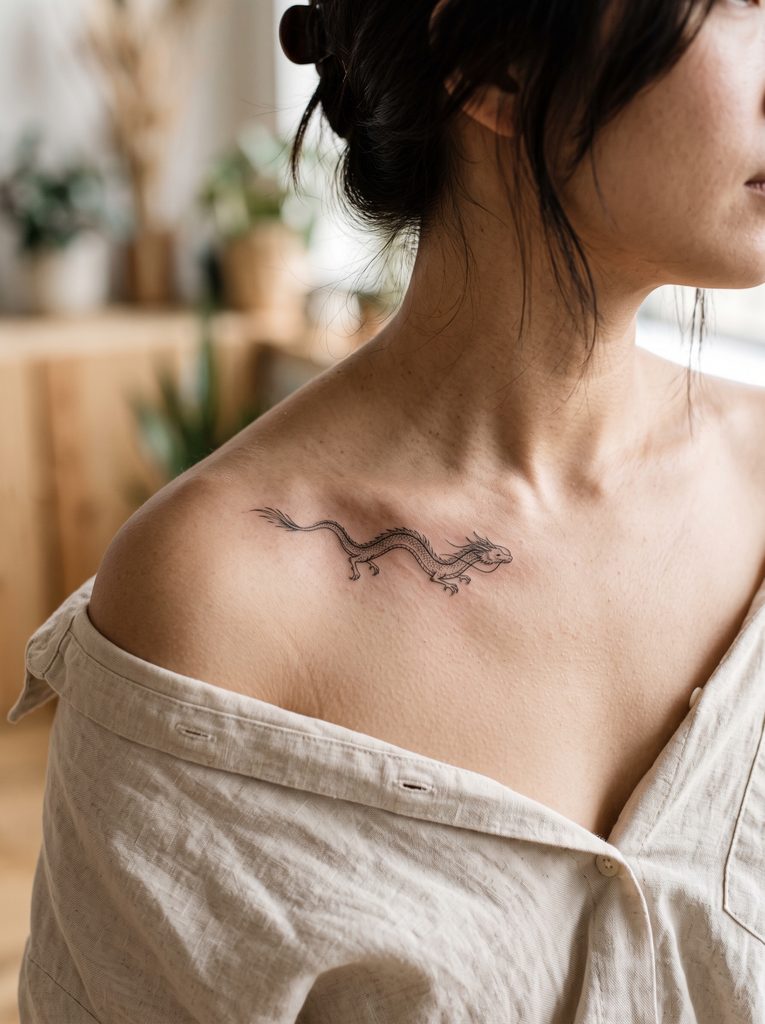
A horizontal composition running just below the clavicle bone. The long body follows the bone’s curve, finishing with the whiskers trailing toward the neck.
15. Ribcage Hidden Gem
A matchbox-sized dragon tucked beneath the bra or pectoral line. Completely hidden in formal settings, it offers a deeply personal, intimate placement.
16. Inner Bicep Micro Piece
Tucked away on the soft inner arm, this spot shields fine-line ink from excessive sun exposure while remaining invisible during professional desk work.
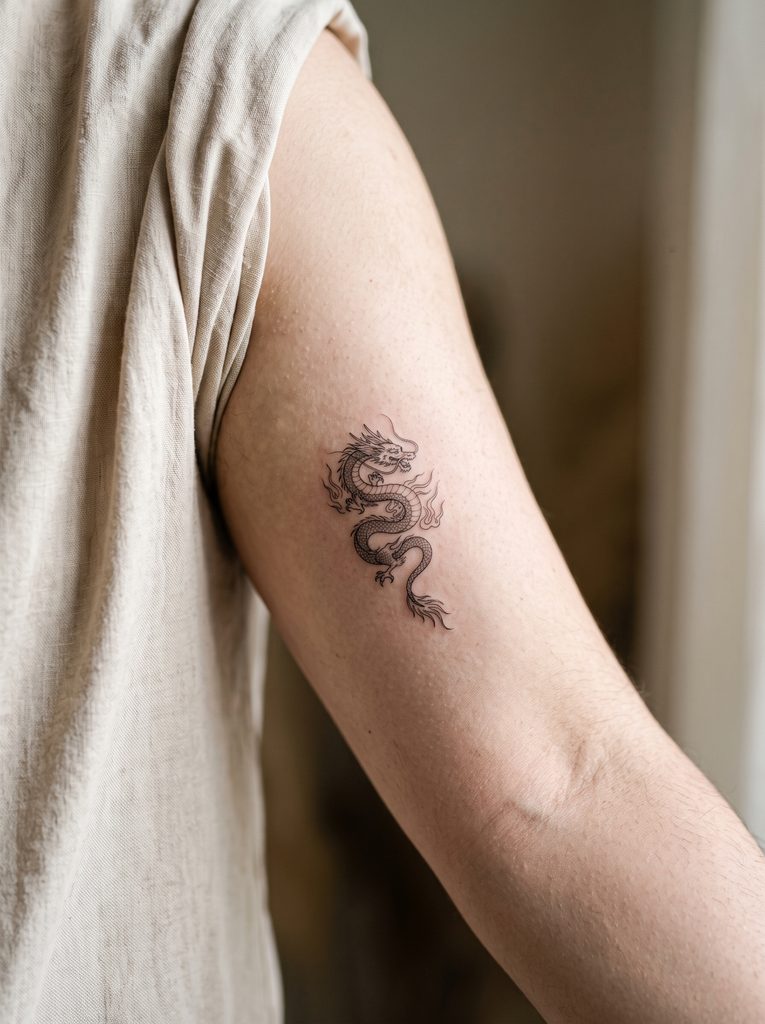
17. Wrist “C-Shape” Bracelet
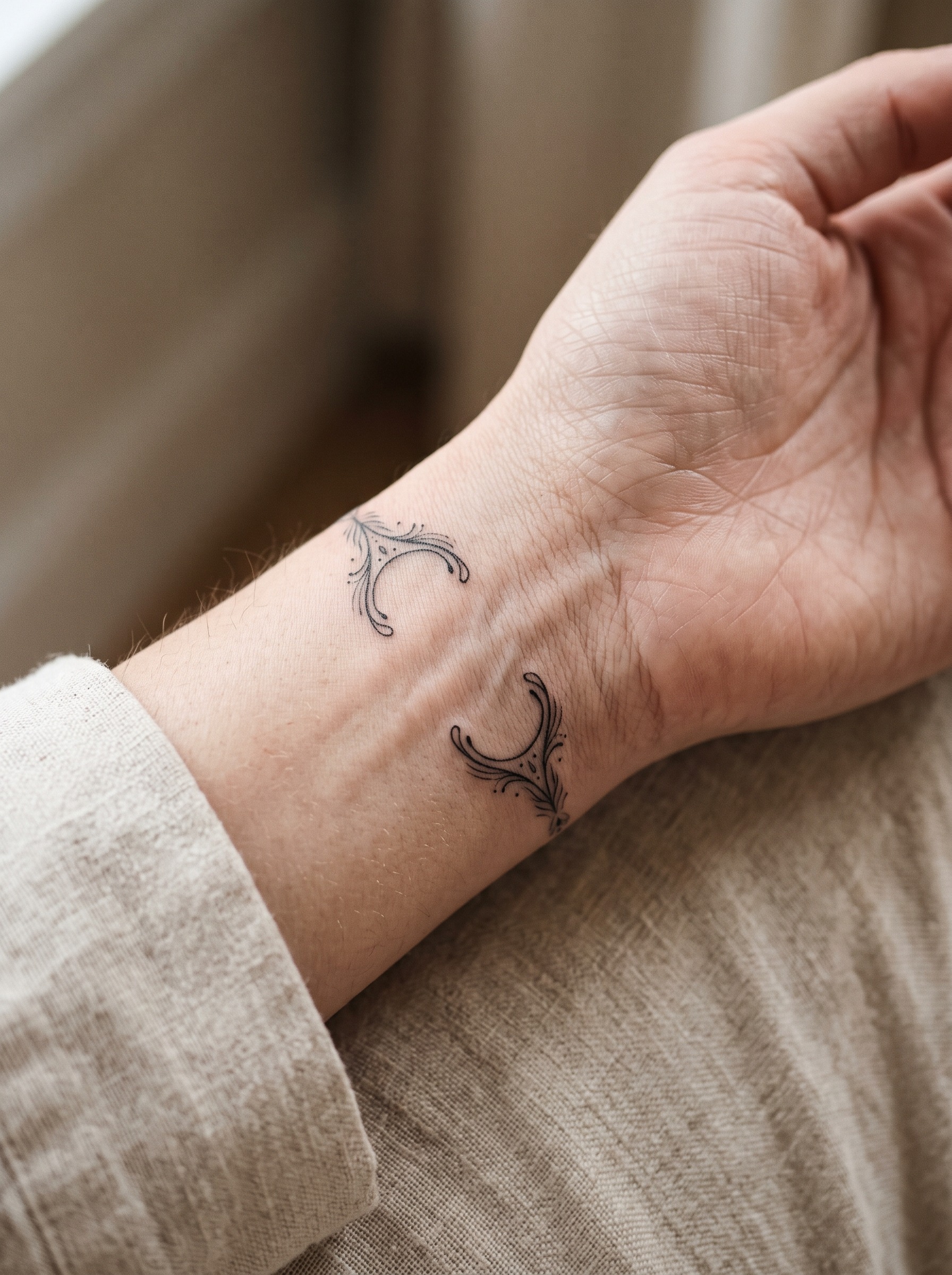
Designed to hug the outer edge of the wrist bones, mimicking the silhouette of an open-cuff bracelet with delicate whiskered details.
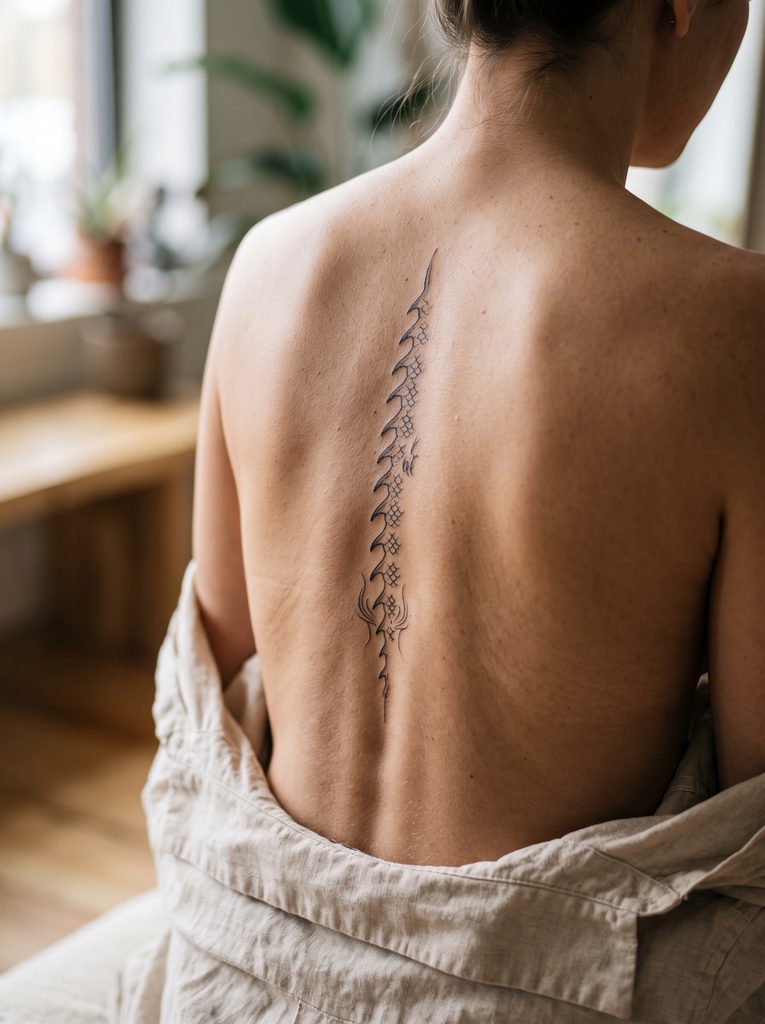
18. Spine Vertical Descent
A vertical string of minimalist scales and dorsal spines dropping straight down 3 to 4 vertebrae, creating an elongating, elegant back accent.
19. Back-of-the-Arm Tricep Plaque
Placed just above the elbow on the back of the arm, this location stays largely flat, preventing the distortion that often affects curved micro designs.
20. Hip Bone Accent
An understated diagonal design tracing the crest of the pelvic bone, balancing delicate curves with subtle, sharp claw accents.
Best Body Placements for Discretion & Longevity
| Placement Area | Concealability | Pain Level (1–5) | Sun Exposure Risk |
| Inner Forearm | Moderate (Sleeves needed) | 2/5 (Mild) | Moderate |
| Behind the Ear | High (Covered by hair) | 3.5/5 (Moderate-High) | Low |
| Ribcage | High (100% under clothes) | 4.5/5 (Sharp/Intense) | Very Low |
| Collarbone | Moderate (T-shirt dependent) | 3.5/5 (Sensitive on bone) | High (Needs SPF) |
| Outer Ankle | High (Covered by footwear) | 4/5 (Vibrating over bone) | Moderate |
Expert Advice: How to Ensure a Small Dragon Tattoo Ages Well
Micro tattoos look striking on social media freshly done, but aging ink spreads naturally under the dermis over the years. To keep a small Japanese dragon readable a decade from now, follow these technical principles:
- Avoid Overcrowding the Scales: In traditional back pieces, artists draw hundreds of overlapping scales. In a 2-to-3-inch piece, packed scales will bleed together into an indistinguishable dark smudge. Opt for negative space, skin breaks, or simple contour lines instead.
- Prioritize High Contrast: Ensure the eye, snout, and distinct three claws have enough surrounding white skin (negative space) to stay sharp as the line width settles over time.
- Choose an Artist with Fine-Line Experience: Micro-work leaves no room for needle wobble or ink blowouts. Seek an artist whose healed portfolio shows crisp, 2-to-3-year-old single-needle tattoos.
- Diligent Aftercare and Daily Sunscreen: Ultraviolet light breaks down delicate ink particles faster than anything else. Apply SPF 50 daily over exposed fine-line pieces once fully healed.
Frequently Asked Questions
Do small Japanese dragon tattoos hurt more than large ones?
Pain is determined by body placement and needle pressure rather than the tattoo’s overall dimensions. A small piece over the ribs or collarbone will feel sharper than a larger piece on the outer bicep or thigh. However, because small pieces typically wrap up within 30 to 60 minutes, the discomfort ends much faster.
How much does a small Japanese dragon tattoo cost in the US?
Most professional tattoo studios in the United States charge a shop minimum ranging from $80 to $150. For intricate fine-line or micro-realism work requiring custom needle setups and detailed drafting, expect to pay between $150 and $350 depending on the artist’s hourly rate and experience.
Can a small tattoo still be considered authentic Irezumi?
While purists consider Irezumi to be an interconnected bodysuit tradition executed by hand (tebori), a smaller piece is culturally authentic as long as the motifs and anatomy are respected—such as retaining water dragon characteristics, whisker shapes, and traditional three-toed claws.
About The Author

3 thoughts on “20 Small Japanese Dragon Tattoo Ideas for a Subtle Look”