
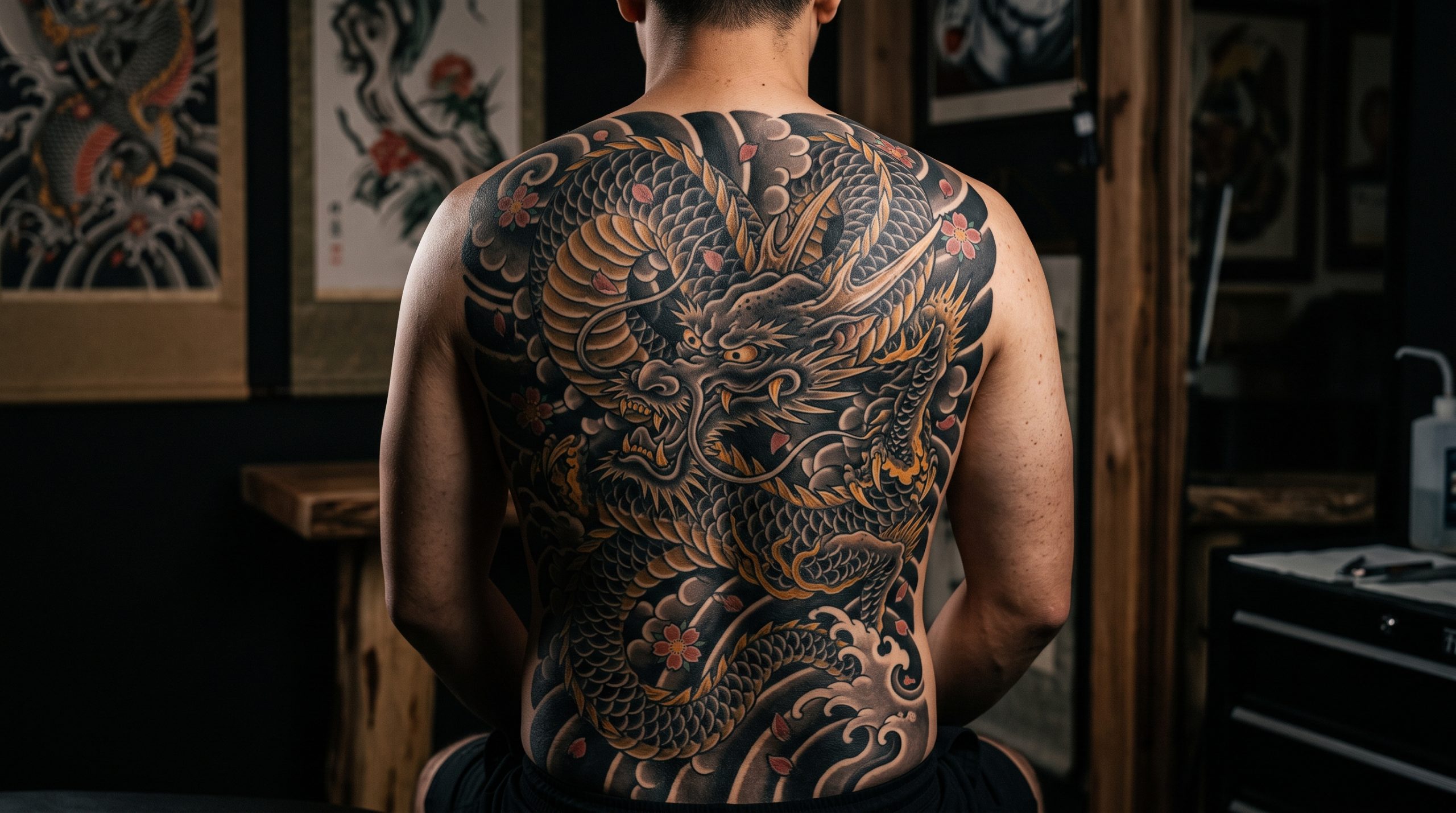
If you are planning your next major piece of body art, understanding the true Japanese dragon tattoo meaning is essential before sitting in the artist’s chair. In the world of Irezumi (traditional Japanese tattooing), few motifs command as much respect, awe, and historical weight as the legendary Ryu (dragon).
Unlike Western depictions of dragons, which are often portrayed as destructive beasts hoarding gold, the Japanese dragon is a benevolent, majestic water deity. It is a protector of mankind, a bringer of rain, and a symbol of profound universal balance.
Whether you are looking for a full backpiece or a flowing arm sleeve, here is the complete guide to the cultural significance, color theory, and deep spiritual meaning of the Japanese dragon tattoo for both men and women.
The Core Japanese Dragon Tattoo Meaning: What Does the Ryu Symbolize?
To wear a traditional Japanese dragon is to wear a symbol of ultimate power tempered by infinite wisdom. In Japanese folklore and Shinto/Buddhist traditions, dragons are associated with bodies of water, rainfall, and the heavens.
The core meanings of the Ryu include:
- Wisdom and Experience: Dragons are ancient creatures, representing the accumulation of knowledge over centuries.
- Protection: They are fiercely protective deities, often tattooed as a spiritual talisman to ward off evil spirits and bad luck.
- Strength and Power: The dragon represents raw, unstoppable natural force, much like a tsunami or a thunderstorm.
- Balance (Yin and Yang): In Eastern philosophy, the dragon is often paired with the phoenix or the tiger to represent the perfect balance of opposing forces in the universe.
The Legend of the Dragon Gate
One of the most famous meanings behind the Japanese dragon tattoo originates from the legend of the Koi fish. According to myth, if a Koi fish exhibits enough perseverance to swim up a massive, raging waterfall known as the “Dragon Gate,” the gods reward its determination by transforming it into a magnificent dragon. Therefore, a dragon tattoo often represents the ultimate reward for overcoming immense life struggles.
Japanese vs. Western Dragons: A Crucial Distinction
When communicating with your tattoo artist, it is vital to know the visual and thematic differences between Eastern and Western dragons.
- Japanese Dragons (Ryu): Usually wingless, heavily scaled, and serpentine (snake-like) in shape. They are often surrounded by wind bars, clouds, and traditional finger waves, representing their domain over water and the sky. They typically have three claws on each foot.
- Western Dragons: Reptilian, bulky, and equipped with large bat-like wings. They breathe fire and are historically viewed as symbols of chaos, destruction, and greed.
Japanese Dragon Tattoo Meaning for Men and Women
Traditional Irezumi was historically male-dominated, but modern tattoo culture embraces the dragon as a powerful symbol for anyone. The energy the dragon represents adapts beautifully to the wearer’s personal journey.
Meaning for Men
For men, the Japanese dragon tattoo is traditionally a declaration of protector energy. It symbolizes a man who has cultivated the strength to defend his family and the wisdom to know when to use that power. It represents honor, unwavering discipline, and the quiet, confident strength of a warrior who does not need to boast.
Meaning for Women
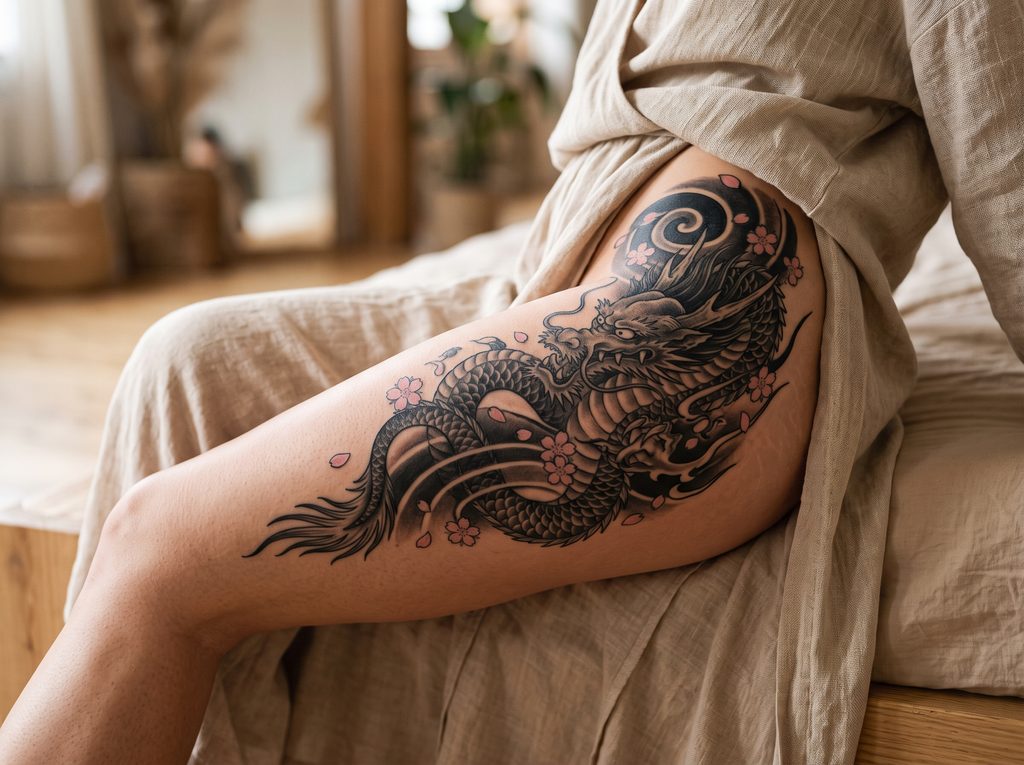
For women, the Japanese dragon takes on a fiercely empowering meaning. It represents a woman who is a master of her own destiny—a force of nature who has overcome societal obstacles or personal hardships. It is a symbol of fierce maternal protection, profound intuition, and untamed independence. A dragon tattoo on a woman is a beautiful declaration that she is both the calm water and the raging storm.
The Significance of Dragon Colors in Irezumi
In traditional Japanese tattooing, color is never chosen just because it “looks cool.” Every pigment carries a highly specific meaning.
Black (Kuro)
A black dragon represents wisdom, experience, and the deep, mysterious waters. It is often chosen by older individuals or those who have gone through dark, challenging times and emerged wiser and stronger.
Red (Aka)
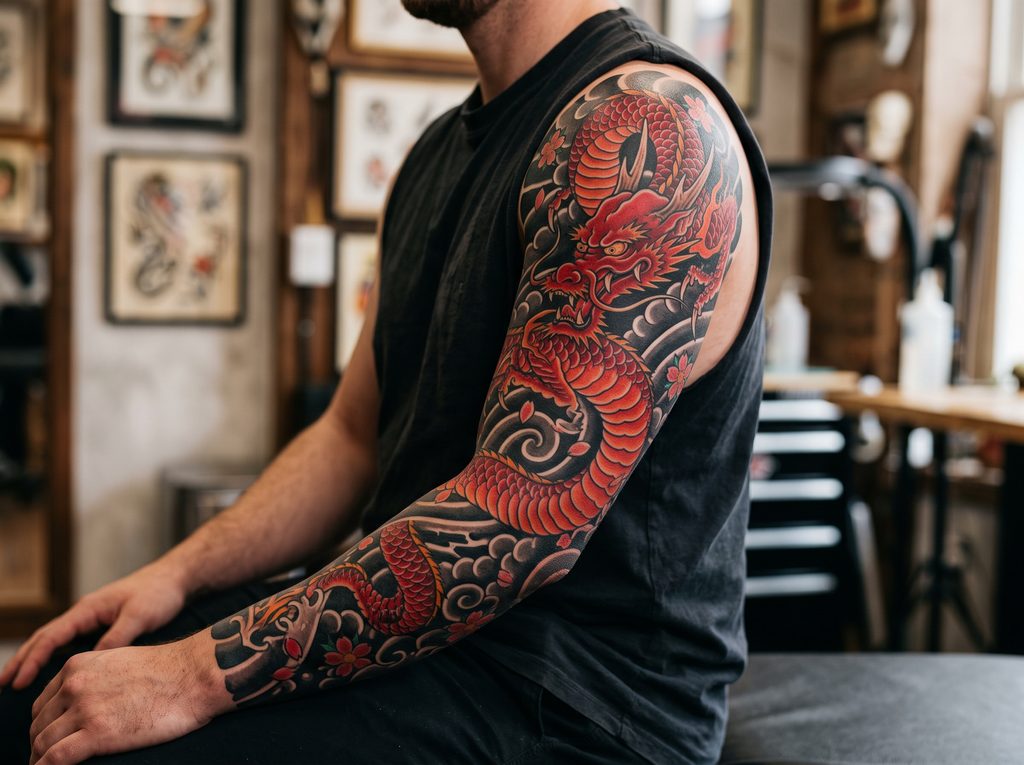
Red is the color of passion, action, and intensity. A red Japanese dragon tattoo meaning is tied to fierce protection, vitality, and courage. It is an aggressive, highly energetic tattoo choice for someone who tackles life head-on.
Blue and Green (Ao/Midori)
Because the Japanese word ao historically encompassed both blue and green, these colors are closely linked. A blue or green dragon represents nature, the ocean, tranquility, and healing. It is the most direct representation of the dragon as a benevolent water deity.
Gold or Yellow (Kiiro)
Gold represents wealth, prosperity, and a multitude of virtues. A gold dragon is a highly auspicious symbol, often tattooed to attract good fortune, success in business, and spiritual enlightenment.
Best Placements for a Japanese Dragon Tattoo
A traditional Japanese dragon is not meant to be a tiny, minimalist tattoo. The Ryu requires space so the artist can capture its sprawling, serpentine body, individual scales, and intricate facial details.
- The Full Back (Senaka): The ultimate canvas. A backpiece allows the dragon to reign supreme, often wrapping from the shoulders down to the thighs.
- The Arm Sleeve (Nagasode): The serpentine body of the dragon wraps perfectly around the natural cylinder of the arm, surrounded by crashing waves and cherry blossoms (sakura).
- The Thigh or Ribcage: For women and men wanting a massive, flowing piece that can be easily hidden under professional clothing, the ribcage and thigh offer expansive, beautiful canvases.
Frequently Asked Questions
Is it cultural appropriation to get a Japanese dragon tattoo? No, as long as it is done with deep respect for the culture and the art form. Most Japanese tattoo masters (Horishi) are honored when foreigners appreciate their traditional art, provided you do not mix it with disrespectful imagery or claim it as your own culture’s invention.
Should a Japanese dragon face up or down? An ascending dragon (facing up) represents someone actively striving toward a goal or climbing the ranks of life. A descending dragon (facing down) represents someone who has already achieved their goals and is now passing down their wisdom and protection to others.
What goes well with a Japanese dragon tattoo? To complete an Irezumi background, dragons are typically paired with water (waves), wind (clouds), and specific flora like cherry blossoms (representing the fleeting nature of life) or peonies (representing wealth and elegance).
A Japanese dragon tattoo is a lifelong commitment to an ancient artistic tradition. By understanding the deep cultural roots of the Ryu, you can work with a specialized artist to create a breathtaking piece of art that perfectly balances strength, wisdom, and the specific energy of your own life’s journey.
About The Author

2 thoughts on “Japanese Dragon Tattoo Meaning for Men and Women: Strength, Wisdom, and Balance”