
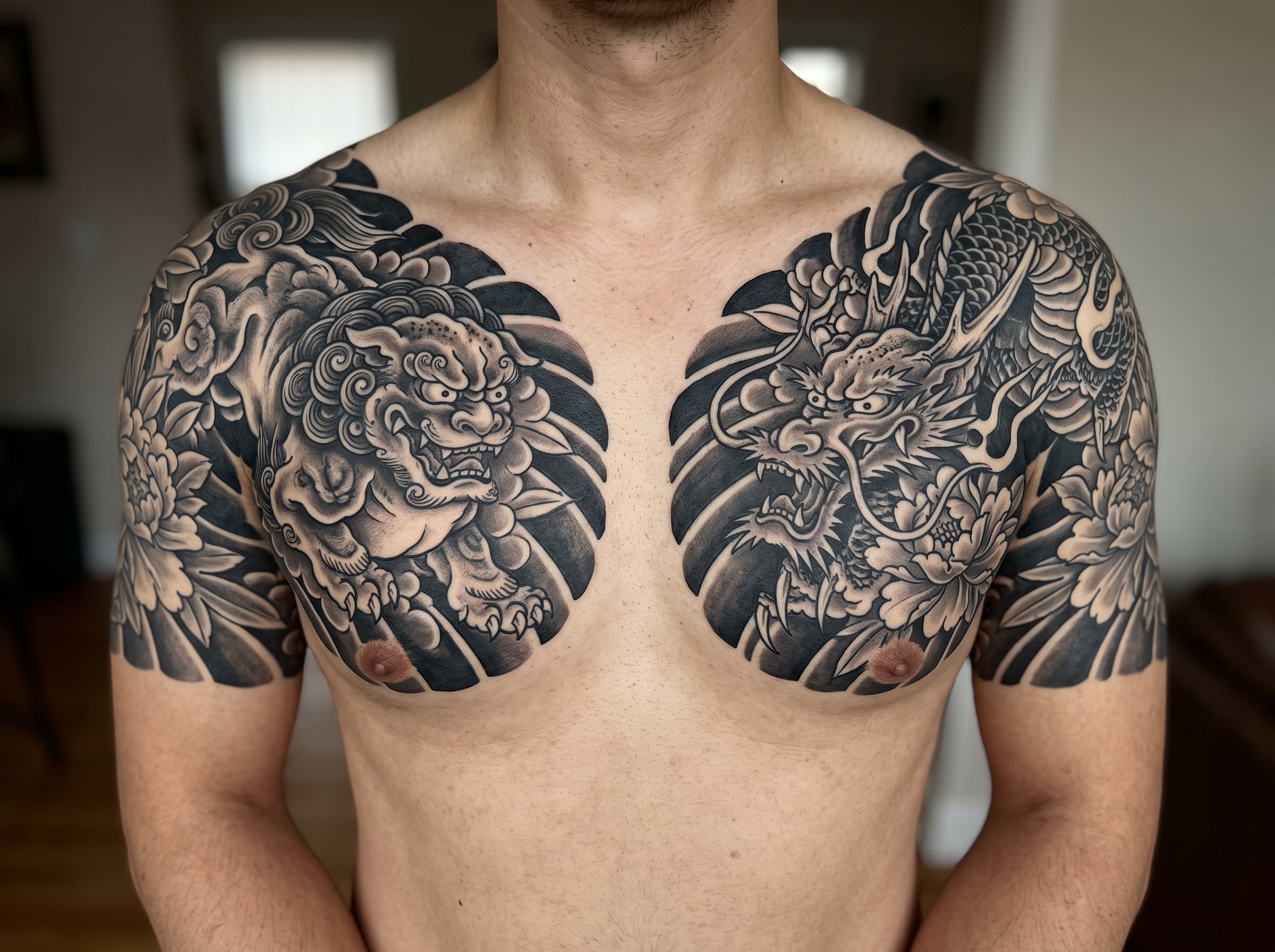
When planning an authentic Japanese tattoo (Irezumi), few placements deliver as much commanding presence as a full-front panel, and even fewer pairings can rival the mythical weight of foo dog and dragon chest tattoos.
Covering the broad contours of the pectoral muscles down into the ribs or extending into sleeves, this pairing unites two of the most celebrated guardian beasts in Asian lore. The Foo Dog (Komainu or Karajishi) commands terrestrial strength and protective boundaries, while the celestial Dragon (Ryu) rules rainfall, cosmic wisdom, and fluid balance.
Whether you are designing a dual chest plate (Hikae) or preparing yourself mentally for the reality of tattooing over bone, here is the complete guide to the profound symbolism, striking design configurations, and honest pain expectations behind this classic motif.
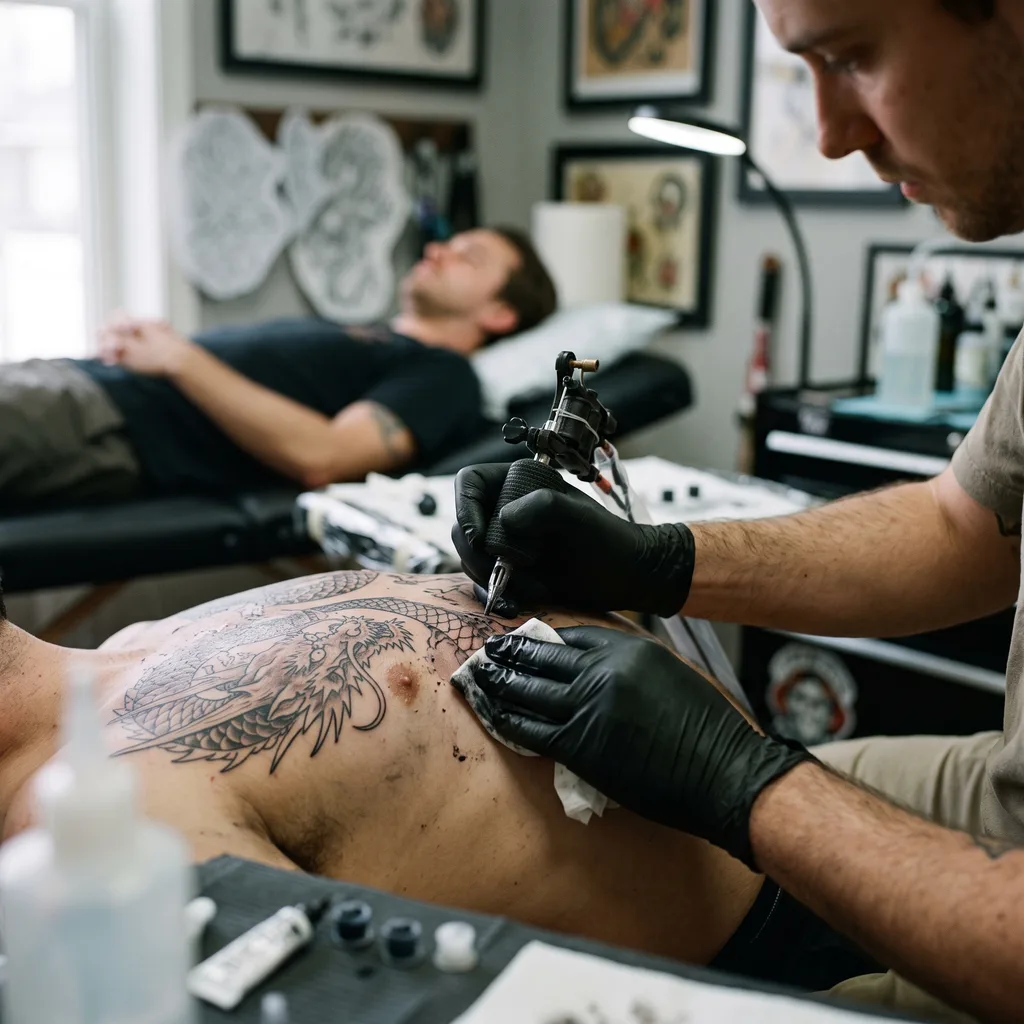
The Symbolism: Terrestrial Guardian Meets Celestial Master
In traditional Japanese iconography, animals and mythical beasts rarely appear at random. They exist in an intricate philosophical ecosystem where every beast balances its counterpart.
1. The Foo Dog (Karajishi / Imperial Guardian Lion)
- Earthly Protection: Foo Dogs are stone and spiritual sentinels traditionally stationed outside Shinto shrines, Buddhist temples, and imperial palaces to ward off malevolent forces.
- Courage and Nobility: Known as the “King of Beasts,” the Foo Dog embodies physical tenacity, resolute loyalty, and heroic defense.
- The “A-Un” Dual Breath: Foo dogs often come in matched pairs—one with an open mouth voicing the cosmic “Ah” (the beginning of life) and one with a closed mouth whispering “Un” (the closure and internal focus).
2. The Dragon (Ryu / The Rain and River Deity)
- Spiritual Wisdom: Dragons embody supreme spiritual mastery, navigating effortlessly between the depths of rivers and the boundless heavens.
- Prosperity and Rebirth: Rather than destructive monsters, Japanese dragons are auspicious harbingers of rain, renewal, and enduring strength.
3. The Power of Combining Both on the Chest
Wearing the Foo Dog on one pectoral panel and the Dragon on the other creates an unbreakable shield across your core. The Foo Dog protects the terrestrial, physical body, while the Dragon guards the spiritual path and mind. Together, they create total equilibrium between physical dominance and internal wisdom.
5 Epic Foo Dog and Dragon Chest Tattoos & Design Concepts
1. The Split-Chest Hikae Panel
The most prestigious traditional Japanese format. The Hikae covers the chest plate and spills cleanly over the shoulder down onto a three-quarter or full sleeve:
- Left Pectoral: A ferocious, snarling Foo Dog crouched atop a stone outcropping, framed by swirling wind bars and bold peony blossoms (Botan).
- Right Pectoral: A serpentine dragon descending from rain-heavy clouds, its three-toed claws grasping toward the collarbone.
- The Center Gap: True to Irezumi etiquette, a clean strip of bare skin runs straight down the sternum (Munewari), allowing the wearer to unbutton a shirt without revealing the ink.
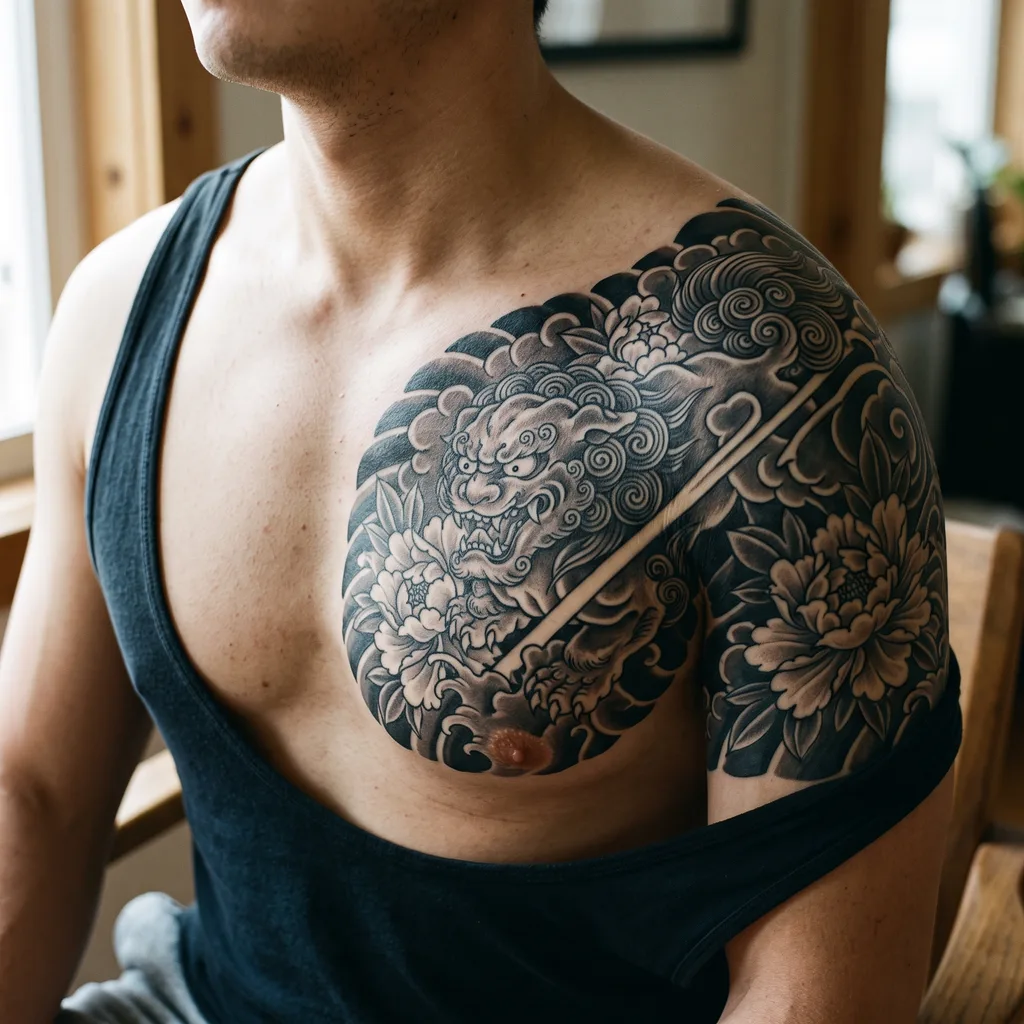
2. Confrontational Dual-Pectoral Stare
Instead of facing outward, both creatures face inward toward the sternum, locked in a dynamic face-off:
- The Foo Dog’s muscular jaw is opened wide, exposing sharp fangs, countered directly by the dragon’s coiled whiskers and fiery brows.
- Crashing water waves and jagged rocks break along the lower ribs, giving the impression of an epic mythological battle frozen in ink.
3. High-Contrast Black & Grey Realism
For collectors looking to depart from bright vermilions and greens:
- Heavy black saturation anchors the background wind bars and smoke plumes, while delicate single-needle grey wash brings out the intricate stone curls of the Foo Dog’s mane.
- The dragon’s glistening scales are rendered with crisp negative-space highlights that pop cleanly across chest musculature.
4. Floral Accompaniments: Peonies and Lotus
In traditional Japanese tattooing, certain creatures demand specific floral accompaniments:
- Foo Dogs are traditionally paired with the Peony (Botan), known as the “King of Flowers,” to balance the beast’s aggressive power with noble beauty.
- Dragons pair harmoniously with lotus flowers or cherry blossom petals, reflecting the fluid, aquatic nature of their legends.
5. Neo-Traditional Dynamic Armor Plate
A modern Western spin that incorporates heavier outline weights, exaggerated dynamic anatomy, and saturated, moody color palettes (deep emerald greens, dark slate greys, and antique golds). The artwork is sculpted specifically to accentuate chest definition and clavicle ridges.
Realistic Pain Levels: What to Expect on the Chest
The chest is notoriously recognized as one of the most physically demanding areas on the human body to endure under the needle. Understanding the sensation before entering the studio helps with mental preparation.
| Chest Area | Pain Level (1 to 10) | Sensation Profile |
| Pectoral Muscle Belly | 5 / 10 (Moderate) | Dull vibrating pressure; relatively tolerable due to thicker muscle tissue. |
| Sternum (Center Breastbone) | 9 / 10 (Severe) | Sharp, intense vibration felt deep in the rib cage; thin skin over bone. |
| Collarbone (Clavicle) | 8.5 / 10 (Very High) | Jarring vibration that reverberates up into the neck and jawline. |
| Under-Pectoral Rib Crease | 8 / 10 (High) | Piercing, stinging burning sensation where skin thins near the ribs. |
| Nipple Vicinity | 9 / 10 (Extreme) | Exceptionally sensitive nerve endings; reputable artists leave breathing room. |
Proven Tips to Manage Chest Session Fatigue:
- Paced Breathing: When the needle works across the sternum or collarbone, breathing erratically makes the chest spasm. Focus on slow, rhythmic belly breaths.
- Break Sessions Apart: Do not attempt to outline and fully shade a double-chest piece in one marathon day. Split the project into a lining session followed by separate shading appointments 3 to 4 weeks apart.
- Hydration and Complex Carbs: Eat a substantial, carb-dense meal 90 minutes prior to ink time to regulate your blood sugar against adrenaline spikes.
Frequently Asked Questions
Which side of the chest should the dragon and foo dog go on?
In classic Irezumi, there is no strict religious rule dictating left or right. However, many artists place the Foo Dog on the right chest (representing defensive physical action) and the Dragon on the left chest (guarding the heart and emotional wisdom).
How long does a full foo dog and dragon chest tattoo take to complete?
A full dual-pectoral piece without sleeves typically requires 15 to 25 hours of needle time, depending on the level of background wave bars, color packing, and scale detail.
How bad is the healing process for a chest tattoo?
Chest pieces can be uncomfortable for the first 3 to 5 days because regular actions—sleeping on your stomach, crossing your arms, or wearing tight shirts—put direct pressure on the raw dermis. Opt for loose, clean cotton button-down shirts and sleep flat on your back during initial recovery.
About The Author

7 thoughts on “Foo Dog and Dragon Chest Tattoos: Designs, Symbolism, and Pain Levels”