
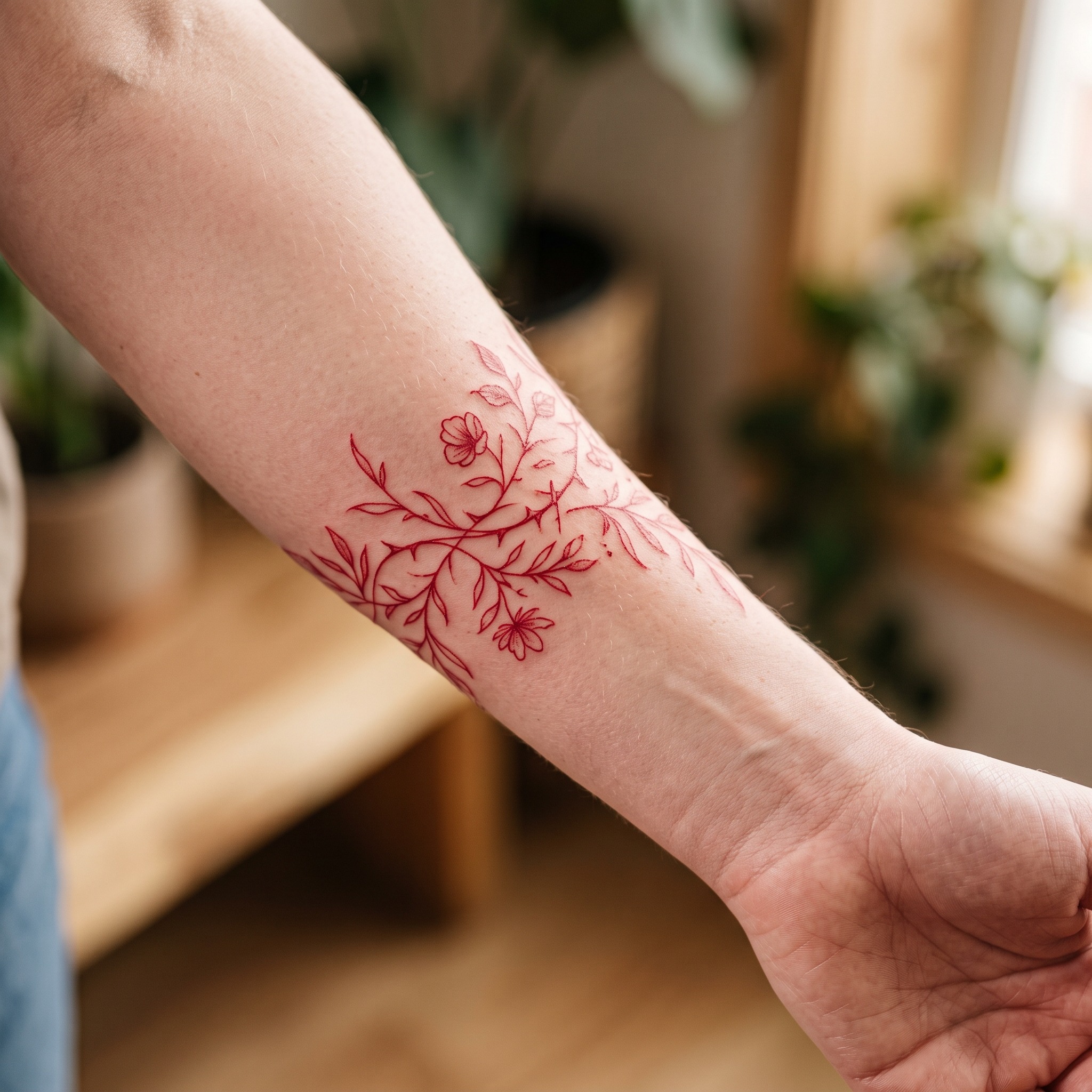
Getting red ink tattoos has exploded in popularity, offering a strikingly bold, vivid aesthetic that distinguishes itself from standard monochrome blackwork. From fiery traditional Japanese koi accents to minimalist all-red linework, this intense pigment creates high-impact visual artistry on virtually every skin tone.
However, choosing red ink tattoos demands deeper consideration than picking standard black carbon pigment. Historically, red pigment has been notoriously recognized among dermatologists as the primary color associated with cutaneous hypersensitivity, sun vulnerability, and erratic healing.
Before booking your appointment, here is everything you need to know about pigment chemistry, allergic risks, long-term longevity, and clinical aftercare.
1. What Makes Red Ink Different From Black Ink?
Black tattoo pigment is primarily composed of carbon black particles, which are biologically inert and settle into dermal macrophages with minimal immunological fuss.
In contrast, red ink tattoos rely on complex organic compounds and synthetic dyes. Decades ago, vintage red formulations contained heavy metals such as mercuric sulfide (cinnabar), iron oxide, and cadmium, which caused frequent inflammatory episodes. Modern pigments predominantly utilize organic naphthol and azo-based dyes. While significantly safer and compliant with European REACH standards, red remains chemically complex and more biologically reactive than carbon black.
If you are curious about broader studio safety protocols, read our breakdown on are tattoos safe to understand modern chemical testing.
2. Allergic Reactions: The Biggest Risk With Red Ink Tattoos
When dermatologists review adverse reactions to body art, red ink accounts for the vast majority of documented complaints. Understanding the warning signs is essential before proceeding:
Types of Allergic Responses
- Allergic Contact Dermatitis: Intense localized itching, redness, swelling, and small fluid-filled papules localized strictly within the red areas.
- Delayed Hypersensitivity: Unlike a food allergy that manifests immediately, a red pigment allergy can flare up weeks, months, or even years after the tattoo has fully healed.
- Photoallergic Reactions: Exposure to direct UV sunlight activates compounds within the red pigment, triggering sudden raised welts and severe itching.
3. How to Know If You Are at Risk
While severe allergic reactions remain relatively rare across the general population, certain predispositions elevate your risk:
- Pre-existing Nickel or Metal Allergies: If costume jewelry or belt buckles make your skin break out in an itchy rash, your skin has a heightened propensity for reactive dermatitis.
- History of Severe Eczema or Psoriasis: Chronic inflammatory skin conditions can experience the “Koebner phenomenon,” where needle trauma and foreign pigment cause plaque flares.
- Request a Patch Test: If you have sensitive skin, ask your tattoo artist to perform a discreet single-dot patch test behind your ear or along your ankle, waiting at least 4 to 6 weeks to evaluate immune compatibility.
4. How Red Ink Tattoos Age and Fade
Longevity is another vital factor to weigh. Red pigment possesses a shorter wavelength absorption profile, meaning it absorbs UV radiation aggressively:
| Stage | What to Expect With Red Ink Tattoos |
| Fresh (Days 1–14) | Intense, glossy crimson hue with prominent contrast |
| Healed (Month 2) | Settles into the mid-dermis, looking slightly softer |
| Long-Term (3–5+ Years) | Prone to fading into a muted terracotta or pinkish hue without sun protection |
To keep vibrant designs looking sharp—such as intricate elements in black and grey dragon and koi fish tattoos—applying broad-spectrum SPF 50 sunscreen daily is non-negotiable.
5. Healing Stages and Special Aftercare
Healing red ink tattoos requires gentleness because skin under red pigment often stays inflamed slightly longer than areas treated with light black shading.
- Avoid Over-Moisturizing: Thick layers of heavy petroleum trap moisture, creating heat rash and clogging pores in already reactive red skin. Use light, fragrance-free lotions.
- Never Pick Scabs: Red ink scabbing tends to be thicker. Picking flaking skin pulls settled pigment out of the dermis, leaving permanent faded gaps.
- Compare With Normal Timelines: Check our complete timeline guide on how long do tattoos take to heal to monitor your recovery milestones.
6. Popular Styles for Red Ink Tattoos
Red pigment can be utilized in several distinctive creative ways:
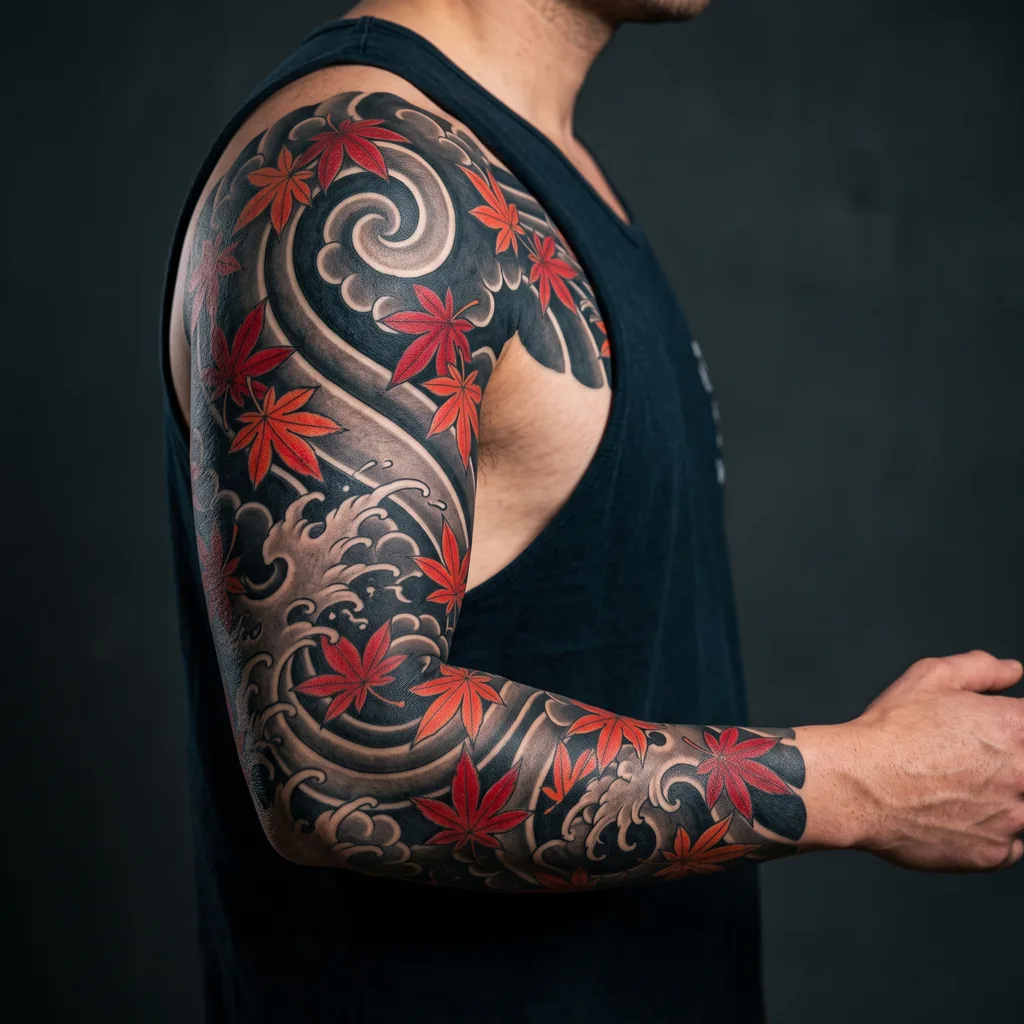
- Traditional Japanese Irezumi: Red is revered for depicting divine strength, protection, and life energy. Bold red maple leaves, flames, and deep accents on foo dog and dragon chest tattoos add timeless contrast against dark wind bars.
- Fine Line and Micro-Tattoos: Minimalist single-needle red scripts, anatomical hearts, and botanical motifs give an airy, contemporary appearance.
- Cyber Sigilism & Abstract Black-and-Red: High-contrast combinations reminiscent of trash polka or biomechanical designs.
7. What Should You Do If You Want Red Ink Removed Later?
If an intractable allergic reaction occurs or you simply change your mind, red pigment responds well to specific medical lasers. Standard lasers targeted for black ink (1064 nm) will not clear red; instead, practitioners switch to specialized 532 nm KTP or picosecond wavelengths that target red chromophores directly.
To understand laser efficacy, clearance costs, and expectations, consult our full guide on can tattoos be removed completely.
Summary Checklist Before Getting Inked With Red
Before you commit to your new design, verify that you have covered every preparation step:
- [ ] Consulted an artist who uses reputable, EU-REACH or FDA-inspected pigments.
- [ ] Considered a small patch test if you have sensitive or reactive skin.
- [ ] Followed all pre-appointment hydration and nutrition rules outlined in what should you do before getting a tattoo.
- [ ] Stocked up on gentle, fragrance-free soap and mineral sunscreen (SPF 50).
- [ ] Prepared mentally to protect the area strictly from direct sunlight forever.
If you are in doubt about a persistent raised bump or burning sensation, always consult clinical resources from the American Academy of Dermatology or a certified physician.
About The Author
