
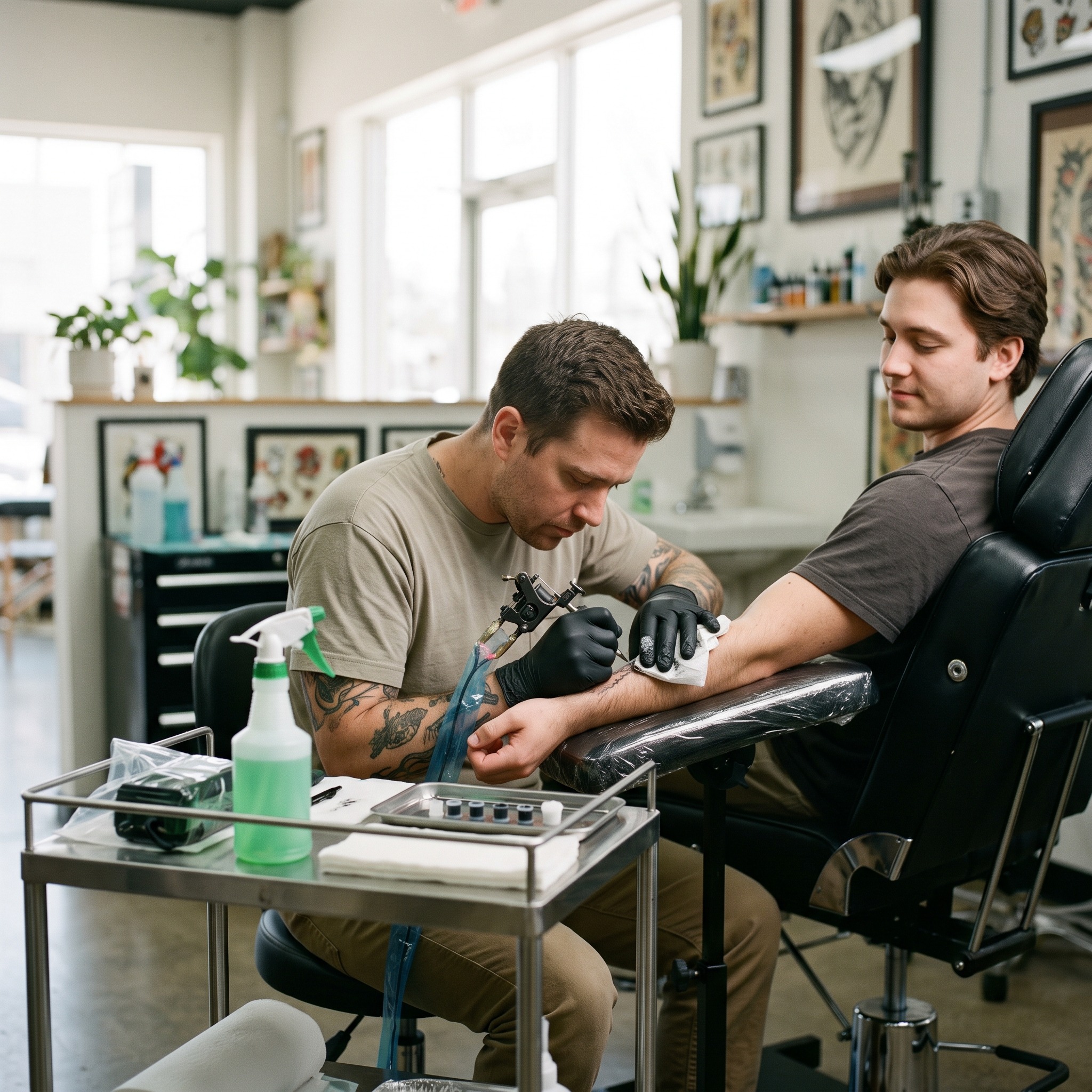
Wondering how much do tattoos hurt is the single most common concern people face before sitting in an artist’s chair. If you are asking how much do tattoos hurt on different body parts, the reality is far more manageable than the internet often suggests.
Tattoo pain is not a single, uniform sensation. It shifts from a mild, annoying vibration on muscular areas to an intense, hot scratching sensation over sensitive nerves and bone.
Below, we dissect the authentic sensation of tattoo needles, outline a clear pain chart by body placement, and answer the most common questions to help you prepare mentally and physically.
What Does Tattoo Pain Actually Feel Like?
Tattoo needles do not feel like a standard hypodermic medical injection. Instead of piercing deep into muscle or veins, tattoo needles oscillate rapidly within the upper layers of your skin (the dermis).
Most collectors describe the sensation in three distinct ways depending on the needle type:
- The Hot Scratch (Linework): Outlining needles are tightly grouped. This feels like a sharp, hot cat scratch moving across an existing sunburn.
- The Dull Vibration (Shading): Shading needles (magnums) spread the impact across a wider surface area. This feels more like an intense, dull electrical buzzing or constant sandpaper friction.
- The Raw Ache (Late-Session Work): Toward the end of a long appointment, previously worked skin becomes inflamed. Returning over raw skin to pack white highlights feels like a stinging sunburn being pressed firmly.
How Much Do Tattoos Hurt by Body Placement: Pain Levels Explained
Where you place your design is the primary factor that dictates how much it hurts. Areas with thick muscle, tough skin, and few nerve endings are far easier to sit through than bony ridges.
| Pain Level | Body Placement Areas | Sensation Intensity |
| Low (1–3 / 10) | Outer Forearm, Outer Bicep, Outer Thigh, Calves | Mild buzzing, easily tolerated during long sessions. |
| Moderate (4–6 / 10) | Inner Bicep, Upper Back, Shoulders, Glutes | Noticeable pinch and heat; manageable with steady breathing. |
| High (7–8 / 10) | Ribcage, Collarbone, Tops of Feet, Knees, Shinbone | Sharp vibration that resonates deep into bone and joints. |
| Severe (9–10 / 10) | Sternum, Armpit, Spine, Hip Bones, Elbow Crease | Intense, piercing sting that triggers involuntary muscle flinches. |
When evaluating how much do tattoos hurt, skin thickness and nerve density dictate your overall comfort level far more than individual pain tolerance.
If you are planning an intricate Japanese design across sensitive bone, such as traditional foo dog and dragon chest tattoos, understanding these pain spikes over the sternum and clavicle will help you pace your appointments.
Answers to the Most Common Tattoo Pain Questions
1. Does tattoo pain get worse the longer you sit?
Yes. During the first 15 to 30 minutes, your body releases adrenaline and natural endorphins, creating a natural pain buffer. However, after three to four hours, physical stamina drains, adrenaline crashes, and localized swelling increases, making the final stretch significantly harder.
2. Why do tattoos hurt more over bone?
Skin that rests directly over bone (such as the collarbone, ribcage, or shin) has minimal fat and muscle to absorb the needle machine’s mechanical vibrations. These vibrations resonate directly into the periosteum (the nerve-rich tissue coating your bones), intensifying the pain signal.
3. Can I use numbing cream to eliminate pain?
Topical numbing creams containing lidocaine can dull superficial pain for 60 to 90 minutes. However, consult your tattoo artist before applying anything. Some formulas change skin texture, making ink saturation difficult. Furthermore, when the numbing agent wears off mid-session, the sudden rush of pain can feel overwhelming.
4. Do color tattoos hurt more than black and grey?
The ink pigment itself does not hurt more. However, full-color compositions require repeated passes over the exact same area to pack pigment solidly, whereas black-and-grey work often relies on lighter washes. For an example of contrast without excessive skin trauma, explore black and grey dragon and koi fish tattoos.
5. Does getting tattooed on an empty stomach hurt more?
Significantly more. Low blood sugar spikes your nervous system’s stress response and lowers pain tolerance, drastically increasing your risk of nausea or fainting. Always eat a balanced, carbohydrate-rich meal 90 minutes prior to your session.
6. What should I do if the pain becomes unbearable?
Communicate with your artist immediately. Professional tattooers expect clients to ask for short breaks to stretch, drink water, or reset breathing. You can always split a large project into multiple sessions rather than forcing yourself through agony.
4 Proven Ways to Reduce Tattoo Pain
While learning how much do tattoos hurt helps you set realistic expectations, you can actively reduce the physical discomfort using these proven studio strategies:
- Practice Deep Belly Breathing: When pain spikes, humans naturally hold their breath, which tenses muscles and magnifies pain. Focus on slow, steady exhalations as the needle makes contact.
- Arrive Well-Rested and Hydrated: Sound sleep and hydrated skin significantly improve how smoothly needles deposit pigment into the dermis.
- Bring Distractions: Noise-canceling headphones, audiobooks, or watching movies on your phone distract your sensory cortex from focusing exclusively on the needle hum.
- Follow Proper Studio Prep: If you plan on tackling an extensive project, read our complete breakdown on how to prepare for a Japanese tattoo sleeve for advanced session tips.
Frequently Asked Questions
Which spot is best for a first tattoo with low pain?
The outer bicep or outer forearm is ideal. The skin is thick, muscle padding is substantial, and nerve endings are relatively sparse, making it a gentle introduction to tattooing.
Is tattoo healing painful?
The healing phase feels like a mild to moderate sunburn for the first 48 hours. After day three, physical pain subsides into a peeling, intensely itchy phase that requires gentle, fragrance-free moisturizing. For complete beginner basics, see our guide on what to know before getting your first tattoo.
Can I take ibuprofen or aspirin before my tattoo?
Avoid aspirin and high doses of ibuprofen before a session because they act as mild blood thinners, causing excess bleeding that dilutes ink saturation. Acetaminophen (Tylenol) is generally preferred if approved by your doctor.
About The Author
