How Tattoo Prices Germany Vary Across Hourly and Day Rates
Planning your next piece and trying to budget accurately? Navigating tattoo prices germany helps you understand expected studio fees, hourly rates, and deposit requirements before sitting in the chair.
Getting a tattoo in Germany is an exciting experience, home to world-renowned ateliers, guest artists, and strict hygiene regulations. However, for first-timers, expats, and travelers, pricing can feel opaque.
Unlike retail shopping, you won’t find a standard fixed price list hanging on every studio wall. Tattoo pricing in Germany depends on whether the artist charges an hourly rate or a flat day rate, the studio’s geographic location, and their minimum sitting fee.
Here is an honest, transparent look at what you will actually pay at a German tattoo studio in 2026.
1. Average Tattoo Costs in Germany at a Glance
| Tattoo Project / Size | Typical Duration | Estimated Cost (EUR) | Primary Pricing Model |
| Studio Minimum (Micro tattoo, dots, tiny initials) | 10–20 mins | €60 – €100 | Flat Base Fee |
| Small Piece (2–5 cm, fine-line symbol, script) | 30–60 mins | €100 – €180 | Flat Rate or 1 Hr Rate |
| Medium Piece (Palm to hand-sized, flash art) | 2–4 hours | €250 – €550 | Hourly Rate |
| Large Piece (Forearm, calf, chest panel) | 4–6 hours | €500 – €1,000+ | Hourly or Half-Day Rate |
| Full Day Session (Back piece, full sleeve progress) | 6–8 hours | €800 – €1,600+ | Flat Day Rate (Tagessatz) |
2. Studio Minimums vs. Hourly Rates: How Pricing Works
German tattoo studios calculate their pricing using three standard models:
The Studio Minimum (Mindestpreis)
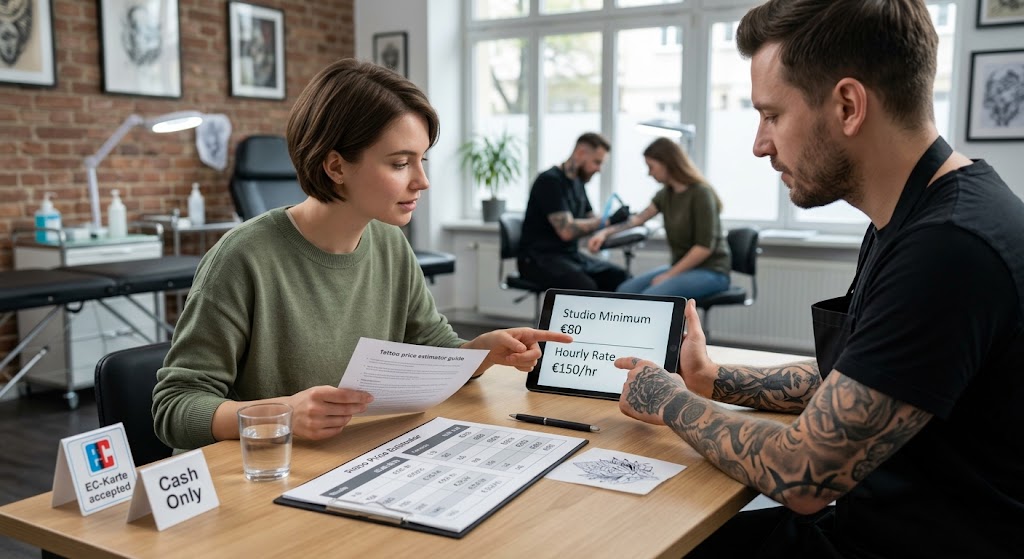
Even if your design is a single 1 cm star that takes 90 seconds to needle, you will rarely pay less than €60 to €100.
This base fee covers the non-negotiable operational and hygiene costs required by German law (DIN EN 17169):
- Single-use sterile needle cartridges
- EU REACH-compliant ink caps
- Medical barrier film and surface disinfectants
- Stencil paper and prep solutions
The Hourly Rate (Stundensatz)
For custom pieces that take between 2 and 5 hours, most resident artists in Germany charge €120 to €200 per hour.
- High-demand artists or specialized guest artists (Gasttätowierer) often charge €200 to €250+ per hour.
- What counts as billable time? At reputable studios, the clock starts when the needle touches the skin. Stencil adjustments, consultations, and short breaks are generally not billed under the hourly rate, though policies vary.
The Day Rate (Tagessatz)
For full-sleeve projects, large backpieces, or multi-hour realism work, artists often prefer a flat day rate ranging from €800 to €1,500. Booking a full day is typically more economical than paying by the hour for long, detailed sessions.
3. Regional Differences: Berlin vs. Munich vs. Smaller Cities
Germany’s decentralized economy means tattoo prices vary noticeably depending on the city and federal state (Bundesland):
- Berlin: Highly competitive and home to thousands of artists. Berlin offers a wide pricing spectrum. Independent studios in Kreuzberg, Neukölln, or Friedrichshain often feature accessible rates (€100–€160/hr), though world-famous private ateliers command top-tier rates.
- Munich & Frankfurt: Consistently the highest rates in Germany due to high commercial studio rent and living expenses. Expect studio minimums of €80–€100 and standard hourly rates averaging €150–€250/hr.
- Hamburg & Cologne: Moderate-to-high pricing (€130–€180/hr) with a rich heritage in traditional maritime and contemporary neo-traditional tattooing.
- Smaller Towns / Eastern Federal States: Rates frequently range between €90 and €140 per hour, though top-tier specialized artists maintain standard national rates regardless of geography.
4. Hidden Costs You Need to Factor In
When budgeting for your tattoo, the needle time isn’t the only expense:
1. The Design & Consultation Deposit (Anzahlung)
To reserve your appointment slot, German studios will ask for a deposit ranging from €50 to €200 (or 20–30% of a day rate).
- Deposits are deducted from your final bill on the day of the tattoo.
- Cancellation terms: Under German contract customs, deposits are strictly non-refundable if you cancel with less than 48–72 hours’ notice (Ausfallgebühr).
2. Custom Drawing Fees
Minor design tweaks are almost always included in the quote. However, if you request a complete redesign from scratch on appointment day, artists may charge an extra design fee (€50–€100) or reschedule your session.
3. Touch-Up Sessions (Nachstechen)
- Within 3–6 months: Most artists in Germany include one free touch-up session to fix any ink fallout or uneven healing.
- After 6 months: If you wait too long or neglect basic aftercare, studios will charge a standard needle fee or minimum (€50–€80) to refresh the piece.
4. Pharmacy Aftercare Supplies
You will need to buy your healing products from a local German pharmacy (Apotheke) or drugstore (dm / Rossmann). Budget an extra €15 to €30 for:
- Medical tattoo film / Second skin (e.g., Suprasorb F or Dermalize)
- Panthenol healing ointment (e.g., Bepanthen Wund- und Heilsalbe or Panthenol-ratiopharm)
- Gentle, fragrance-free pH-neutral soap (e.g., Balea Med or Sebamed)
5. Payment Culture: Cash vs. Card in German Studios
A common surprise for international visitors and expats is Germany’s reliance on physical cash (Barzahlung).
- Cash is still standard: While more modern studios accept debit cards (Girocard/EC-Karte), many independent artists and private studios remain strictly cash-only for final balances.
- Credit Cards are rarely accepted: Visa, Mastercard, and American Express incur high merchant processing fees, so many German studios do not support them.
- Deposits: Handled electronically via PayPal (Friends & Family or Business with fees covered) or German SEPA bank transfer (Überweisung).
Pro Tip: Do not wait until the appointment ends to find an ATM. Look for bank branches (Sparkasse, Volksbank, Deutsche Bank) before your appointment. Standard independent “Euronet” yellow-and-blue ATMs found on German street corners often charge steep conversion and transaction fees.
6. Do You Tip Tattoo Artists in Germany?
In the United States, a 15–20% tip is standard. In Germany, tipping is a gesture of appreciation, never a requirement.
German tattoo artists set their prices to cover all operational overhead, taxes, and income. You are not obligated to add 20% on top of an already high bill.
Standard Tipping Guidelines in Germany:
- The “Round Up” Rule (Stimmt so): For smaller pieces, rounding up to the nearest clean number is customary (e.g., paying €150 on a €130 bill).
- For Exceptional Full-Day Sessions: A tip of €20 to €50 is generous and warmly appreciated.
- Non-Monetary Alternatives: Small thoughtful gestures—bringing a coffee, pastries from a local Bäckerei, or leaving a detailed 5-star Google review tagging the artist—are just as valued as cash.
Frequently Asked Questions (FAQ)
Are tattoo prices in Germany subject to VAT (MwSt.)?
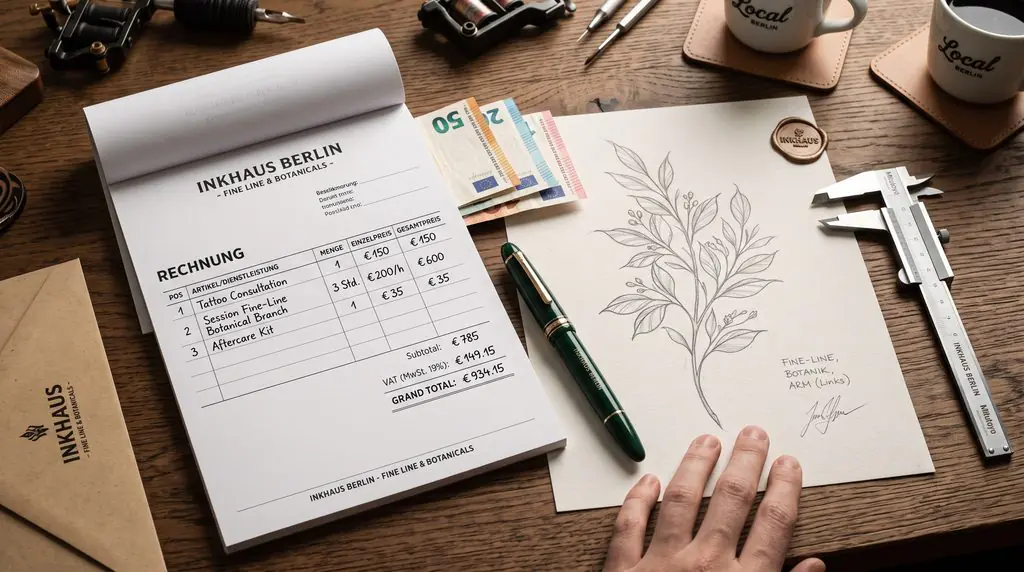
Yes. Tattoo services are subject to Germany’s standard 19% value-added tax (Mehrwertsteuer). By law, all quotes provided to private end-consumers must already include VAT. You will not face an unexpected 19% surcharge added on top of your final quote.
Why do some artists charge a flat fee for “Wannados”?
A Wannado is a pre-drawn, original design created by the artist that they actively want to tattoo. Because the concept is already drawn and sized, artists frequently offer them at fixed, discounted package prices compared to bespoke custom commissions.
Can I negotiate the price with a German tattoo artist?
No. Bargaining or haggling over tattoo prices is considered disrespectful in German studio culture. If a quote exceeds your budget, be honest with the artist: ask if you can simplify the design, scale down the size, or split the work across multiple manageable sessions.
About The Author

1 thought on “How Much Do Tattoos Cost in Germany? (2026 Price Guide & Hidden Fees)”