
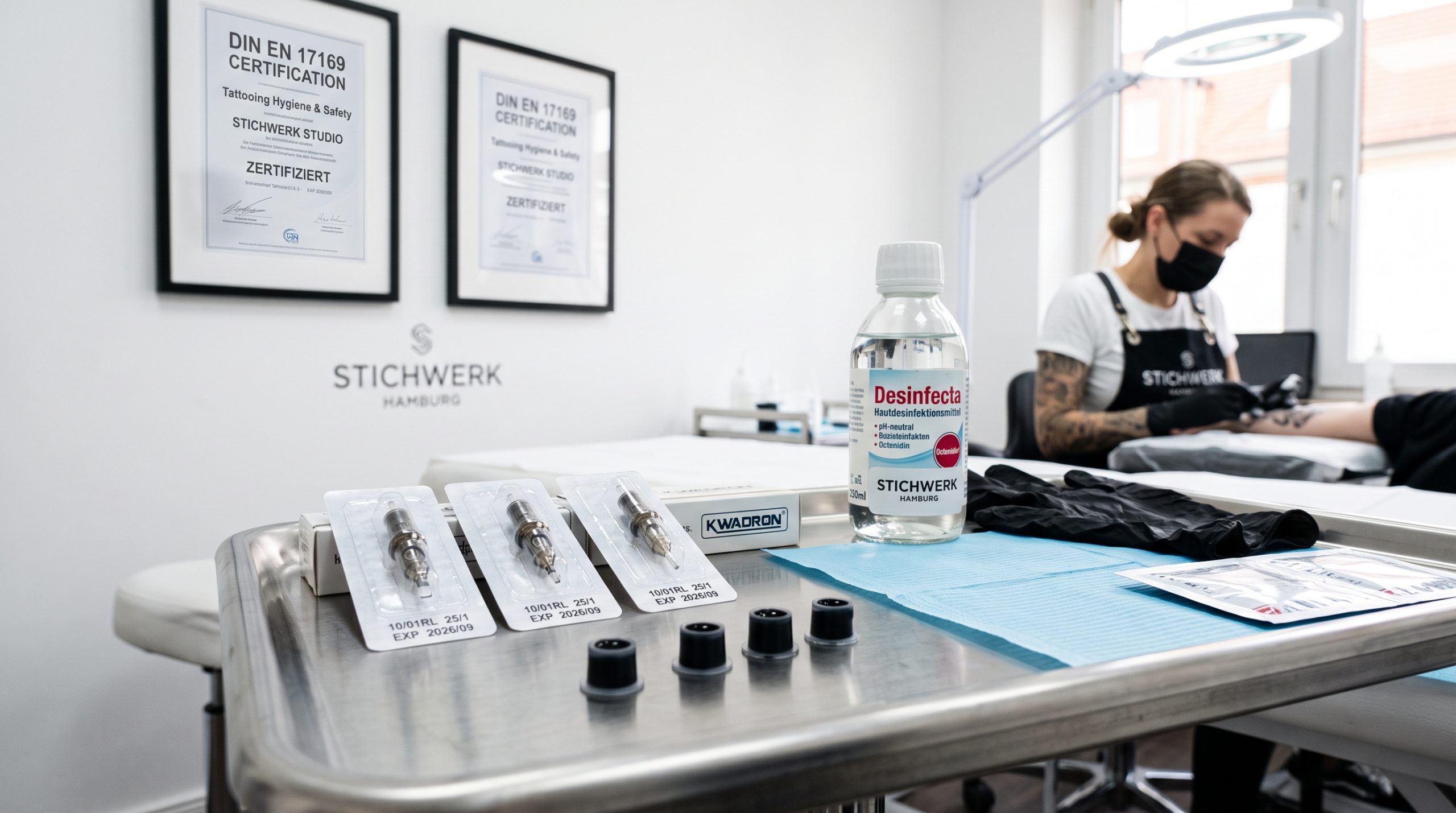
Planning to get inked in Berlin, Hamburg, or Munich? Understanding official tattoo studio hygiene standards germany ensures you choose a safe, certified, and fully compliant atelier.
Germany is home to some of the world’s most innovative tattoo ateliers. However, unlike professions such as physicians or master craftsmen (Handwerksmeister), the job title of “tattoo artist” (Tätowierer) is not formally protected under German trade law. In theory, anyone can register a business (Gewerbeanmeldung) and open a studio.
What protects you as a client is not a mandatory artistic degree, but Germany’s rigorous federal infection prevention laws and strict commercial hygiene standards.
Official health authorities oversee commercial spaces, but knowing what to inspect yourself ensures you receive safe, medical-grade care.
Here is the complete checklist to verify that a German tattoo studio operates legally, cleanly, and safely.
1. The Legal Gold Standard: DIN EN 17169 Explained
In Germany, professional studios adhere to DIN EN 17169 (Tätowieren – Gute fachliche Praxis / Tattooing – Good Practice). This European standard outlines universal hygiene, infection prevention, and operational workflows for tattoo ateliers.
What DIN EN 17169 Mandates:
- Distinct Work Zones: Clean areas (sterile storage) must be strictly separated from contaminated areas (waste disposal, needle cleaning).
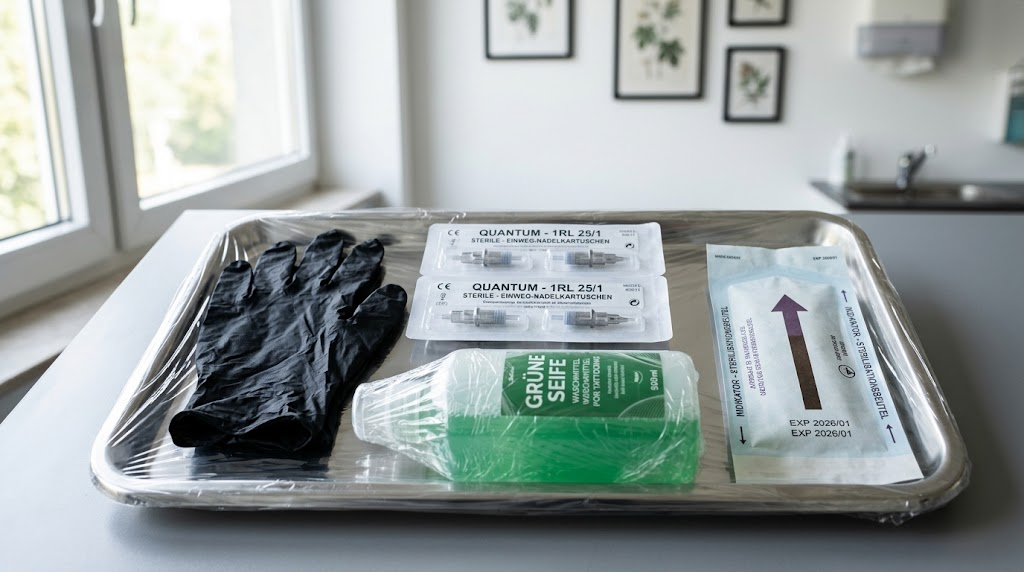
- Cross-Contamination Controls: Single-use barrier films over clip cords, power supplies, spray bottles, and machine grips.
- Sterile Consumables: Needles and cartridges must arrive in individual, intact blister packs with lot numbers and sterile expiration dates.
- Trained Hygiene Management: The studio must maintain an active, written hygiene plan (Hygieneplan) readily available for review.
Reputable studios in Germany frequently display hygiene certificates issued by accredited third-party audit institutes (such as TÜV or professional hygiene academies) in their entrance or waiting areas.
2. How Tattoo Studio Hygiene Standards Germany Protect Clients
Every commercial tattoo studio in Germany falls under the jurisdiction of the local Gesundheitsamt (Municipal Public Health Department).
- Mandatory Registration: Studios must officially register their premises before starting operations under Section 36 of the German Infection Protection Act (Infektionsschutzgesetz – IfSG).
- Unannounced Inspections: Health inspectors perform periodic, unannounced audits evaluating autoclave logs, biohazard waste disposal contracts, disinfectant efficacy, and ventilation.
- Official Closure Authority: If a studio fails basic spore tests or cleanliness benchmarks, the Gesundheitsamt has the administrative power to shut the facility down immediately.
3. The 5-Point Studio Walk-Through Checklist
When entering a German atelier for a consultation or appointment, review these five tangible safety checkpoints:
1. The Floor and Furniture Materials
Sterile environments require non-porous surfaces. Workstations, floors, and client chairs must be constructed from smooth, washable materials (sealed concrete, commercial vinyl, medical faux-leather, or stainless steel) that withstand hospital-grade surface disinfectants (Flächendesinfektion). If you see wall-to-wall carpets, worn fabric chairs, or unfinished wooden workstations in the tattooing zone, find another studio.
2. Physical Separation of the Tattoo Area
Professional studios divide their floor plan into at least two zones:
- The Reception/Lounge Area: Where clients discuss ideas, complete paperwork, drink water, and wait.
- The Treatment Zone (Tätowierbereich): A sterile area where food, open drinks, street coats, and pets are strictly prohibited.
3. Surface Barriers & Fresh Setup
Watch how the artist prepares the station. Everything touched during the session must be wrapped in single-use plastic barrier film or eco-friendly biodegradable covers:
- The machine, wireless battery, and clip cord
- The armrest or massage table (covered in clean medical paper roll / Liegenabdeckung)
- Wash bottles and machine power toggles
4. Blister-Packed Single-Use Cartridges
Modern professional tattooing relies almost entirely on disposable needle cartridges. The artist must open the blister pack in front of your eyes right before the session begins. If an artist uses traditional reusable steel grips or tubes, ask to see their autoclave sterilization packaging, complete with chemical color-change indicator strips.
5. Skin Prep & Disinfection
Before applying the stencil, the artist should:
- Shave the area with a brand-new disposable razor.
- Cleanse and disinfect the skin using a certified German medical skin antiseptic (such as Kodansha, Octeniderm, or Cutasept) and let it dry for at least 30 to 60 seconds to ensure full bacterial elimination.
4. Documentation: The Einwilligungserklärung (Consent Form)
Under German civil and criminal law, a tattoo technically constitutes bodily harm (Körperverletzung) unless justified by the client’s informed, explicit consent. A legitimate studio will never ink you without formal documentation.
Before needle contact, you must complete an Einwilligungserklärung (Informed Consent Form).
A legally compliant studio form requires:
- Verification of legal age (18+, or 16+ with in-person parental consent and physical identification cards).
- Medical disclosures (blood thinners, diabetes, epilepsy, hepatitis, allergies to nickel or latex).
- Acknowledgement of proper aftercare responsibilities and potential healing risks.
- Documentation of batch and lot numbers of the inks used during your procedure.
Red Flag: If an artist accepts cash without asking for your ID or having you complete an intake and consent sheet, they are bypassing German legal and hygiene requirements.
5. Major Red Flags: When to Walk Away
Walk out of a studio immediately if you encounter any of the following:
- Pet Presence in the Inking Zone: Dogs and cats carry dander and microbes; having pets inside active tattooing areas violates German health ordinances.
- Unlabeled or Repackaged Inks: Bottled inks missing EU REACH compliance statements, expiration dates, or batch tracking numbers.
- Reusing Ink Caps: Pouring excess pigment from an open ink cap back into a master bottle, or dipping needles into communal pigment jars.
- Cross-Contamination with Gloves: An artist who adjusts overhead lamps, checks their smartphone, or touches door handles with gloved hands without changing gloves before touching your skin.
- Basement / Home “Kitchen” Studios: In Germany, “scratchers” (Küchentätowierer) operating out of private apartments circumvent Gesundheitsamt inspections, trade licensing, and proper biohazard waste disposal.
Frequently Asked Questions (FAQ)
Can 16-year-olds legally get tattooed in Germany?
Under German law, there is no federal age minimum set in the penal code, but standard industry self-regulation and contract law require individuals to be 18 years old. Some studios accept clients at 16 or 17, but only with the written consent and physical presence of a legal parent/guardian, accompanied by original official government IDs from both parties.
How are biohazard tattoo needles disposed of in Germany?
Single-use needles and razor blades must be placed immediately into yellow, puncture-resistant medical sharps containers (Kanülenabwurfbox). These containers are sealed and picked up by certified hazardous-waste management contractors; they cannot be thrown into regular municipal household waste.
What should I do if an artist drops something on the floor mid-session?
A professional artist will stop, take off their contaminated gloves, sanitize their hands, pick up the item or clean the area, put on fresh nitrile gloves, and set up a new sterile consumable. If an artist picks up a dropped tool with working gloves and continues tattooing your skin, stop the session immediately.
About The Author

3 thoughts on “How Official Tattoo Studio Hygiene Standards Germany Protect Clients”