
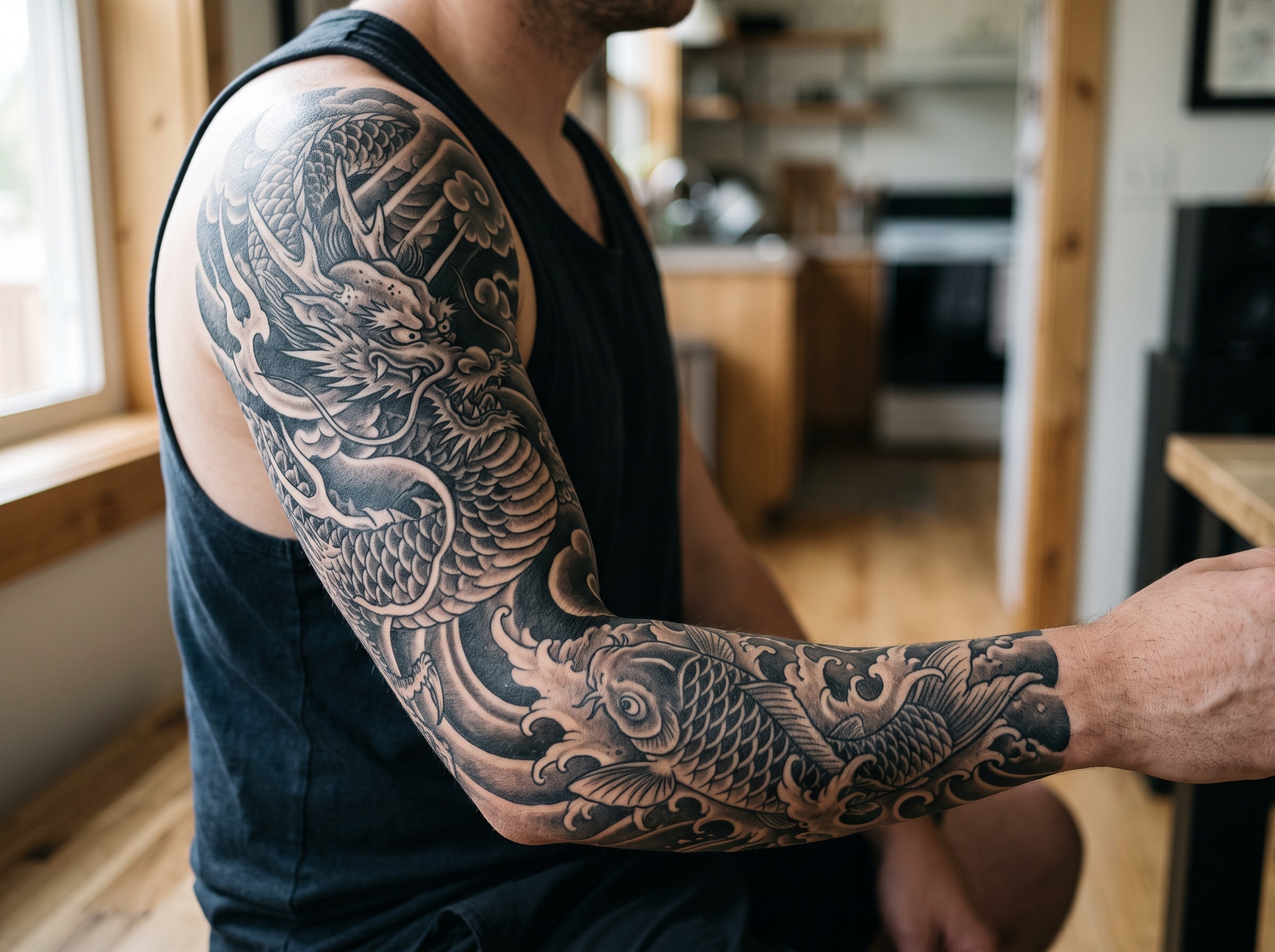
When it comes to traditional Japanese ink (Irezumi), black and grey dragon and koi fish tattoos are among the most revered and visually striking pairings you can choose. While colorful pieces grab attention, rendering this legendary metamorphosis in monochromatic ink strips away distractions—leaving pure contrast, fluid motion, and rich Eastern folklore on your skin.
A black and grey dragon and koi fish tattoo strips away chromatic distractions, relying instead on smooth gradient shading, stark negative-space skin breaks, and dynamic textures. More than just a striking visual aesthetic, this pairing tells one of Eastern mythology’s most enduring stories of perseverance, transformation, and personal triumph.
Below, we unpack the legendary meaning behind the koi-to-dragon metamorphosis, showcase 15 striking design concepts, and reveal the best placements to bring this flowing artwork to life.
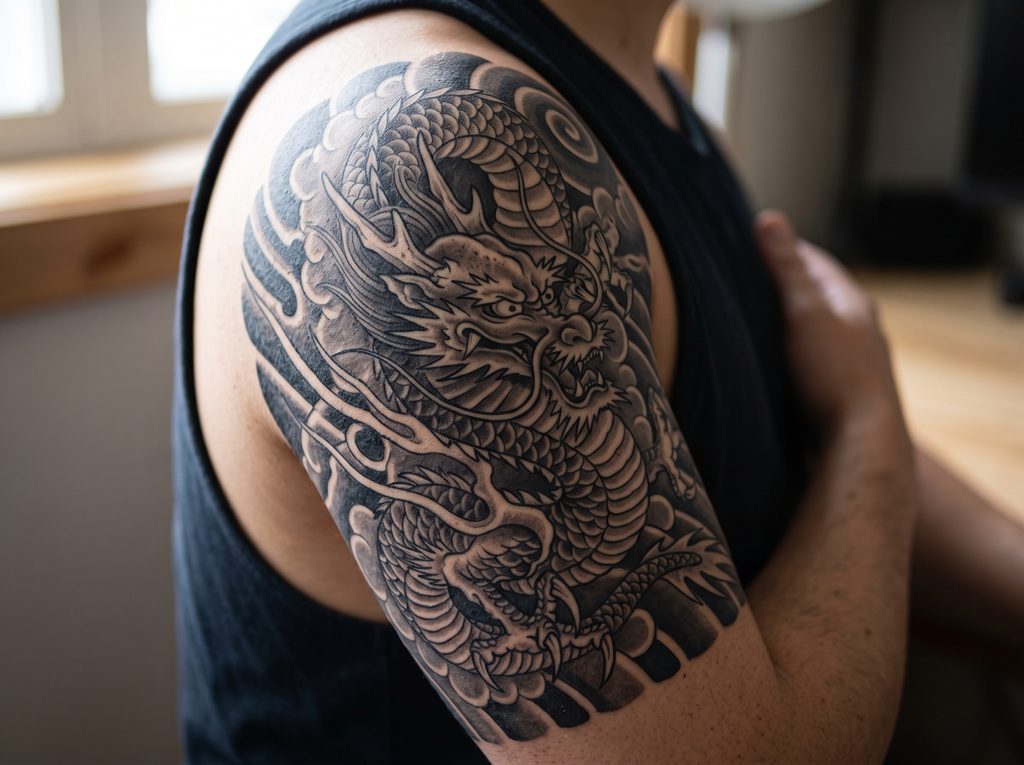
The Meaning: The Legend of the Dragon Gate
To truly appreciate a koi and dragon tattoo, one must understand the ancient parable of the Dragon Gate (Longmen).
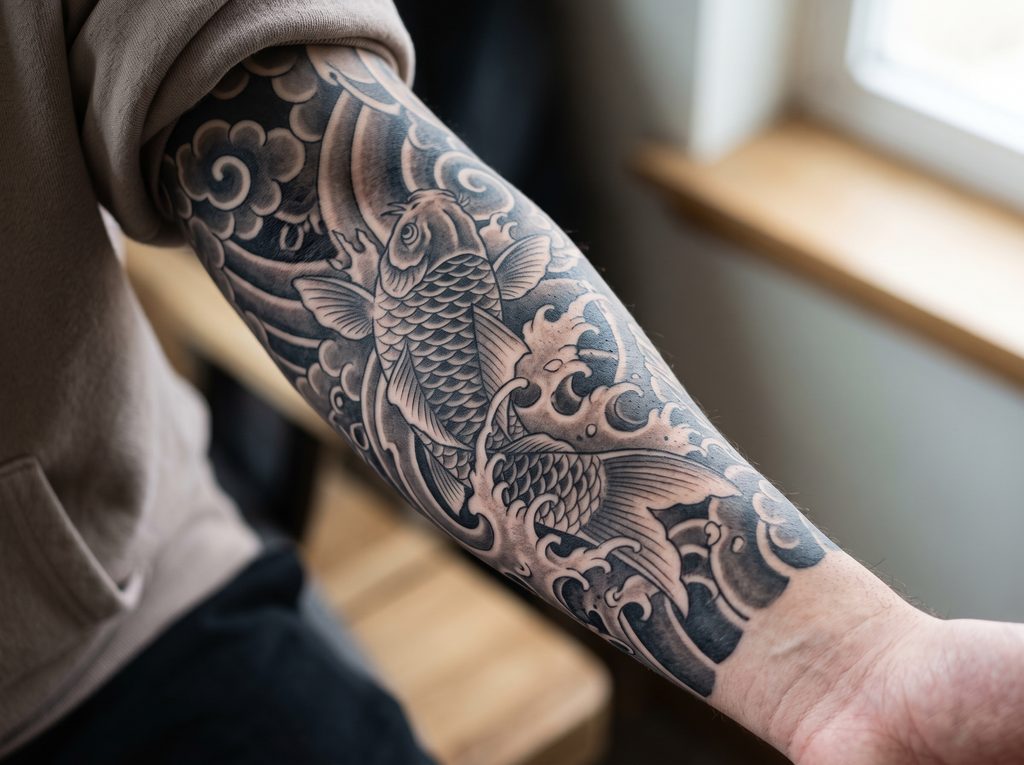
According to ancient Asian folklore, thousands of golden koi fish swam up the roaring currents of the Yellow River, battling strong rapids and sharp rocks. Upon reaching a massive waterfall, most fish turned back. However, a small school of persistent koi refused to surrender, leaping tirelessly against the churning water.
Moved by their unwavering determination, the river spirits rewarded the koi that successfully leapt to the very crest of the falls by transforming it into a majestic dragon—a master of rain, clouds, and celestial wisdom.
Key Symbolism in Black and Grey Work:
- Perseverance Against the Current: The swimming koi represents the daily human struggle, quiet ambition, and enduring hardship.
- Metamorphosis and Triumph: The towering dragon embodies the ultimate reward—transcendence, newfound authority, and self-mastery.
- Yin and Yang Balance: A flowing water creature paired with a sky deity creates a natural dialogue of balance, grounded heavily by deep black shadows and soft charcoal shading.
15 Striking Black and Grey Dragon and Koi Fish Tattoos & Design Concepts
1. The Dynamic Half-and-Half Metamorphosis Concepts
1. The Mid-Waterfall Transformation Piece
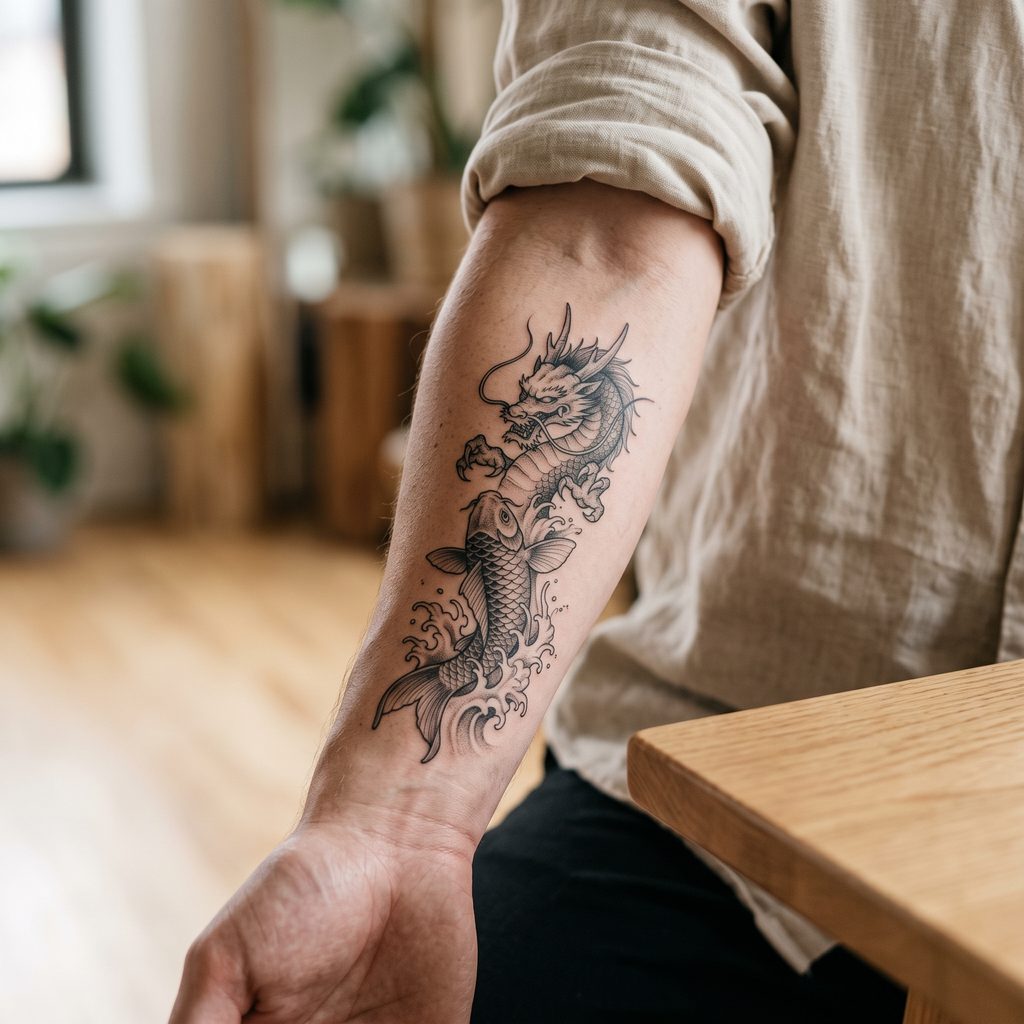
A visual capture of the exact moment of transformation: the lower body features distinct koi scales and delicate dorsal fins, while the upper torso erupts into sharp dragon horns, whiskers (hige), and coiled claws.
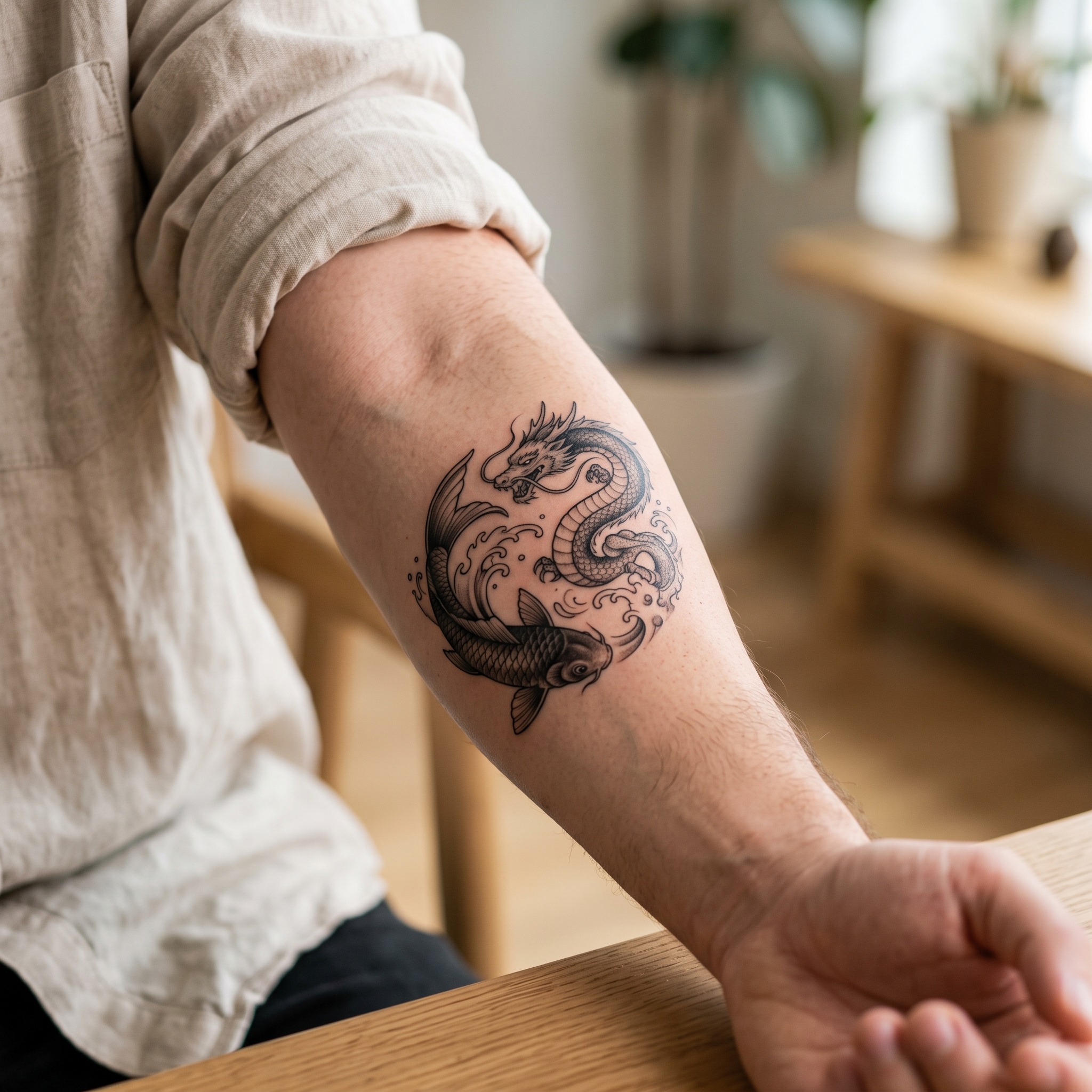
2. The Twin Swirl (Yin and Yang Flow)
A circular, circular composition where an ink-shaded koi swims counter-clockwise while a serpentine black-and-grey dragon flows clockwise, balancing negative space through swirling splash waves (mikiri).
3. The Dragon Gate Ascent
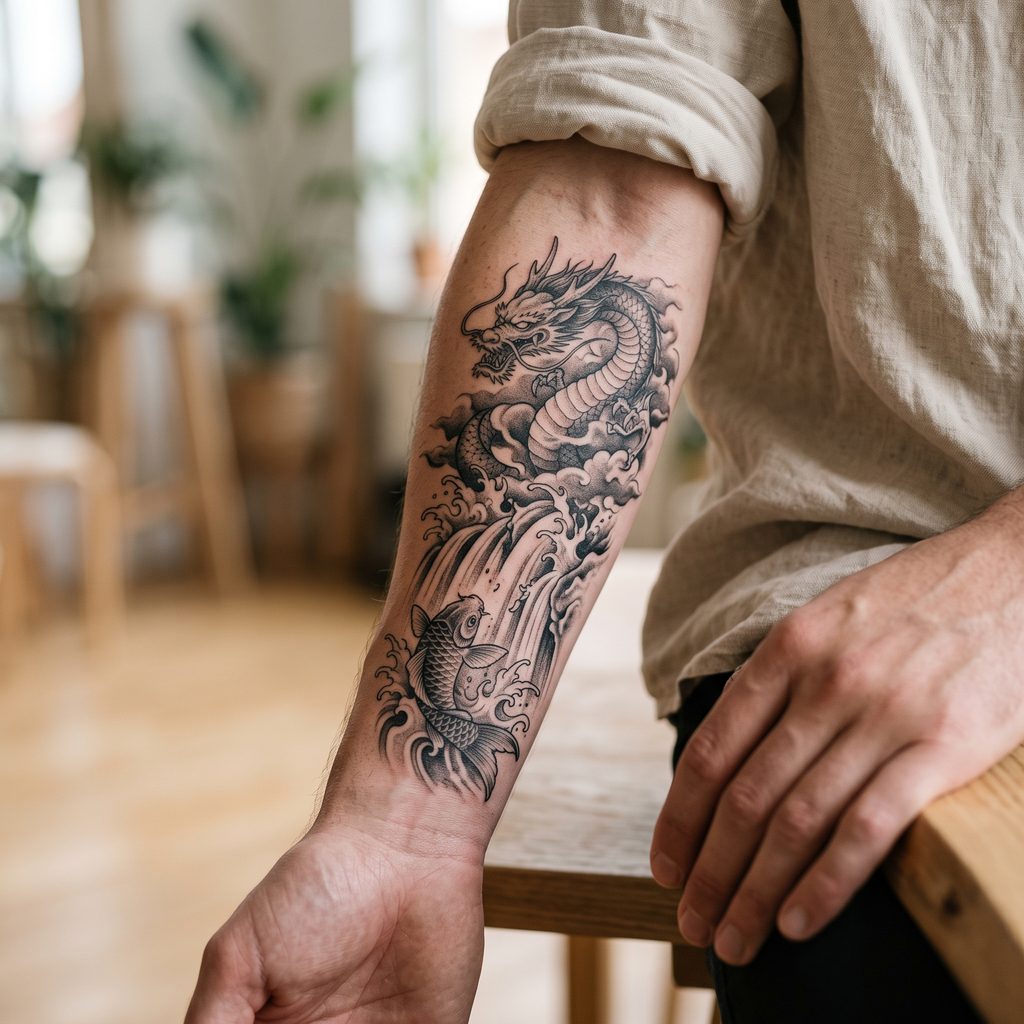
A vertical narrative design showing a determined koi battling heavy grey-wash waterfalls at the base, with a massive dragon silhouette coiling protectively through stormy clouds at the top.
4. The Single-Needle Fine-Line Transformation
A minimalist take utilizing fine-line grey shading. Perfect for subtle collectors, this design relies on delicate line weights rather than dense, heavy black ink packing.
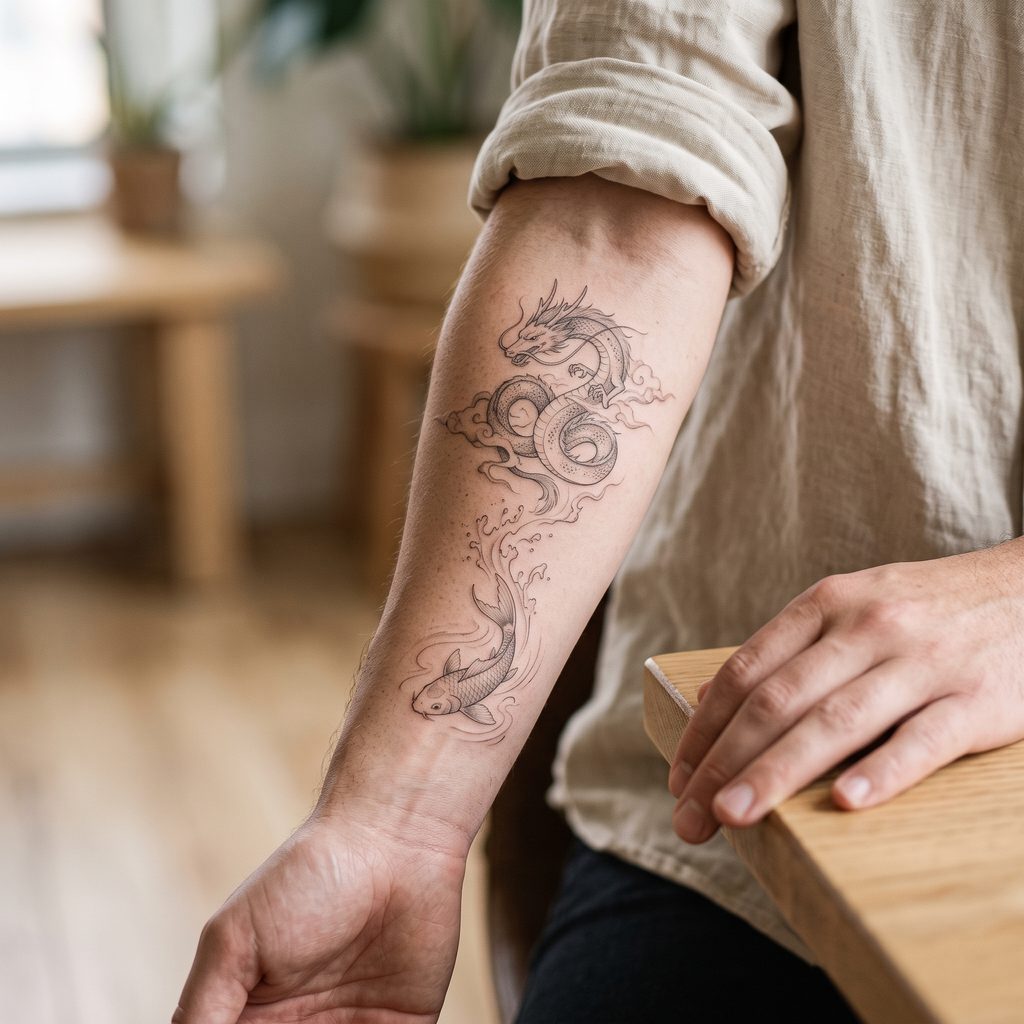
5. Smoke and Shadow Emerging Dragon
A realistic charcoal-wash piece where a crisp koi navigates clear waters, while the guardian dragon dissolves into ethereal plumes of Japanese incense smoke behind it.
2. Traditional Irezumi & Full Composition Styles
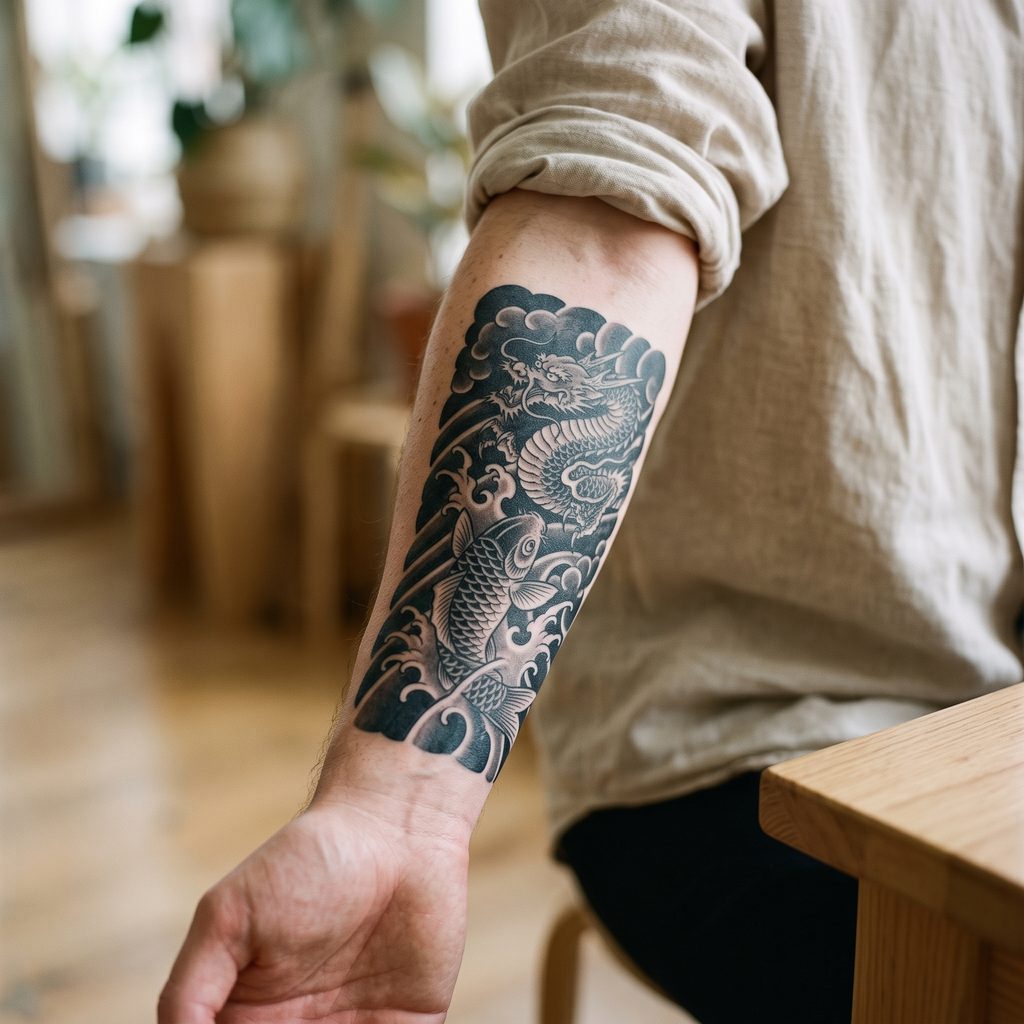
6. Classic Irezumi Waves and Wind Bars
True to heritage, this composition frames the koi and dragon against solid black wind bars (hikari) and crashing wave crests, allowing the pale skin breaks to simulate sunlight hitting water.
7. The Dragon with Flaming Pearl and Koi
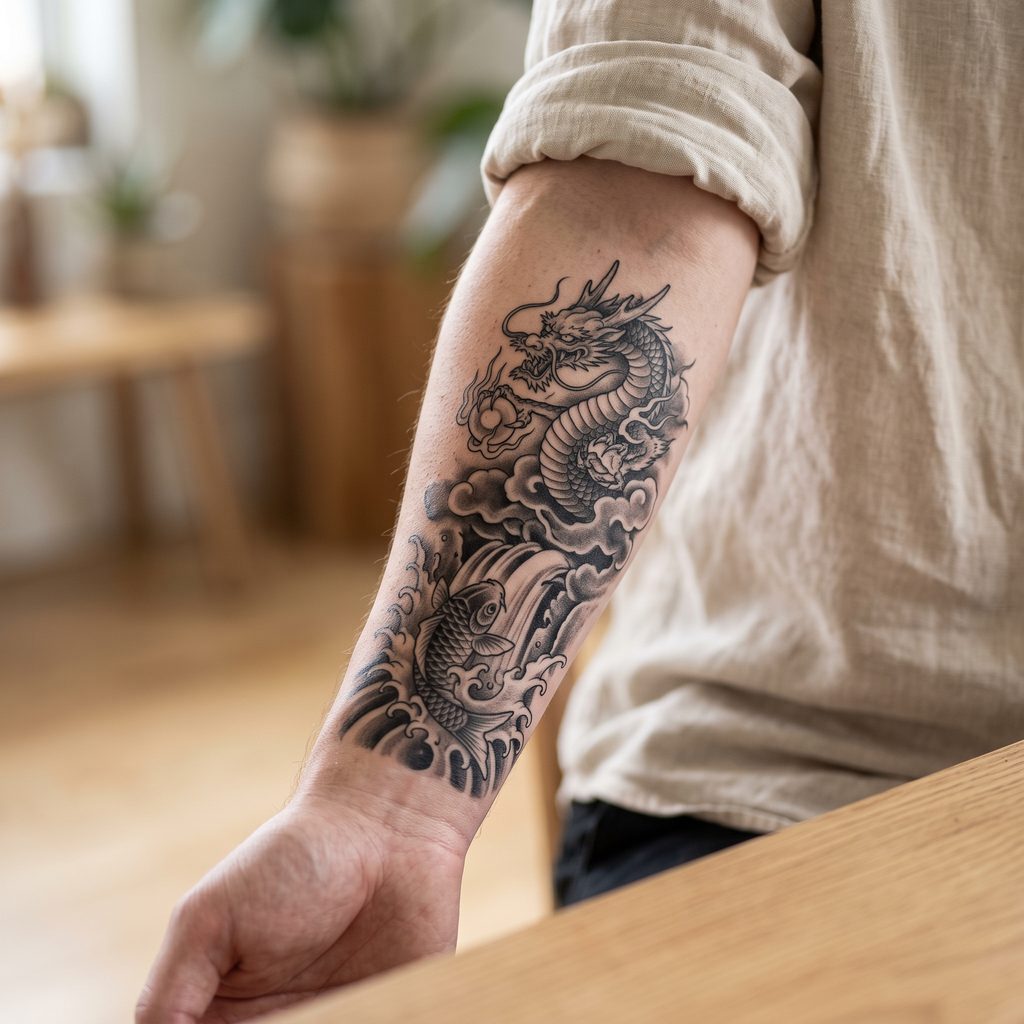
Featuring the sacred wish-granting jewel (Hoju), the dragon hovers over an ascending koi, symbolizing that clarity and wisdom await those who finish the journey.
8. Lotus Pool Guardian
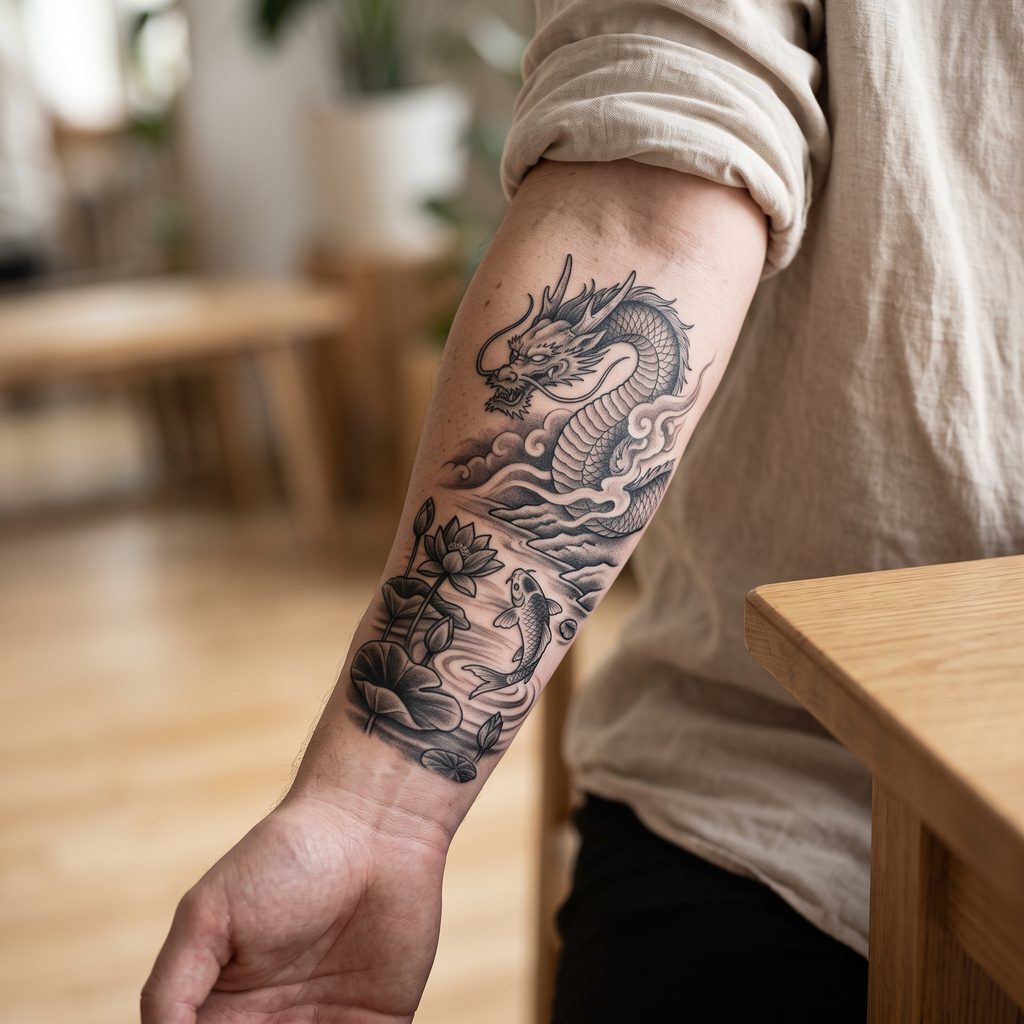
A tranquil pond scene where dark lotus leaves rest on water, an alert koi glides across smooth ripples, and a benevolent dragon coils along the riverbank in protective reverence.
9. Cherry Blossom Drift in Monochrome
Floating sakura petals scattered across dramatic black-wash current lines soften the aggressive anatomy of the dragon’s three claws, introducing a reminder of life’s fleeting beauty (mono no aware).
10. Chiaroscuro High-Contrast Sleeve
Deep, saturated black backgrounds that make the dragon’s white belly scales and the koi’s reflective eyes pop intensely off the skin.
3. Contemporary & Placement-Specific Designs
11. The Anatomical Spine Flow
A vertical back piece where the koi sits centered over the lower lumbar, while the dragon’s elongated spine travels straight up between the shoulder blades, crowning at the base of the neck.
12. Forearm S-Curve Wrap
Designed to twist naturally with arm motion: viewing the inner wrist reveals the swimming koi, while rotating the arm shows the coiled dragon guarding the outer forearm.
13. Shoulder Cap to Chest Panel (Hikae)
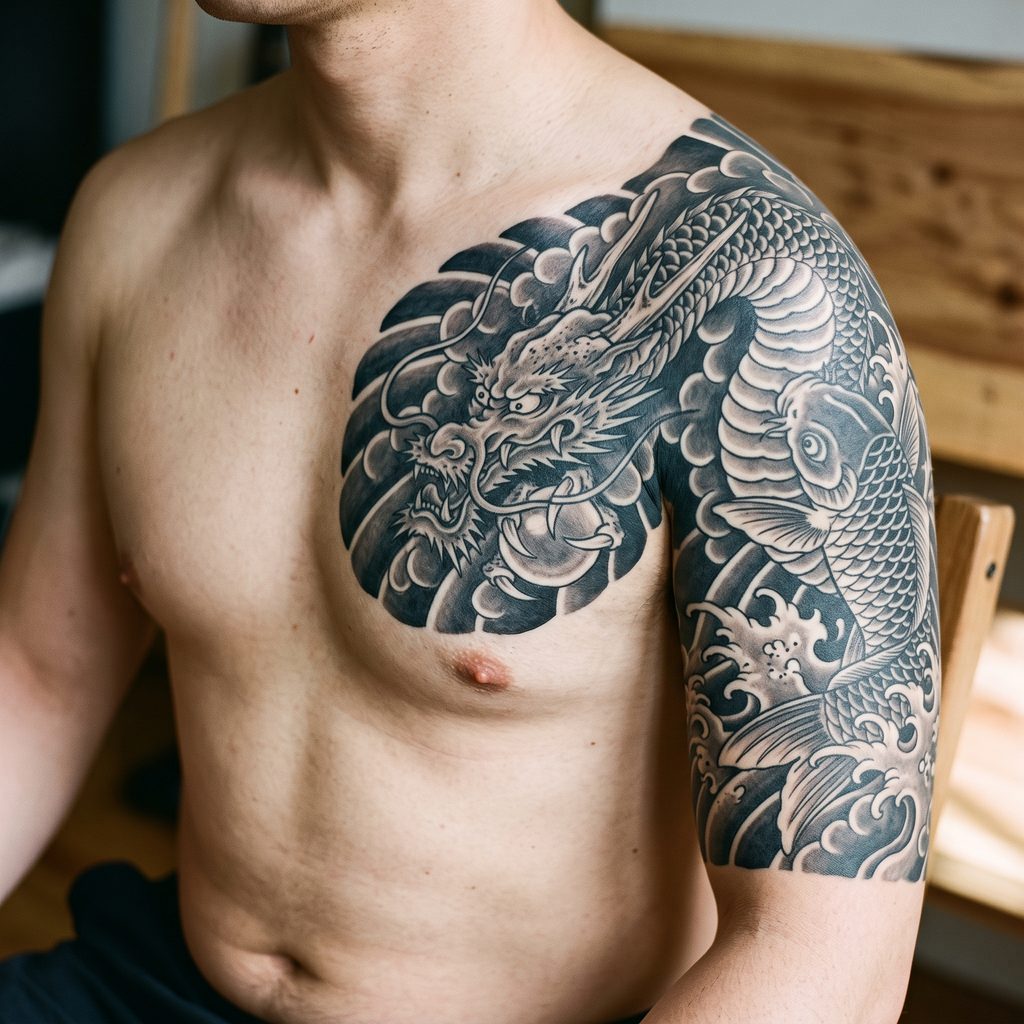
A traditional Japanese placement where the dragon dominates the chest plate, coiling down across the shoulder to meet a leaping koi on the upper arm.
14. Thigh Panel Movement
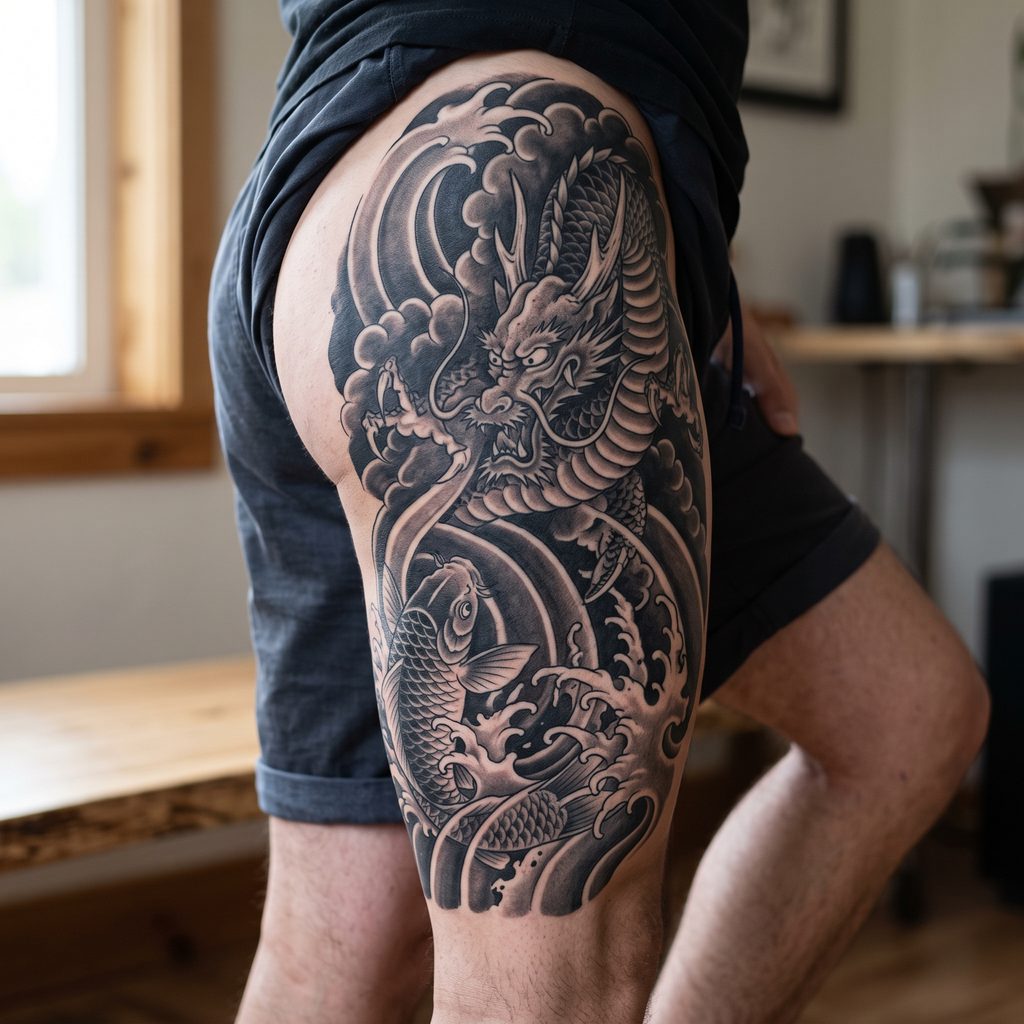
A spacious canvas design using wide wave bars to flatter the leg’s natural contours, featuring a full-scale dragon descending from the hip to meet an ascending fish.
15. The Ribcage Serpentine Climb
A sleek, close-contour design tracing along the ribs, emphasizing the steepness of the waterfall climb through vertical, dramatic shading.
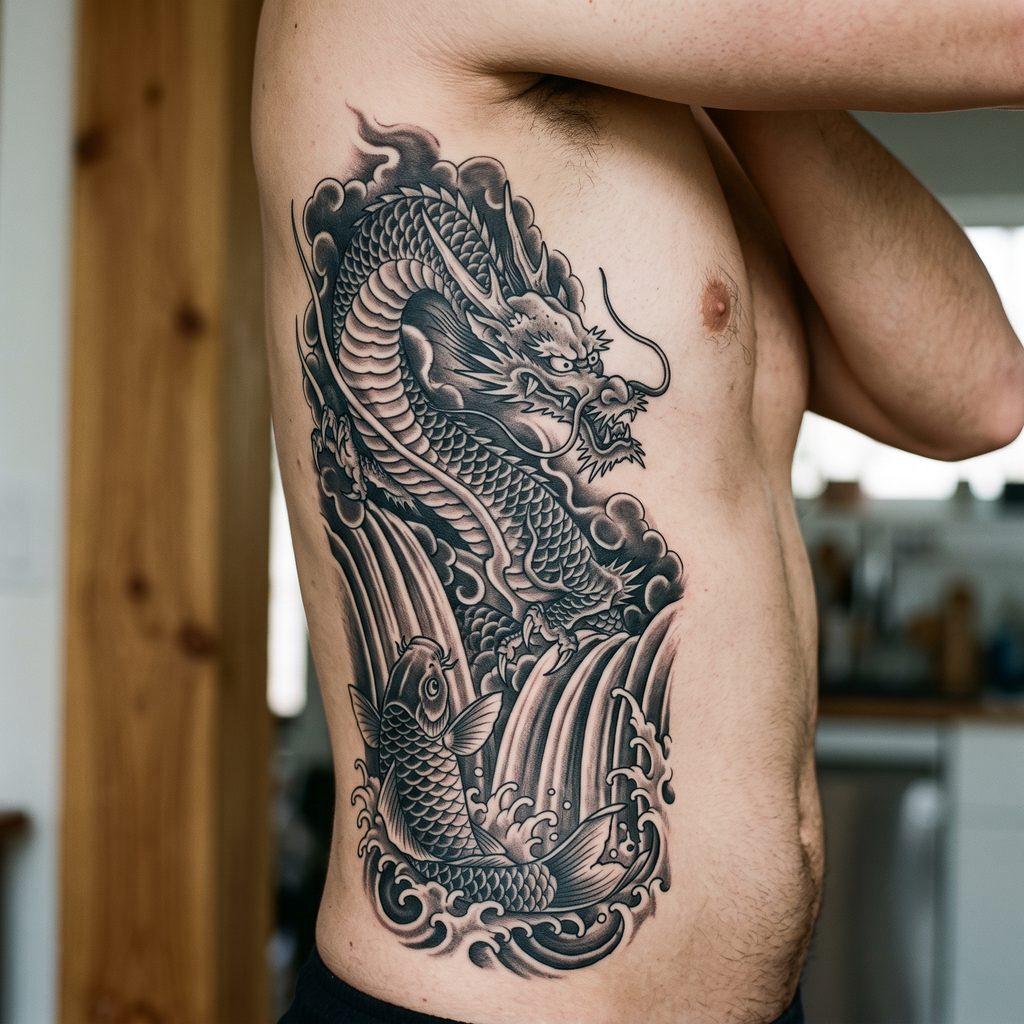
Best Placements for Dragon and Koi Compositions
Because both creatures require flowing motion, flat and rigid canvas placements rarely do justice to the narrative.
| Body Area | Shading Canvas Space | Pain Tolerance | Visual Movement Potential |
| Full / Half Sleeve | Excellent | Mild to Moderate | Dynamic (wraps seamlessly with arm movement) |
| Full Back Piece | Maximum | Moderate to High | Highest (allows full waterfall and sky scale) |
| Outer Thigh & Hip | Large & Flat | Moderate | Strong (ideal for large vertical storytelling) |
| Chest to Bicep (Hikae) | Expansive | Sharp near collarbone | Authentic Japanese traditional silhouette |
Why Choose Black and Grey Over Traditional Color?
While full-color Irezumi remains breathtaking, collectors frequently gravitate toward black and grey for distinct artistic and practical reasons:
- Superior Longevity: Black carbon-based ink particles hold their ground against sun fading and cellular breakdown far longer than bright yellow, light blue, or delicate red pigments.
- Focus on Textural Contrast: Without color, your artist must master lighting, stippling, and graduated washes. This emphasizes the organic texture of dragon horns, serrated claws, and shimmering fish scales.
- Versatility with Daily Fashion: A monochromatic tattoo effortlessly complements any wardrobe palette, maintaining an understated, mature presence in both casual and professional settings.
Frequently Asked Questions
Which direction should the koi fish swim in a dragon tattoo?
Traditionally, a koi swimming upstream represents an individual currently fighting life’s obstacles and striving for growth. A koi swimming downstream or alongside the dragon often represents an ambition already achieved, signifying peace after overcoming major adversity.
How do I keep black and grey ink from turning dull or greyed-out?
The secret to crisp black-and-grey longevity is religious sun protection. Once healed, applying an SPF 50 sunscreen over the ink prevents UV radiation from breaking down pigment boundaries and keeps your negative-space highlights crisp.
How many sessions does a dragon and koi sleeve typically take?
A detailed black and grey half-sleeve generally requires 2 to 3 sessions totaling 10 to 18 hours of needle time. A full sleeve incorporating extensive background wave bars and cloud work typically takes 25 to 40 hours spread across several months.
About The Author

2 thoughts on “Black and Grey Dragon and Koi Fish Tattoos: 15 Striking Designs”