
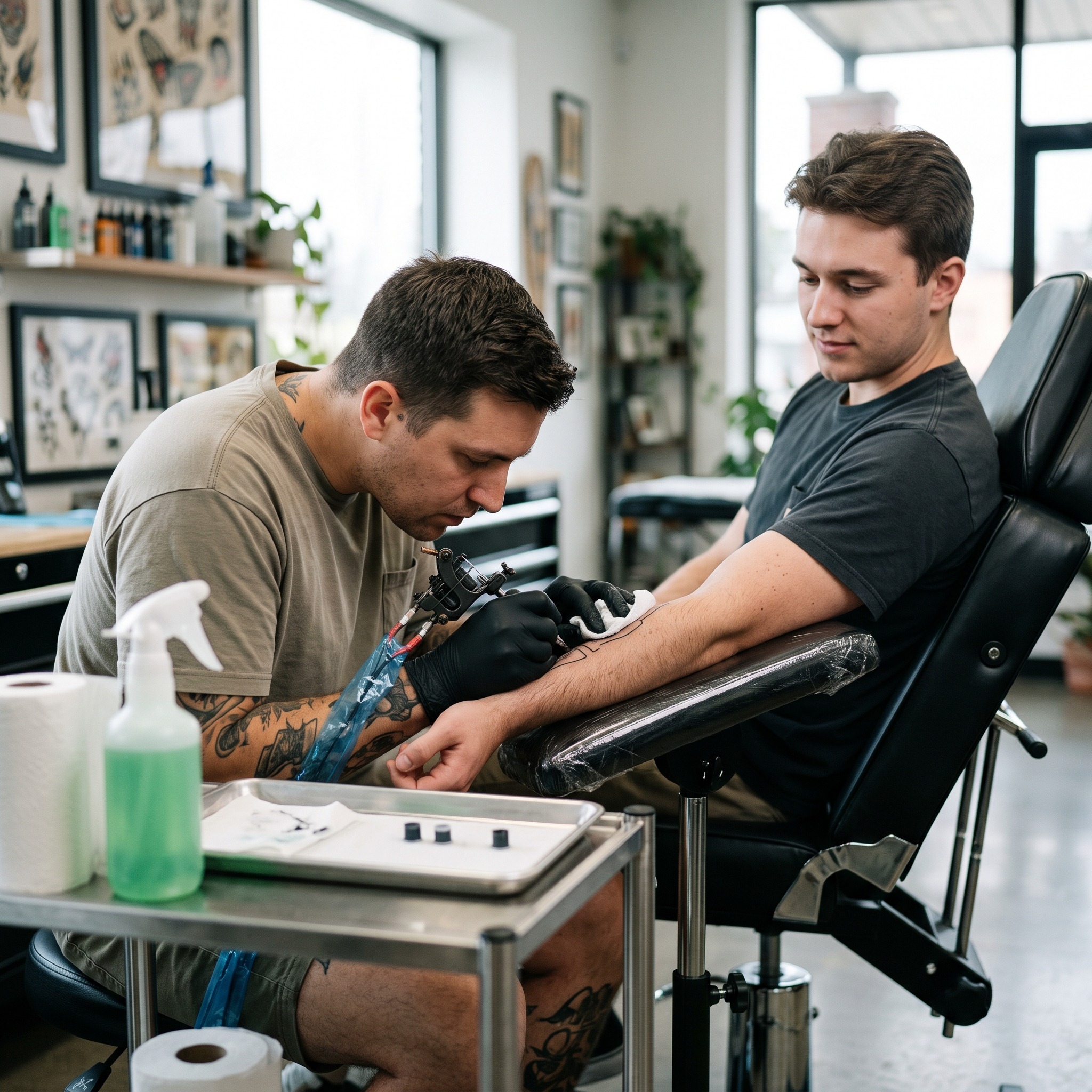
Understanding what to know before getting your first tattoo is the ultimate way to replace nervous anxiety with quiet confidence. Sitting in a professional tattoo chair for the very first time is thrilling, but it also permanently alters your skin—meaning you shouldn’t step into a studio without grounded, honest expectations.
From piercing pain realities and realistic studio pricing to placement regrets and proper aftercare, we break down the 15 most critical first-timer questions below so you can walk into your appointment fully prepared.
What to Know Before Getting Your First Tattoo: 15 Questions Answered
1. How Bad Does a First Tattoo Actually Hurt?
Tattoo pain is inevitable, but it is rarely as unbearable as first-timers imagine. The sensation feels less like a medical injection and more like a steady, hot scratching or vibrating sunburn.
Pain levels fluctuate dramatically depending on your anatomy:
- Least Painful (Great for Beginners): Outer shoulder, forearm, outer bicep, and outer thigh (areas with dense muscle and thick skin).
- Most Painful (High Nerve Density): Ribcage, sternum, collarbones, inner bicep, spine, and feet.
2. How Much Does a First Tattoo Cost?
Tattoo pricing varies widely based on geographic market, artist demand, and project scale:
- Shop Minimums: Most reputable U.S. studios have a baseline minimum (typically $80 to $150) simply to unwrap sterile needles and set up sanitary barrier film, even for a tiny dot.
- Hourly vs. Flat Rates: Small-to-medium flash pieces often come with flat quotes, while custom work generally runs between $150 and $300+ per hour.
- Tipping: Standard studio etiquette in the United States is to tip your artist 15% to 20% for excellent service and hygiene.
3. Should My First Tattoo Be Small or Large?
While diving straight into a massive project is possible, starting smaller allows you to learn how your body tolerates needle trauma and how your skin recovers. Many collectors test the waters with small Japanese dragon tattoo ideas or fine-line symbols before moving to larger canvases.
4. How Do I Find the Right Tattoo Artist?
Never pick a tattooer based solely on convenience or proximity.
- Scrutinize Portfolios: Verify that the artist regularly specializes in the specific aesthetic you want (e.g., Traditional Americana, Fine-Line, or bold Japanese Irezumi).
- Demand Healed Photos: Fresh ink always looks vibrant; healed photos (6+ months old) show whether an artist’s lines stay sharp or blowout beneath the dermis.
- Studio Cleanliness: The shop should smell clean, maintain hospital-grade disinfectant stations, and use strictly single-use, sealed disposable needles.
5. What If I Can’t Draw—How Do Consultations Work?
You do not need to be an artist. Your job is to bring reference imagery, preferred dimensions, and aesthetic preferences. Your tattooer’s job is to compose a custom stencil suited to your muscle curves. Reputable artists will never force you to accept a stencil you aren’t completely happy with.
6. Can I Get Staph or an Infection from a Tattoo?
In a licensed, modern studio adhering to universal precautions guided by the American Academy of Dermatology infection risks are extremely low.
The vast majority of tattoo complications happen after clients leave the studio due to improper cleaning, touching raw ink with dirty hands, or soaking in untreated water.
7. What Should I Wear to the Tattoo Studio?
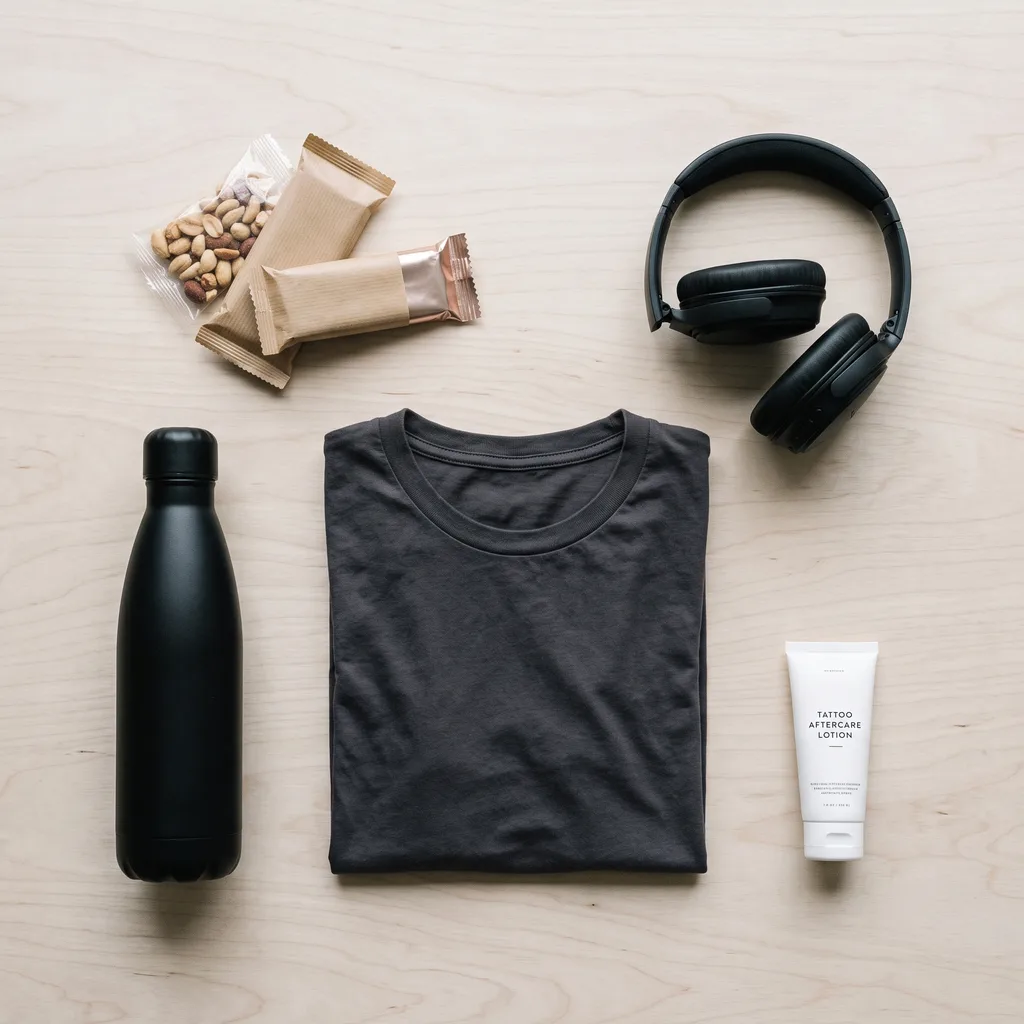
Wear loose-fitting, comfortable clothing made of dark, breathable cotton. Black clothing ensures you won’t ruin a favorite shirt if stencil fluid or carbon ink splashes during the session. Ensure your outfit gives the artist unobstructed access to the placement area.
8. What Should I Eat and Drink Before My Appointment?
Never show up on an empty stomach. Tattooing spikes adrenaline, which rapidly burns through your blood glucose. Eat a substantial meal rich in complex carbs and protein 90 minutes before your slot, and pack water alongside clean snacks (like bananas, nuts, or protein bars).
9. Can I Use Numbing Cream for My First Session?
Speak with your artist before applying any over-the-counter lidocaine creams. Some numbing formulations alter skin elasticity, making it harder for the artist to deposit ink evenly, or wear off abruptly mid-session, resulting in a sudden shock of pain.
10. How Long Does a Fresh Tattoo Take to Heal?
Superficial epidermal healing typically takes 2 to 3 weeks, during which you will experience light peeling and flaking (similar to a healing sunburn). Complete dermal recovery beneath the surface takes roughly 4 to 6 weeks.
11. What Are the Absolute “Never-Dos” During Aftercare?
- Never Submerge in Water: Avoid baths, swimming pools, hot tubs, and lakes for at least 3 to 4 weeks. Quick, lukewarm showers are fine.
- Never Expose to Direct Sun: Keep fresh ink completely shaded. Once fully healed, apply SPF 50 sunscreen daily to prevent fading.
- Never Pick or Scratch Peeling Skin: Pulling off flakes pulls trapped ink out of the dermis, leaving patchy spots.
12. Can I Work Out After Getting Tattooed?
Take 48 to 72 hours off from heavy lifting and intense cardio. Excessive sweating, stretching of fresh lines, and dirty gym equipment harbor dangerous bacteria that can ruin new ink.
13. Which Tattoo Placements Age the Best?
Flat, sun-protected areas with consistent skin elasticity (upper arms, thighs, calves) age remarkably well. High-friction, high-turnover skin zones—such as palms, finger sides, inner lips, and the sides of feet—fade rapidly and frequently require frequent touch-ups.
14. What If I Regret It or Hate the Stencil?
The stencil phase is your time to be honest. If the stencil is one inch too low or angled weirdly, speak up immediately. A professional artist will gladly wipe it off and reapply it five times until it sits perfectly on your body.
15. How Do I Build Toward a Full Concept Down the Road?
If you dream of large connected work—such as foo dog and dragon chest tattoos or extensive multi-session back pieces—tell your artist upfront. Even if you only start with one element, designing with future expansion in mind ensures your background bars and wind currents flow seamlessly later.
5 Practical Steps to Prepare for Tattoo Day
To turn these answers into a seamless studio experience, follow this step-by-step checklist:
- Hydrate Your Skin Early: Apply a basic, fragrance-free lotion daily for 5 days leading up to your session.
- Avoid Alcohol for 48 Hours: Alcohol thins the blood, causing excess bleeding that pushes out fresh ink.
- Leave Shaving to the Pro: Avoid razor burn or micro-nicks; let your artist prep the target skin with a sterile razor.
- Pack a Studio Survival Kit: Bring headphones, a phone charger, water, snacks, your ID, and payment.
- Study Long-Term Projects: If you plan on moving to large-scale art soon, check out our complete breakdown on how to prepare for a Japanese tattoo sleeve for a deep dive into session stamina.
Frequently Asked Questions
Can I drink coffee before getting a tattoo?
Keep caffeine to a minimum. Heavy doses of coffee or energy drinks raise your heart rate and heighten your nervous system, which can make you jumpy in the chair.
Is it normal for a new tattoo to bleed or weep fluid?
Yes. For the first 24 to 48 hours, a mix of clear lymph fluid, excess blood, and discarded ink is completely normal. Gently wash it away with lukewarm water and antibacterial soap.
What should I do if my tattoo looks red and inflamed?
Mild redness and warmth are normal for the first 48 hours. However, if redness expands significantly, produces foul-smelling yellow/green pus, or you develop a fever, consult a healthcare provider immediately.
About The Author

3 thoughts on “What to Know Before Getting Your First Tattoo: 15 Questions Answered”